
Your thermostat might be in the wrong place and you don’t even know it. In Spring Branch’s older ranch-style homes, thermostat placement can cause your HVAC system to run inefficiently, creating hot and cold spots throughout your house. The problem isn’t your air conditioner or heater – it’s where your thermostat reads the temperature.
Spring Branch homes built in the 1960s through 1980s often have thermostats installed in hallways or near kitchens. These locations give false readings because they don’t represent the actual temperature in your living spaces. Your system runs too long or too short, wasting energy and leaving you uncomfortable. Energy Department thermostat guide.
Getting your thermostat in the right spot can cut your energy bills by 10-15% and eliminate those annoying temperature swings. Here’s what you need to know about proper placement and why it matters so much in Spring Branch. Getting Your Furnace Ready for a Houston Cold Snap (Katy and West Houston).
The Hidden Cost of Bad Thermostat Placement
When your thermostat sits in a bad location, it’s like having a faulty speedometer in your car. You think you’re driving the right speed, but you’re actually way off. Your HVAC system works the same way – it’s trying to hit a target that doesn’t exist. What a New AC Installation Actually Costs in The Woodlands.
In Spring Branch’s older homes, common problem areas include:
- Hallways that stay cooler than living rooms
- Kitchens where cooking heat skews readings
- Near windows where sunlight creates ghost temperatures
- Close to supply vents where air movement tricks sensors
These locations cause your system to short-cycle or run too long. Short-cycling means your system turns on and off frequently, which wears out components faster and never properly conditions your home. When it runs too long, you’re paying for wasted energy and still not getting comfortable.
Spring Branch’s mix of ranch homes and split-levels makes this especially tricky. The open floor plans common in the area mean temperature variations between rooms can be significant. Your thermostat needs to be where it represents the average temperature your family actually experiences. Why Your Memorial Home Needs a High-Efficiency AC Unit Right Now.
The Golden Rules for Thermostat Placement
Proper thermostat placement follows specific guidelines that work in any home, but are critical in Spring Branch’s climate. Here are the rules that matter most:
- Interior Wall Location
Place your thermostat on an interior wall away from exterior temperature influences. Exterior walls can be 5-8 degrees different from interior spaces due to Houston’s heat gain through walls.
- Height Matters
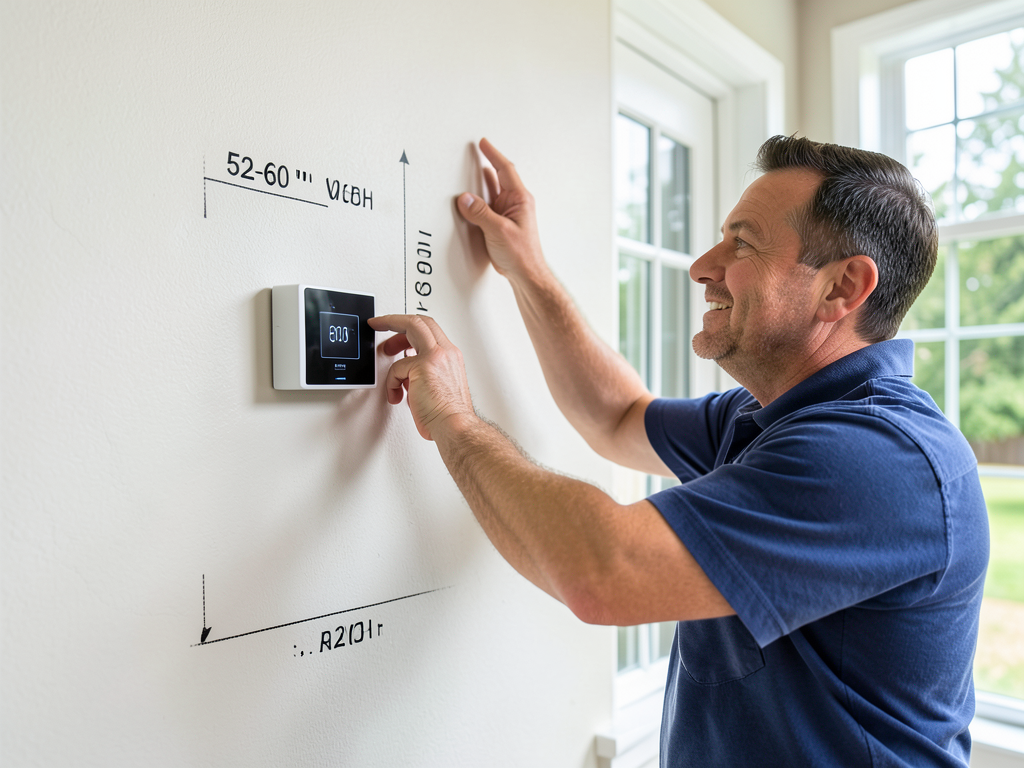
Mount the thermostat 52-60 inches from the floor. This height captures the average air temperature where people actually live and breathe, not near the floor where cold air settles or near the ceiling where heat rises.
- Central High-Traffic Area
Choose a spot that represents your home’s average temperature. Living rooms or family rooms work best because that’s where you spend most of your time and where temperature matters most.
The 52-60 inch height isn’t random. It’s based on where human bodies experience temperature most comfortably. Below 52 inches, you’re reading floor-level air that can be significantly colder in winter. Above 60 inches, you’re getting ceiling-level readings that are often warmer due to heat rising.
In Spring Branch’s ranch homes, this often means moving your thermostat from a hallway to a living area. The hallway might be 72 degrees while your living room is actually 78 degrees on a hot Houston afternoon. Your system thinks it’s doing its job when it’s actually leaving you uncomfortable.
The 5 ‘No-Go’ Zones for Your Thermostat
Some locations guarantee your thermostat will give you bad information. Here are the five spots that will ruin your comfort no matter what:
| Location | Why It Fails | Spring Branch Impact |
|---|---|---|
| Near Windows/Doors | Direct sunlight and drafts create false readings | Spring Branch’s afternoon sun can heat a wall by 15-20 degrees |
| Kitchens | Cooking creates temporary heat spikes | Open floor plans mean kitchen heat affects entire living area |
| Direct Sunlight | Solar gain tricks sensors year-round | Houston gets 204 sunny days annually – that’s a lot of false readings |
| Near Supply Vefs | Air movement creates ghost readings | Drafts from vents can make sensors think rooms are cooler than they are |
| Hallways | Stagnant air doesn’t represent living space temps | Hallways often stay 3-5 degrees cooler than main rooms |
The kitchen problem is especially common in Spring Branch’s open-concept homes. When you’re cooking dinner, your kitchen can be 10 degrees hotter than the rest of your house. If your thermostat is nearby, it thinks your entire home needs cooling when only the kitchen does.. Read more about Why One Room in Your Bunker Hill Home Is Always Hotter Than the Others.
Near windows, Spring Branch’s intense afternoon sun can heat a wall surface by 15-20 degrees above the actual air temperature. Your thermostat reads that hot wall and thinks your whole house is that temperature.
The Houston Factor: Humidity and Airflow
Houston’s humidity changes everything about thermostat placement. In Spring Branch’s older homes, high humidity affects how your thermostat sensor works and how your HVAC system responds.
Humidity impacts thermostat accuracy because most sensors measure dry-bulb temperature but not moisture content. In Houston’s 80%+ humidity, the same temperature feels very different depending on moisture levels. Your body feels warmer at 78 degrees with high humidity than at 78 degrees with low humidity.
Spring Branch’s mix of home styles creates unique airflow patterns. Ranch homes often have long duct runs that create temperature stratification. Your thermostat might be in a cool spot while your bedrooms upstairs are hot and stuffy.
Airflow interference is another Houston-specific issue. With our long cooling seasons, supply vents run constantly. If your thermostat is near a vent, it gets false readings from moving air. The sensor thinks the room is cooler than it actually is because it’s feeling the 55-degree air coming out of the vent rather than the actual room temperature.
Spring Branch’s older homes often have undersized return air systems. This creates pressure imbalances where some rooms are pressurized and others are depressurized. Your thermostat might be in a room with good airflow while other areas never get properly conditioned.
Smart Thermostats and Remote Sensors: The Modern Fix
You don’t always have to move your thermostat to fix placement problems. Smart thermostats with remote sensors offer a practical solution for many Spring Branch homeowners.
Modern smart thermostats like Nest, Ecobee, and Honeywell can use wireless remote sensors placed throughout your home. These sensors give you accurate temperature readings from multiple locations and let your system respond to actual conditions rather than a single bad location.
Remote sensors work especially well in Spring Branch’s larger homes where one thermostat can’t possibly represent the whole house. You can place sensors in your living room, bedrooms, and even your home office. The system uses algorithms to balance comfort across all zones.
Some advanced features include:
- Room-specific scheduling
- Temperature averaging across multiple sensors
- Occupancy detection to focus on occupied spaces
- Humidity sensing for better comfort control
The cost of remote sensors is often much less than moving your thermostat and running new wiring. For Spring Branch homes where the thermostat is in a terrible location but moving it would require major wall repairs, remote sensors can be the perfect solution. EPA Energy Star thermostat information.
However, remote sensors aren’t perfect. They need power, either through batteries or hardwiring. Battery-powered sensors need regular replacement, and hardwired ones still require installation. They also add complexity to your system that some homeowners don’t want.
When to Call a Houston HVAC Professional
Some thermostat problems require professional help. Here are the signs that you need an expert rather than trying to fix it yourself:
Short-cycling is the biggest red flag. If your system turns on and off every few minutes, your thermostat might be in a bad location or there could be other issues. Short-cycling wastes energy and destroys your compressor over time.
Uneven cooling across your home suggests your thermostat isn’t representing the whole house. If one room is always too hot while another is freezing, your thermostat location is probably part of the problem.
High energy bills with no clear cause often point to thermostat issues. When your system runs inefficiently due to bad readings, you pay for wasted energy without getting comfortable.
Physical relocation might be necessary if your thermostat is in one of the no-go zones. Moving a thermostat requires running new wiring, patching walls, and sometimes modifying your HVAC system. This isn’t a DIY job – it requires understanding of electrical codes, HVAC systems, and proper wiring.
Professional relocation includes proper C-wire installation for smart thermostats, ensuring your new location meets all clearance requirements, and testing the system after the move. A bad DIY relocation can create more problems than it solves.
In Spring Branch, many homes need thermostat relocation due to their age and original construction methods. The cost varies based on how difficult it is to run new wiring and whether wall repairs are needed, but the energy savings often pay for the work within 2-3 years.
Making the Right Choice for Your Spring Branch Home
The decision between fixing your current thermostat location versus relocating it depends on several factors. Consider these questions:
- How old is your current thermostat? Older models might be worth replacing anyway
- Can you add remote sensors instead of moving the thermostat?
- What’s the cost difference between repair and relocation?
- Do you want smart features that require C-wire anyway?
For many Spring Branch homeowners, the answer is a smart thermostat with remote sensors. This solves most comfort problems without the cost and hassle of moving the thermostat. It’s especially good for homes where the current location isn’t terrible but isn’t ideal either.. Read more about The Ideal HVAC Settings for a New Baby’s Nursery in Greatwood.
However, if your thermostat is in a truly bad location – like right above a supply vent or in direct sunlight – relocation might be your only real option. The comfort improvement and energy savings usually justify the cost.
Spring Branch’s unique mix of home styles means there’s no one-size-fits-all solution. A 1960s ranch might need something entirely different than a 1980s split-level. That’s why professional assessment matters so much.
Don’t let a bad thermostat location ruin your comfort another summer. The right solution can save you money, improve your comfort, and extend the life of your HVAC system. Whether that’s a simple sensor addition or a full relocation, the first step is understanding your current situation.
Call (281) 552-7766 today to schedule your thermostat assessment. We’ll check your current location, test your system’s performance, and recommend the best solution for your specific home and budget. Don’t wait until the next heat wave hits – fix it now and enjoy comfortable, efficient cooling all season long.
Frequently Asked Questions
Can I just move my thermostat myself?
Moving a thermostat requires running new wiring through walls, which involves electrical work and potentially cutting into drywall. It also requires proper thermostat wiring knowledge and understanding of HVAC system requirements. DIY moves often create more problems than they solve.
How much does thermostat relocation cost in Spring Branch?
Costs vary based on how difficult it is to run new wiring and whether wall repairs are needed. Simple relocations might cost $300-500, while complex moves requiring extensive wiring could be $800-1,200. The energy savings often pay for the work within 2-3 years.
Will a smart thermostat fix my placement problems?
Smart thermostats with remote sensors can solve many placement issues without moving the main thermostat. They provide accurate readings from multiple locations and let your system respond to actual conditions. However, they can’t fix problems like direct sunlight on the main thermostat or extreme drafts.
How do I know if my thermostat is in a bad location?
Signs include uneven cooling across your home, short-cycling (system turning on/off frequently), high energy bills, and rooms that are always too hot or too cold. If your thermostat is near windows, kitchens, supply vents, or in a hallway, it’s probably in a bad location.
What’s the ideal thermostat height?
The ideal height is 52-60 inches from the floor. This range captures the average air temperature where people actually live and breathe. Below 52 inches, you’re reading floor-level air that can be significantly colder. Above 60 inches, you’re getting ceiling-level readings that are often warmer.
Can remote sensors work with any thermostat?
No, remote sensors only work with smart thermostats that support them. Popular models include Nest, Ecobee, Honeywell, and some other high-end thermostats. Basic programmable thermostats don’t have remote sensor capability.
How many remote sensors do I need?
For most Spring Branch homes, 2-3 sensors provide good coverage. Place one in your main living area, one in a bedroom, and possibly one in your home office if you use it frequently. The exact number depends on your home’s layout and your comfort priorities.
Will fixing my thermostat location really save me money?
Yes, proper thermostat placement can reduce your energy bills by 10-15%. When your system runs efficiently based on accurate readings, it doesn’t waste energy cycling on and off or running too long. The savings often pay for professional fixes within a few years.