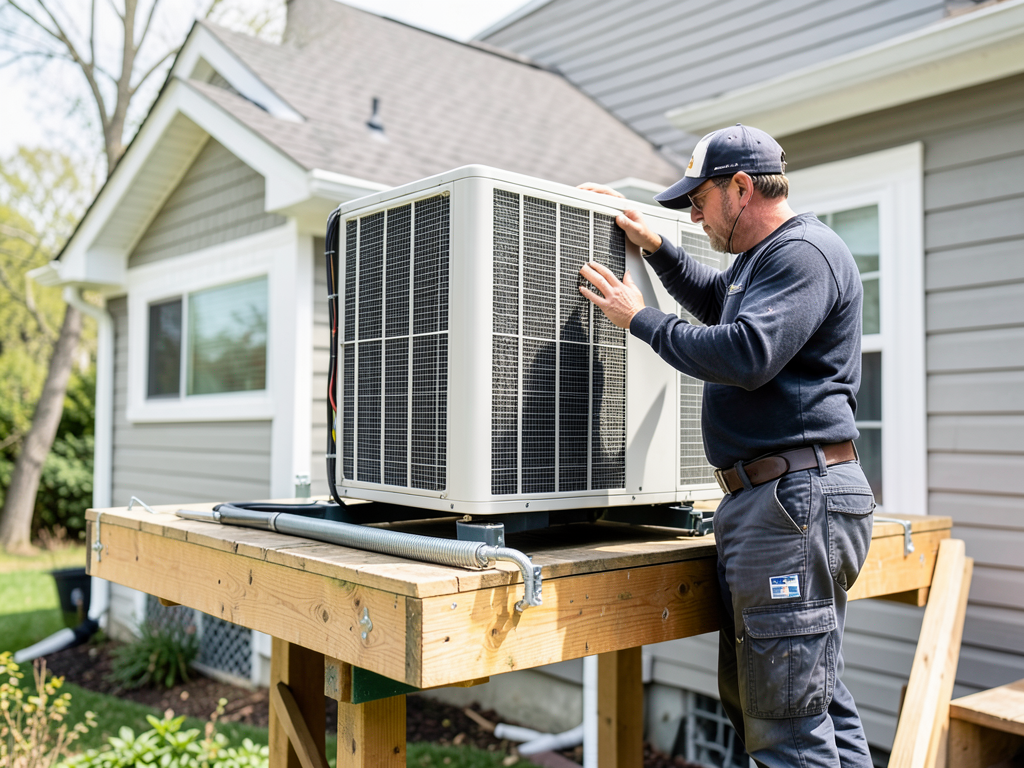





Air Conditioning Installation in Houston – Expert Central Air Systems for High-Humidity Climate Control

Titan HVAC Houston installs right-sized air conditioning systems engineered for 90-degree summers and year-round Gulf Coast humidity, with load calculations specific to your home's insulation, ductwork, and exposure.

Slider Image 1
Slider Image 2
Slider Image 3
Slider Image 4
Slider Image 5
Slider Image 7
Slider Image 8
Slider Image 9
Slider Image 10
Slider Image 11

Why Houston's Climate Demands Proper AC Installation

Houston's subtropical climate pushes air conditioners harder than almost anywhere in the United States. You face nine months of cooling season, average summer temperatures near 95 degrees, and humidity that hovers between 60 and 90 percent. That combination creates a refrigerant load most systems never see in drier climates.

When you install an air conditioner in this environment, the unit must handle both sensible heat and latent heat. Sensible heat is the temperature you feel. Latent heat is the moisture in the air. An undersized system will cool the air but leave it clammy. An oversized system will short-cycle and never run long enough to pull moisture out. Both mistakes lead to mold, discomfort, and wasted energy.

The clay soil under Houston homes shifts with moisture changes, which can stress ductwork over time. If your ducts have separated at the seams or pulled away from the plenum, your new AC unit will pump cooled air into your attic instead of your living room. You will pay for comfort you never receive.

A proper AC installation starts with a Manual J load calculation, duct integrity testing, and refrigerant line sizing that matches the tonnage of your new unit. You also need to account for radiant heat from afternoon sun exposure, especially if your home faces west or southwest. AC unit installation in Houston is not a one-size-fits-all transaction. It is engineering work that requires local climate knowledge and attention to the details that generic contractors skip.

Why Houston's Climate Demands Proper AC Installation
How We Size and Install Central Air Systems

How We Size and Install Central Air Systems

We begin every air conditioner replacement with a room-by-room load calculation. We measure square footage, ceiling height, window area, insulation R-value, and duct layout. We calculate heat gain from your roof, walls, and windows. We factor in occupancy and appliance load. This tells us the exact tonnage your home requires, not what the last unit happened to be.

Next, we inspect your existing ductwork. We check for disconnected joints, crushed flex duct, and undersized return plenums. We test static pressure to ensure airflow matches the capacity of your new system. If your ducts cannot deliver the CFM your unit produces, we will tell you before we install the equipment.

We match indoor coil to outdoor condenser by model number and AHRI certification. Mixing brands or mismatching components voids warranties and reduces efficiency. We install the outdoor condenser on a level pad with proper clearance for airflow and service access. We run a new refrigerant line set if the old one shows signs of contamination or if the new system uses a different refrigerant type.

We pull a vacuum on the refrigerant lines to remove moisture and air, then charge the system to the manufacturer's subcooling or superheat specification. We verify airflow at each register, check voltage and amperage at the disconnect, and program the thermostat for your schedule. We leave you with a system that runs quietly, cools evenly, and removes humidity without overcooling the air.

What Happens During Your AC Unit Installation

Air Conditioning Installation in Houston – Expert Central Air Systems for High-Humidity Climate Control
01

Load Calculation and Equipment Selection

We measure your home's cooling load using Manual J software, which accounts for insulation, window exposure, roof color, and duct efficiency. This gives us the exact tonnage and SEER rating you need. We present equipment options from manufacturers we trust, with explanations of efficiency ratings, noise levels, and compatibility with your electrical service. You make an informed decision based on data, not guesswork or the capacity of the unit we happen to have on the truck.
02

System Removal and Installation

We disconnect and remove your old air handler and condenser, then install the new equipment according to manufacturer torque specs and local code requirements. We verify duct connections, install a new filter rack if needed, and run electrical whip to the disconnect box. We pressure-test refrigerant lines, evacuate the system with a vacuum pump, and charge the refrigerant to spec. We test the condensate drain and install a safety float switch to prevent overflow damage.
03

Startup and Performance Verification

We power up your system and measure airflow, temperature drop, and humidity removal at multiple registers. We check amperage draw, capacitor values, and thermostat staging. We verify the system reaches setpoint without short-cycling and maintains even temperatures across all rooms. We walk you through thermostat operation, filter replacement, and the maintenance schedule you need to follow. You receive documentation of all work performed, warranty registration, and our contact information for future service.

Why Local Expertise Matters for Central Air Installation

Houston operates under the 2021 International Residential Code with local amendments enforced by the City of Houston Permitting Center. We pull permits for every new air conditioner install, which means your system passes inspection for electrical connections, refrigerant handling, and combustion appliance clearances. A system installed without permits creates liability when you sell your home or file an insurance claim.

We also understand the architectural quirks of Houston homes. Older homes in the Heights and Montrose often have undersized electrical panels and knob-and-tube wiring. Newer builds in Katy and Cypress use spray foam insulation that changes ventilation requirements. Homes near the Ship Channel face salt air that corrodes condenser coils faster than inland properties. We adjust our installation approach based on your home's age, location, and construction type.

You also need a contractor who understands the humidity control demands of this region. Air conditioning in Houston is not just about temperature. It is about controlling moisture that fuels mold growth and wood rot. We size systems to run long enough to dehumidify, and we recommend variable-speed air handlers when your budget allows. A two-stage or modulating system runs at low capacity most of the time, which removes more moisture per BTU than a single-stage unit that slams on and off.

Titan HVAC Houston has installed central air systems in every neighborhood from Bellaire to The Woodlands. We know the local building stock, the local climate, and the local inspectors. You get a system that works for your home, not a generic installation that ignores everything unique about living in Southeast Texas.

What You Can Expect From Start to Finish

Timeline and Scheduling

Most residential AC installations take between six and ten hours, depending on the complexity of your ductwork and the location of your equipment. We schedule installations Monday through Saturday and provide a four-hour arrival window. If we encounter issues like undersized electrical service or duct modifications, we will explain the additional work required before we proceed. We do not leave your home without a functioning system unless you choose to delay work for budgetary reasons. Permits typically add one to three business days for approval, which we handle on your behalf.

Pre-Installation Assessment

Before we install anything, we verify your electrical panel can handle the amperage draw of your new system. We inspect your ductwork for leaks, disconnections, and sizing problems. We check your thermostat wiring and confirm compatibility with your new equipment. If your home has zone dampers or a two-stage system, we test the control board and actuators. We also inspect your attic insulation and ventilation, because an improperly vented attic can add thousands of BTUs to your cooling load. You receive a written assessment of any issues we find, with cost estimates for corrections.

System Performance and Comfort

A properly installed air conditioning system will lower your indoor temperature to setpoint within 20 to 30 minutes on a 95-degree day. You should feel consistent airflow from every register, with no hot spots or rooms that never cool down. Your humidity should stay between 40 and 50 percent when the system runs. You should not hear rattling, buzzing, or grinding noises from the indoor or outdoor unit. If your old system struggled to keep up, you will notice the difference immediately. Your energy bills should drop as well, especially if you replaced a unit older than ten years.

Maintenance and Follow-Up

We recommend professional maintenance twice a year, once before cooling season and once before heating season. During a maintenance visit, we clean the evaporator coil, check refrigerant charge, inspect electrical connections, and test capacitors. We also clean or replace your filter, clear the condensate drain, and lubricate blower motor bearings if applicable. Most manufacturer warranties require proof of annual maintenance to remain valid. We offer maintenance agreements that include priority scheduling, discounted repairs, and automatic reminders when service is due. You also receive our direct line for any questions or concerns after installation.

Frequently Asked Questions

You Have Questions,
We Have Answers

How much would it cost to have air conditioning installed? +

Air conditioning installation costs in Houston vary based on system size, efficiency rating, ductwork condition, and home square footage. A basic split system for an average home typically ranges from several thousand to over ten thousand dollars. Houston's extreme heat and humidity demand higher SEER ratings for efficient cooling, which affects price. Factors like attic accessibility, electrical panel upgrades, and whether you need duct replacement also impact total cost. Get multiple quotes from licensed contractors who assess your specific cooling load requirements. Ask about financing options and rebates available through CenterPoint Energy for high-efficiency systems.

What is the $5000 rule for AC? +

The $5000 rule helps Houston homeowners decide between AC repair and replacement. Multiply your system's age by the repair cost estimate. If that number exceeds $5000, replacement makes more financial sense than repair. For example, a 12-year-old unit needing a $500 repair equals $6000, suggesting replacement. Houston's brutal summers stress AC systems harder than mild climates, reducing typical lifespan to 10-15 years. Factor in rising energy bills from aging equipment. If your unit uses R-22 refrigerant, which is now expensive and phased out, replacement becomes even more cost-effective than repeated repairs.

How much to pay for air conditioning installation? +

Air conditioning installation costs depend on system type, tonnage, efficiency rating, and installation complexity. Houston homes need proper sizing calculations based on square footage, insulation levels, window efficiency, and ceiling heights. A qualified contractor performs Manual J load calculations to determine correct tonnage. Undersized systems run constantly without cooling adequately. Oversized units short-cycle, causing humidity problems common in Gulf Coast climates. Installation includes equipment, labor, refrigerant lines, condensate drains, electrical connections, and thermostat setup. Additional costs arise from duct modifications, attic insulation upgrades, or electrical service upgrades needed to handle modern high-efficiency units.

How much does it cost to install an air cond? +

Installing an air conditioner in Houston involves multiple cost factors beyond equipment price. System tonnage must match your home's cooling load, which contractors calculate using Manual J assessments. Houston's high humidity requires systems with good dehumidification capabilities, not just raw cooling power. Installation complexity increases costs if your home needs ductwork modifications, electrical panel upgrades, or difficult attic access. Higher SEER ratings cost more upfront but reduce monthly electric bills significantly during Houston's long cooling season. Labor costs vary between contractors. Always verify proper licensing, insurance coverage, and whether permits are included in quoted prices.

How much does it cost to put AC in a 2000 sq ft house? +

A 2000 square foot Houston home typically needs a 3 to 4-ton air conditioning system, depending on insulation quality, window efficiency, ceiling height, and sun exposure. Installation costs vary widely based on system efficiency, brand selection, ductwork condition, and installation complexity. Houston's clay soil causes foundation shifting that can damage ductwork, potentially requiring repairs during installation. Higher SEER-rated systems cost more initially but deliver substantial savings on electric bills during our brutal summers. Two-story homes often cost more due to zoning requirements and additional labor. Request multiple detailed quotes that include load calculations specific to your home's characteristics.

What is the 3 minute rule for AC? +

The 3-minute rule prevents compressor damage after your AC cycles off. Wait at least three minutes before restarting your system. This allows refrigerant pressure to equalize throughout the system. Starting too soon forces the compressor to work against high pressure, causing premature wear and potential failure. Houston homeowners who frequently adjust thermostats or experience power outages during storms should follow this rule strictly. Modern thermostats often have built-in delay protection. If your system short-cycles frequently, running less than 10 minutes per cycle, you likely have a sizing problem, refrigerant leak, or failing component requiring professional diagnosis.

How Gulf Coast Humidity Affects AC Unit Installation in Houston

Houston sits 50 feet above sea level, nine miles from Galveston Bay, and surrounded by bayous that feed moisture into the air year-round. That geography creates dew points in the 70s during summer, which means your air conditioner must remove a gallon of water per hour just to keep indoor humidity below 60 percent. A system sized only for temperature will cool the air to 72 degrees but leave it sticky and uncomfortable. Proper air conditioner replacement in Houston requires sizing for latent load, which is why we use Manual J software instead of the old rule of thumb that assigns 400 square feet per ton. The humidity here demands precision.

We work with the same inspectors, the same distributors, and the same building codes every day. That familiarity means we know which manufacturers offer the best warranty support in this market, which models handle salt air without corroding in three years, and which thermostats integrate with Houston's time-of-use electricity plans. When you hire a contractor who installs systems across five states, you get a technician who may have never worked in this climate. When you hire Titan HVAC Houston, you get a team that understands the specific challenges of cooling homes in this part of Texas. That local knowledge protects your investment and ensures your comfort.
HVAC Services in The Houston Area

Titan HVAC is proud to serve Houston and the surrounding areas with expert heating and cooling solutions. Our central location allows us to respond quickly to both residential and commercial clients. Whether you need an emergency fix or scheduled service, we’re never far away. Explore our service area and see how close comfort really is. We're just a call or click away—connect with us today.

Address:
Titan HVAC Houston, 3730 Kirby DrHouston, Houston, TX, 77098

Additional Services We Offer

Our news updates

Latest Articles & News from The Blogs

Updating the HVAC in an Eastwood Brick Bungalow Without Ruining the Character Eastwood’s brick bungalows built in the 1920s and…

Updating the HVAC in an Eastwood Brick Bungalow Without Ruining the Character

Updating the HVAC in an Eastwood Brick Bungalow Without Ruining the Character Eastwood’s brick bungalows built in the 1920s and…

Clever Ways to Hide an Outdoor AC Unit Without Breaking Woodlands HOA Rules

Clever Ways to Hide an Outdoor AC Unit Without Breaking Woodlands HOA Rules Living in The Woodlands means enjoying tree-lined…

Why a Radiant Barrier Might Be the Missing Piece for Your Aliana AC System

Why a Radiant Barrier Might Be the Missing Piece for Your Aliana AC System If your Aliana home feels like…

Contact Us

Call Titan HVAC Houston at (281) 552-7766 to schedule a load calculation and equipment consultation. We provide upfront pricing, same-week installation, and systems engineered for Houston's climate. No surprises, no upselling, just honest work.