
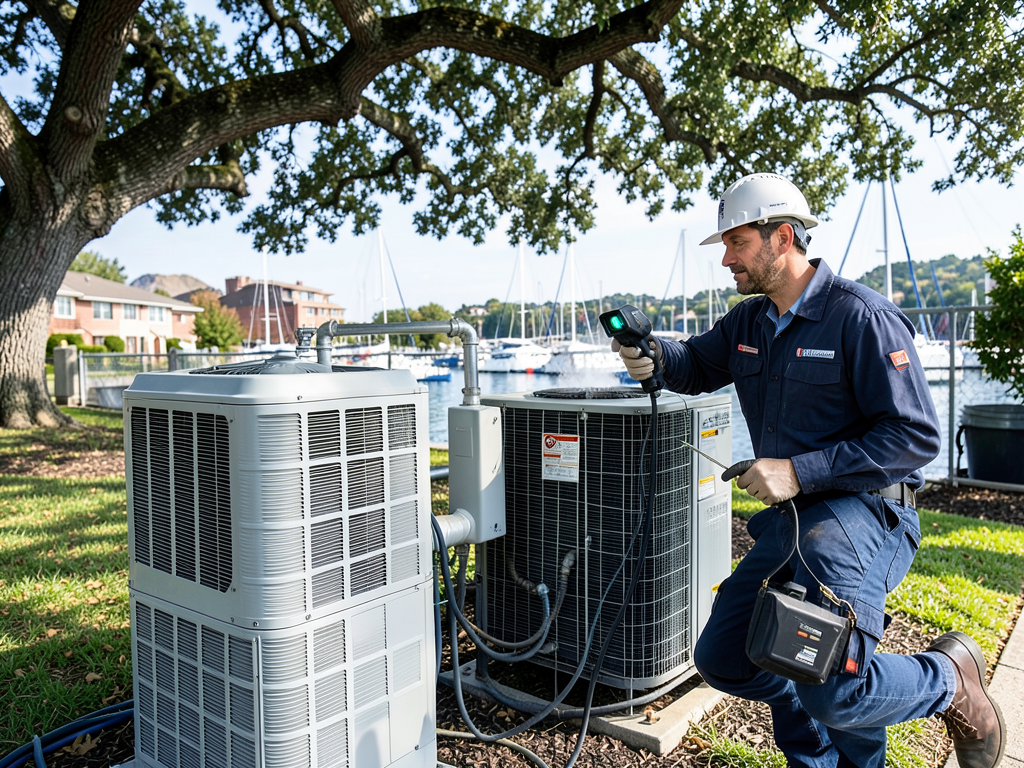
How Mature Tree Shade Impacts Your AC Performance and Efficiency in Denver Harbor
Denver Harbor’s tree-lined streets create beautiful summer shade but can also sabotage your AC’s performance. Mature oaks and magnolias reduce direct sunlight on your home by up to 70%, lowering indoor temperatures naturally. However, when branches grow too close to your outdoor condenser unit, they restrict airflow and force your system to work harder, increasing energy costs by 15-25%.
The science is simple: your AC condenser needs constant airflow to release heat. When leaves, twigs, or branches block that flow, the unit can’t properly cool refrigerant, causing it to run longer cycles and wear out faster. In Denver Harbor’s humid climate, this problem compounds quickly, leading to frozen coils, tripped breakers, and complete system failure during peak summer heat. Why Your Memorial Home Needs a High-Efficiency AC Unit Right Now.
The Hidden Cost of Denver Harbor’s Beautiful Canopy
Denver Harbor’s mature trees provide excellent shade but create specific challenges for AC units. The neighborhood’s mix of Live Oaks, Southern Magnolias, and Cedar Elms drops leaves, pollen, and sap year-round. This debris accumulates on condenser coils, reducing heat transfer efficiency by up to 30% when left uncleaned.
Local soil conditions in Denver Harbor’s flat terrain mean many homes have minimal yard space between the house and property lines. This forces outdoor units into tight corners where tree branches naturally grow. The combination of restricted airflow and constant debris exposure creates a perfect storm for AC inefficiency.
According to the U.S. Department of Energy, strategic tree placement can reduce cooling costs by 10-25%, but only when maintaining proper clearance around the condenser unit. In Denver Harbor, where summer temperatures regularly exceed 95°F, even small airflow restrictions can push indoor temperatures above 80°F when your system struggles. U.S. Department of Energy landscaping guide.
Understanding the Airflow Danger Zone
Your AC condenser needs 2-3 feet of clearance on all sides to function properly. This clearance zone isn’t just about branches touching the unit—it’s about maintaining unobstructed air intake and exhaust. When trees grow within this zone, they create turbulence that disrupts the smooth airflow pattern your system needs.. Read more about Understanding Texas Laws About Working AC for Rental Properties in the Greater Fifth Ward.
The physics are straightforward: your condenser fan pulls in 2,000-3,000 cubic feet of air per minute. Any obstruction reduces this volume, forcing the compressor to work harder and longer. In Denver Harbor’s 80%+ humidity, this strain is magnified because the system must remove more moisture from the air, requiring even more airflow.
Short-cycling is another hidden danger. When airflow is restricted, your AC may cool the immediate area around the condenser but fail to cool your entire home effectively. This causes the system to turn on and off rapidly, increasing energy consumption by 30% and dramatically shortening component lifespan.
Denver Harbor’s Most Common AC-Killing Trees
Live Oaks dominate Denver Harbor’s canopy and present unique challenges. Their evergreen nature means year-round debris, and their dense canopy creates constant shade. The pollen from Live Oaks clogs condenser coils and can reduce efficiency by 15% in peak season. Their acorns and small branches also pose physical damage risks. NATE certification standards.
Southern Magnolias drop large, waxy leaves that stick to condenser coils when wet. These leaves trap moisture and create ideal conditions for algae growth, which further reduces heat transfer. The tree’s shallow root system often competes with underground AC lines, causing foundation shifts that tilt condenser pads.
Cedar Elms produce smaller debris but in massive quantities. Their leaves are small enough to get sucked into condenser fans, causing impeller damage. The tree’s rapid growth means branches can quickly encroach on the critical 2-3 foot clearance zone, often before homeowners notice the problem.
The 5-Foot Rule: Maintenance and Placement Strategy
Professional AC technicians recommend a 5-foot rule for tree placement near outdoor units. This provides the minimum 2-3 foot clearance while allowing for future growth. In Denver Harbor’s mature neighborhoods, this often means existing trees need strategic pruning rather than removal.
Annual maintenance should include condenser coil cleaning, especially after spring pollen season and fall leaf drop. Denver Harbor’s high humidity means algae and mold growth on coils is common, reducing efficiency by up to 20% if left untreated. Professional cleaning with specialized coil cleaners restores optimal heat transfer.
Foundation stability is crucial in Denver Harbor’s flat terrain. Expansive clay soils can shift up to 2 inches seasonally, causing condenser pads to tilt. A tilted unit reduces refrigerant flow efficiency by 10-15% and can cause compressor failure. Annual pad leveling prevents these costly issues.
Maximizing Shade Benefits While Protecting Your AC
The key is strategic tree placement. Plant deciduous trees on the south and west sides of your home where summer sun is strongest. These trees provide shade in summer but allow warming sunlight through bare branches in winter. Keep them at least 15 feet from the house to prevent root damage to foundation and underground lines.
Install a shade structure over your condenser unit instead of relying on tree branches. A simple lattice or awning can reduce ambient temperature around the unit by 10-15°F without restricting airflow. This provides the cooling benefits of shade while maintaining the critical clearance zone.
Regular pruning is essential. Remove any branches within 3 feet of your condenser, and trim back foliage that casts shadows on the unit during peak operating hours (typically 2-6 PM). This ensures your AC gets the cooling shade benefits without the airflow restrictions.
Denver Harbor-Specific AC Efficiency Solutions
Denver Harbor’s unique combination of mature trees, flat terrain, and high humidity requires specialized AC solutions. High-efficiency units with variable-speed compressors can better handle airflow restrictions, maintaining performance even when conditions aren’t ideal. These units adjust their output based on real-time conditions, reducing energy waste.
Smart thermostats with outdoor temperature sensors can detect when your AC is struggling due to environmental factors. They can alert you to potential issues before complete system failure occurs. In Denver Harbor’s heat, this early warning can prevent emergency repairs during the hottest days of summer. Finding Emergency AC Repair in Sugar Land Without Getting Ripped Off.
Consider upgrading to a two-stage AC system if your home is heavily shaded. These systems run at lower capacity most of the time, providing better humidity control and energy efficiency. They’re particularly effective in Denver Harbor where shaded homes often need less cooling but still require good dehumidification.
Professional Assessment: When to Call the Experts
Call a professional if you notice your AC running constantly but failing to cool below 78°F, hear unusual noises from the condenser, or see ice forming on refrigerant lines. These are signs of airflow restriction or refrigerant issues that require immediate attention.
Professional AC technicians use thermal imaging cameras to detect airflow restrictions and coil efficiency problems. They can identify hot spots on your condenser that indicate restricted airflow or failing components. This diagnostic approach catches problems early, preventing costly emergency repairs. Emergency 24-Hour AC Service for Families in Katy.
Annual professional maintenance should include coil cleaning, refrigerant level checks, electrical component testing, and clearance zone assessment. In Denver Harbor’s climate, this maintenance is crucial for system longevity and efficiency. The cost of annual maintenance is typically recovered through energy savings and prevented repairs.
Emergency AC Service in Denver Harbor
When your AC fails during Denver Harbor’s summer heat, every minute counts. Emergency service calls should be answered within 30 minutes, with technicians arriving within 2 hours. Look for companies with fully stocked trucks and NATE-certified technicians who can diagnose and repair most issues on the first visit. Emergency Boiler Repair.
Emergency AC repair costs in Denver Harbor typically range from $150-500 for common issues like capacitor replacement or refrigerant recharge. More complex repairs like compressor replacement can cost $1,500-3,000. Having a trusted local company’s number saved can save hours of discomfort and prevent price gouging during peak demand.
Don’t wait for complete system failure. If your AC shows signs of struggling with Denver Harbor’s tree-related challenges, call (281) 552-7766 today for a professional assessment. Early intervention prevents emergency repairs and extends your system’s life.
Frequently Asked Questions
How close can trees be to my AC condenser?
Trees should be at least 5 feet away from your AC condenser, with a minimum 2-3 foot clearance zone around the unit. This allows for proper airflow and accounts for future tree growth.
Will trimming my trees improve AC efficiency?
Yes, trimming trees to maintain proper clearance can improve AC efficiency by 15-25%. Removing debris from around the unit and ensuring unobstructed airflow allows the system to operate at peak performance.
What’s the best tree to plant near an AC unit?
Plant deciduous trees at least 15 feet away from your AC unit. Good options for Houston include Cedar Elm, Drummond Red Maple, and Texas Ash. These provide summer shade but allow winter sun through bare branches.
How often should I clean my AC condenser coils?
Clean your AC condenser coils at least twice yearly—once after spring pollen season and again after fall leaf drop. In Denver Harbor’s high humidity, more frequent cleaning may be needed to prevent algae and mold buildup.
Can tree shade really save on cooling costs?
Yes, strategic tree placement can reduce cooling costs by 10-25% according to the U.S. Department of Energy. However, this benefit is lost if trees restrict airflow around your condenser unit.
Take Action to Protect Your AC Investment
Denver Harbor’s mature trees provide beautiful shade but require careful management to protect your AC system. The combination of restricted airflow, constant debris, and high humidity creates unique challenges that can reduce your system’s efficiency by up to 40% if left unaddressed.
Don’t wait for complete system failure. Call (281) 552-7766 today to schedule your professional AC assessment. Our NATE-certified technicians will evaluate your current tree situation, clean your condenser coils, and ensure your system is operating at peak efficiency. We serve all of Denver Harbor and surrounding Houston communities with 24/7 emergency service available.
Protect your investment and your comfort. Call (281) 552-7766 now before the next heat wave hits. Your AC system works hard enough without fighting against your beautiful trees.
{
“@context”: “https://schema.org”,
“@type”: “BlogPosting”,
“headline”: “How Mature Tree Shade Impacts Your AC Performance and Efficiency in Denver Harbor”,
“description”: “Learn how Denver Harbor’s mature tree canopy affects your AC’s cooling power. Discover the science behind shade savings and the risks of blocked airflow.”,
“wordCount”: 1683,
“datePublished”: “2026-06-14T08:45:00.000Z”,
“dateModified”: “2026-06-14T08:45:00.000Z”,
“inLanguage”: “en-US”,
“mainEntityOfPage”: {
“@type”: “WebPage”,
“@id”: “https://titanhvachouston.com”
},
“publisher”: {
“@type”: “LocalBusiness”,
“name”: “Titan HVAC Houston”,
“url”: “https://titanhvachouston.com”
},
“author”: {
“@type”: “Organization”,
“name”: “Titan HVAC Houston”,
“url”: “https://titanhvachouston.com”
},
“image”: {
“@type”: “ImageObject”,
“url”: “https://titanhvachouston.com/wp-content/uploads/2026/03/how-mature-tree-shade-impacts-your-ac-performance-1.png”
}
}
{
“@context”: “https://schema.org”,
“@type”: “HVACBusiness”,
“name”: “Titan HVAC Houston”,
“url”: “https://titanhvachouston.com”,
“address”: {
“@type”: “PostalAddress”,
“addressLocality”: “Houston”
},
“areaServed”: {
“@type”: “City”,
“name”: “Houston”
}
}
{
“@context”: “https://schema.org”,
“@type”: “FAQPage”,
“mainEntity”: [
{
“@type”: “Question”,
“name”: “How close can trees be to my AC condenser?”,
“acceptedAnswer”: {
“@type”: “Answer”,
“text”: “Trees should be at least 5 feet away from your AC condenser, with a minimum 2-3 foot clearance zone around the unit. This allows for proper airflow and accounts for future tree growth.”
}
},
{
“@type”: “Question”,
“name”: “Will trimming my trees improve AC efficiency?”,
“acceptedAnswer”: {
“@type”: “Answer”,
“text”: “Yes, trimming trees to maintain proper clearance can improve AC efficiency by 15-25%. Removing debris from around the unit and ensuring unobstructed airflow allows the system to operate at peak performance.”
}
},
{
“@type”: “Question”,
“name”: “What’s the best tree to plant near an AC unit?”,
“acceptedAnswer”: {
“@type”: “Answer”,
“text”: “Plant deciduous trees at least 15 feet away from your AC unit. Good options for Houston include Cedar Elm, Drummond Red Maple, and Texas Ash. These provide summer shade but allow winter sun through bare branches.”
}
},
{
“@type”: “Question”,
“name”: “How often should I clean my AC condenser coils?”,
“acceptedAnswer”: {
“@type”: “Answer”,
“text”: “Clean your AC condenser coils at least twice yearly—once after spring pollen season and again after fall leaf drop. In Denver Harbor’s high humidity, more frequent cleaning may be needed to prevent algae and mold buildup.”
}
},
{
“@type”: “Question”,
“name”: “Can tree shade really save on cooling costs?”,
“acceptedAnswer”: {
“@type”: “Answer”,
“text”: “Yes, strategic tree placement can reduce cooling costs by 10-25% according to the U.S. Department of Energy. However, this benefit is lost if trees restrict airflow around your condenser unit.”
}
}
]
}
{
“@context”: “https://schema.org”,
“@type”: “BreadcrumbList”,
“itemListElement”: [
{
“@type”: “ListItem”,
“position”: 1,
“name”: “Home”,
“item”: “https://titanhvachouston.com”
},
{
“@type”: “ListItem”,
“position”: 2,
“name”: “Blog”,
“item”: “https://titanhvachouston.com/blog”
},
{
“@type”: “ListItem”,
“position”: 3,
“name”: “How Mature Tree Shade Impacts Your AC Performance and Efficiency in Denver Harbor”
}
]
}
{
“@context”: “https://schema.org”,
“@type”: “Service”,
“serviceType”: “HVAC”,
“provider”: {
“@type”: “LocalBusiness”,
“name”: “Titan HVAC Houston”,
“url”: “https://titanhvachouston.com”
},
“areaServed”: {
“@type”: “City”,
“name”: “Houston”
},
“description”: “Learn how Denver Harbor’s mature tree canopy affects your AC’s cooling power. Discover the science behind shade savings and the risks of blocked airflow.”
}