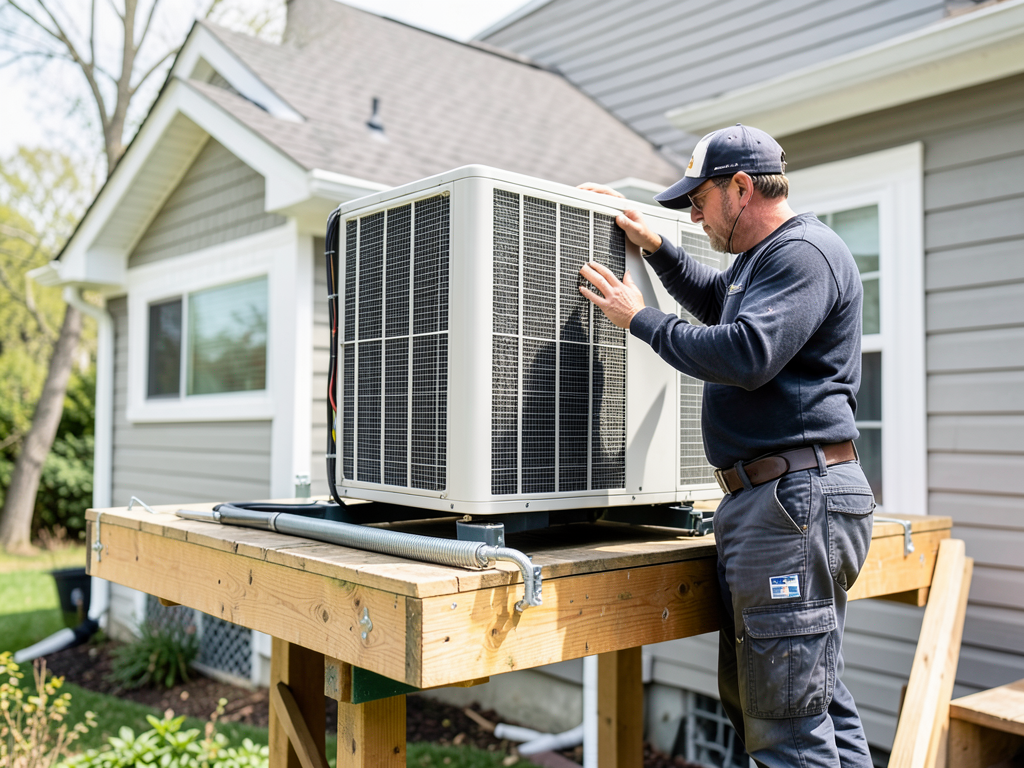





Rapid Response Cooling in Houston – 24/7 Emergency AC Repair With Technicians Dispatched in Under 60 Minutes

When your air conditioner fails in Houston's brutal heat, you need immediate help. Titan HVAC Houston delivers rapid response cooling with certified technicians ready to restore your comfort day or night, 365 days a year.

Slider Image 1
Slider Image 2
Slider Image 3
Slider Image 4
Slider Image 5
Slider Image 7
Slider Image 8
Slider Image 9
Slider Image 10
Slider Image 11

Why Houston AC Emergencies Demand Immediate Action

Houston's climate punishes failed air conditioners. When temperatures climb past 95 degrees with 80 percent humidity, indoor temperatures can reach dangerous levels within two hours. You feel it immediately. The walls start radiating heat. Your kids get irritable. Your pets pant constantly. Elderly family members face real health risks.

The Gulf Coast humidity makes it worse. Without active cooling, moisture accumulates inside your home. Condensation forms on windows. Mold spores begin colonizing damp surfaces within 24 hours. Your furniture absorbs moisture. Electronics overheat. What started as an uncomfortable afternoon becomes a genuine emergency requiring urgent air conditioning service.

Houston's electrical grid stress during summer peaks compounds the problem. When your AC fails during a heat advisory, every HVAC company gets slammed with calls. Waiting until tomorrow means you might wait three days. Indoor heat exhaustion sends hundreds of Houston residents to emergency rooms every summer.

Compressor failures do not fix themselves. Refrigerant leaks get worse. Electrical shorts create fire hazards. The longer you wait, the more expensive emergency HVAC cooling becomes. A failed capacitor you could replace today becomes a burned-out compressor motor tomorrow.

You need someone who answers the phone now. Someone who dispatches a truck immediately. Someone who stocks parts for emergency AC repair on every vehicle. When your system fails at 9 PM on Saturday, you need 24/7 cooling repair that actually means 24/7.

Titan HVAC Houston keeps crews ready around the clock because we understand what AC failure means in this climate. We live here. We know you cannot wait until Monday.

Why Houston AC Emergencies Demand Immediate Action
How Titan HVAC Houston Delivers True Rapid Response Cooling

How Titan HVAC Houston Delivers True Rapid Response Cooling

Most companies promise emergency service but make you wait hours. We built our rapid response system differently. When you call our dedicated emergency line, you reach a dispatcher immediately, not an answering service. That dispatcher sees real-time technician locations on GPS. We tell you exactly when someone will arrive, usually within 60 minutes inside Beltway 8.

Our trucks carry comprehensive diagnostic equipment and the most common failure parts for Houston systems. We stock capacitors for every major brand, contactors rated for Gulf Coast humidity, and refrigerant for R-22 and R-410A systems. Our technicians carry thermal imaging cameras to spot electrical hotspots before they cause secondary failures.

We run full system diagnostics before making repairs. A tripped breaker might indicate a deeper electrical problem. Low refrigerant always means a leak somewhere. We find the root cause, not just the obvious symptom. You get immediate AC service that actually fixes the problem.

Our technicians carry EPA Section 608 certification for refrigerant handling. They understand load calculations, airflow requirements, and electrical phase requirements for residential and light commercial systems. When we diagnose your system, we explain what failed, why it failed, and what you need to prevent repeat failures.

We prioritize vulnerable households first. If you have infants, elderly family members, or medical conditions affected by heat, we bump you to the front of the queue. We also fast-track commercial clients where AC failure affects business operations or product integrity.

Every emergency call gets documented with photos, pressure readings, and amperage draws. You receive a detailed diagnostic report explaining what we found and what we repaired. No surprises, no upselling during emergencies. Just professional urgent air conditioning service when you need it most.

What Happens When You Call for Emergency Cooling

Rapid Response Cooling in Houston – 24/7 Emergency AC Repair With Technicians Dispatched in Under 60 Minutes
01

Immediate Dispatch and ETA

You speak with a live dispatcher who accesses our GPS system to locate the closest available technician. We provide a specific arrival window, not a vague four-hour range. You get a courtesy call when the technician is 15 minutes out. Our average response time inside the Greater Houston area runs under 60 minutes, even during peak summer demand. We confirm your address, verify your cooling system type, and discuss any immediate safety concerns.
02

On-Site Diagnosis and Repair

Our technician arrives in a fully stocked van with diagnostic tools and common repair parts. We run a systematic diagnostic protocol checking electrical connections, refrigerant pressures, compressor amperage, and airflow volumes. We identify the failed component and explain the repair in plain language. Most emergency repairs complete on the first visit because we stock the parts other companies have to order. You approve the repair, we complete the work, and we test system performance before leaving.
03

System Testing and Prevention

After restoring cooling, we monitor system performance for a complete cycle. We verify refrigerant pressures stabilize, check temperature splits across the evaporator coil, and confirm electrical draws match manufacturer specifications. We document baseline performance data for your records. Before leaving, we identify maintenance issues that could cause future failures and provide recommendations for preventing the next emergency. You get cool air now and information to avoid repeat breakdowns later.

Why Houston Residents Choose Titan HVAC for Emergency Cooling

When your AC fails at midnight in July, you need someone who actually answers. You need technicians who know Houston systems inside out. You need a company that treats your emergency like an emergency.

We understand Gulf Coast HVAC challenges because we specialize in them. The salt air from Galveston Bay corrodes electrical connections faster than inland systems. The clay soil shifts foundations and stresses refrigerant line sets. The humidity punishes outdoor condensing units year-round. Our technicians see these failures daily and know exactly how to fix them.

We stock parts specifically for systems common in Houston neighborhoods. The builder-grade units installed in Kingwood subdivisions during the 1980s. The high-efficiency systems in Energy Corridor office buildings. The aging R-22 systems still running in Montrose bungalows. We carry what Houston actually uses, not generic parts that might work.

Our emergency pricing stays flat regardless of time. You pay the same rate at 2 AM Sunday as you do at 2 PM Tuesday. No triple-time surcharges. No weekend premiums. Just honest pricing when you need help most.

We maintain relationships with local supply houses that stay open for emergency parts runs. When we need a specialized component, we can get it fast. Most companies make you wait until Monday when the warehouse opens. We have the connections to source critical parts on weekends and holidays.

Every technician carries background checks and drug screening documentation. We send identification photos via text before arrival. You know exactly who is coming to your home.

Our service database tracks every Houston system we touch. When you call back six months later, we already know your equipment history, past repairs, and maintenance status. We provide continuity other companies cannot match.

What to Expect During Your Emergency Service Call

Response Time and Arrival

We dispatch the nearest available technician within minutes of your call. Inside Beltway 8, expect arrival within 60 minutes. Areas like Katy, Sugar Land, and The Woodlands typically see 90-minute response times. We provide tracking updates and call 15 minutes before arrival. Our technicians drive clearly marked vehicles stocked with diagnostic equipment and repair parts. You never wait wondering if someone is actually coming. During major outage events or severe weather, we triage calls by urgency and communicate realistic timelines upfront.

Diagnostic Process and Approval

Our technician performs a systematic inspection starting with electrical supply, moving through controls and safety devices, then checking refrigerant circuit integrity and airflow. We use calibrated manifold gauges, amp clamps, and thermal imaging to identify failures. You receive a verbal explanation of what failed and why before any work begins. We provide upfront pricing for the repair. If you approve, we complete the work immediately using parts from our truck inventory. If we lack a specialized part, we explain options for temporary cooling restoration while sourcing the component.

Repair Quality and Testing

We complete repairs using OEM or equivalent quality parts, never cheap aftermarket components that fail prematurely. Electrical connections get proper crimps and heat shrink. Refrigerant circuits get evacuated and recharged to manufacturer specifications using calibrated scales. We test system operation through a complete cooling cycle, verifying supply air temperatures, checking temperature splits, and confirming proper compressor amperage draw. You see the system running properly before we leave. We document all measurements and provide a service report detailing what we found and what we fixed.

Follow-Up and Prevention Planning

Emergency repairs come with a service guarantee covering the specific repair performed. If the same component fails due to our workmanship, we return and make it right. We also provide a comprehensive system evaluation identifying deferred maintenance issues, wear items approaching failure, and efficiency problems costing you money. You receive specific recommendations prioritized by urgency. We can schedule preventive maintenance or additional repairs at your convenience. Our service database tracks your system long-term, alerting you when filters need changing or seasonal tune-ups come due.

Frequently Asked Questions

You Have Questions,
We Have Answers

What does rapid cooling mean? +

Rapid cooling means your AC system drops indoor temperatures quickly after you turn it on or adjust the thermostat. In Houston's oppressive heat and humidity, a functional system should cool your home about 1 degree every 10-15 minutes. If your AC struggles to cool down your space fast, you likely have refrigerant leaks, dirty coils, or compressor issues. During summer emergencies when indoor temps hit 85 or higher, you need immediate help. A slow-cooling system wastes energy and puts stress on the equipment, leading to total failure right when you need it most.

What is the $5000 AC rule? +

The $5000 AC rule is a guideline used to decide between repair or replacement. If your AC unit is over 10 years old and the repair cost multiplied by the system's age exceeds $5000, replacement makes better financial sense. For Houston homeowners facing frequent breakdowns in our brutal climate, this calculation matters. An aging system struggling through 100-degree summers will keep failing. Factor in rising energy bills from inefficiency and emergency service calls at night or weekends. Sometimes spending more upfront on a new system saves you thousands in repeat repairs and sky-high electric bills.

What is the 3 minute rule for AC? +

The 3 minute rule protects your compressor from damage. After your AC shuts off, wait at least 3 minutes before restarting it. This lets refrigerant pressures equalize inside the system. Restarting too quickly forces the compressor to work against high pressure, causing mechanical stress and potential failure. In Houston's stop-and-start cooling demands, short cycling already strains equipment. If your thermostat batteries die or you lose power during summer storms, remember this rule when electricity returns. Ignoring it shortens compressor life and can lead to expensive emergency repairs during peak heat.

How cool should my house be if it's 100 outside? +

When it hits 100 degrees outside in Houston, your AC should maintain indoor temps around 75-78 degrees. Most residential systems can cool about 20-25 degrees below outdoor temperature in our humid climate. Pushing your thermostat lower than 72 strains the equipment and drives up energy costs without real comfort gains. If your home stays warmer than 80 degrees during triple-digit heat, you have a problem. Check your air filter first, then call for service. High indoor humidity combined with heat creates dangerous conditions for elderly residents and pets. Your system needs immediate attention.

At what temperature do you stop rapid cooling? +

Stop rapid cooling protocols when core body temperature drops to 101-102 degrees Fahrenheit in medical emergencies. For HVAC systems, rapid cooling refers to normal operation after extreme heat exposure. Your AC should maintain steady temperatures once your home reaches the thermostat setting. If your system keeps running without reaching setpoint during Houston summers, you have undersized equipment or mechanical failure. Continuous operation without cycling off indicates refrigerant loss, frozen coils, or failing compressors. This wastes electricity and risks total breakdown. Get emergency service before the system fails completely and leaves you without cooling in dangerous heat.

When should you not use evaporative cooling? +

Never use evaporative cooling in Houston's high humidity. Swamp coolers add moisture to air, which works in dry climates but makes our muggy conditions unbearable. When relative humidity exceeds 50 percent, evaporative systems stop working and actually increase indoor humidity levels. This promotes mold growth, damages wood structures, and creates health risks. Houston regularly sees 70-90 percent humidity during summer months. You need refrigerated air conditioning that removes moisture while cooling. Evaporative systems also fail during our frequent rain events when outdoor humidity approaches 100 percent. Stick with traditional AC for reliable comfort and humidity control.

Can I write off my new AC unit on my taxes? +

You might write off a new AC unit if it qualifies as a medical necessity prescribed by a doctor or meets energy efficiency tax credits. The IRS occasionally offers credits for high-efficiency HVAC systems that meet specific SEER ratings. Check current federal energy tax credits and consult your tax professional about medical deductions if you have respiratory conditions worsened by heat. Regular AC replacement for comfort alone does not qualify. Home office deductions might allow partial claims if you operate a business from home. Keep all receipts and installation documentation. Tax laws change yearly, so verify current rules before filing.

Is a 3 ton AC too big for 1500 square feet? +

A 3 ton AC is appropriate for 1500 square feet in Houston if you have proper insulation and typical ceiling heights. The rule of thumb is 1 ton per 500 square feet, but our intense heat and humidity require careful load calculations. Factors include window exposure, insulation quality, ductwork condition, and how many stories your home has. Oversized units short cycle, failing to remove humidity properly. Undersized systems run continuously without reaching setpoint. A proper Manual J load calculation accounts for Houston's climate zone and your specific home characteristics. Get a qualified technician to perform this calculation before replacement.

How much does it cost to run a 5000 BTU air conditioner 24 hours a day? +

A 5000 BTU air conditioner running 24 hours daily costs about $15-25 monthly in Houston, depending on your electricity rate. These small window units draw roughly 450-550 watts, consuming about 13 kilowatt-hours daily. At Houston's average residential rate of 12-14 cents per kWh, you spend around 50-75 cents daily. Running any AC continuously wastes money compared to cycling with a thermostat. These units work for single rooms but cannot cool whole homes efficiently in our climate. Central air with proper sizing and thermostat control delivers better comfort and lower costs than running multiple window units constantly.

How do the amish keep cool in the summer? +

The Amish keep cool using passive strategies like opening windows at night, closing them during daytime heat, and using whole-house fans to exhaust hot air. They build homes with deep porches for shade, plant trees strategically, and use light-colored metal roofing that reflects heat. Basements provide natural cooling zones. Some communities allow battery-powered or propane fans. These methods work in moderate climates but prove inadequate for Houston's extreme heat and humidity. Without mechanical air conditioning, indoor temperatures here regularly exceed safe levels during summer. Modern AC systems remain necessary for health and safety in our climate zone.

Why Houston's Extreme Heat Index Makes Rapid Response Cooling Critical

Houston averages 96 days above 90 degrees annually, but humidity makes it feel 10 to 15 degrees hotter. The heat index regularly exceeds 110 degrees from June through September. Indoor temperatures in homes without active cooling can reach 95 degrees within two hours and climb past 100 by evening. The elderly, young children, and anyone with respiratory or cardiovascular conditions face genuine medical risk. Heat exhaustion symptoms appear quickly. Emergency rooms across Harris County treat heat-related illness throughout summer. When your AC fails during a heat advisory, this is not about comfort. This is about safety. Immediate AC service prevents medical emergencies and property damage from sustained high indoor temperatures and humidity.

Houston building codes require specific HVAC capacity calculations based on our climate zone and humidity loads. Systems must handle both sensible heat and latent moisture removal. Most residential systems run 3 to 5 ton capacities to manage our cooling demands. Local HVAC contractors understand these requirements because we work with them daily. We know the common failure points in systems stressed by year-round operation. We understand how coastal humidity accelerates corrosion and biological growth in ductwork. Choosing a company with deep Houston experience means getting technicians who diagnose problems correctly the first time and stock the parts local systems actually need.
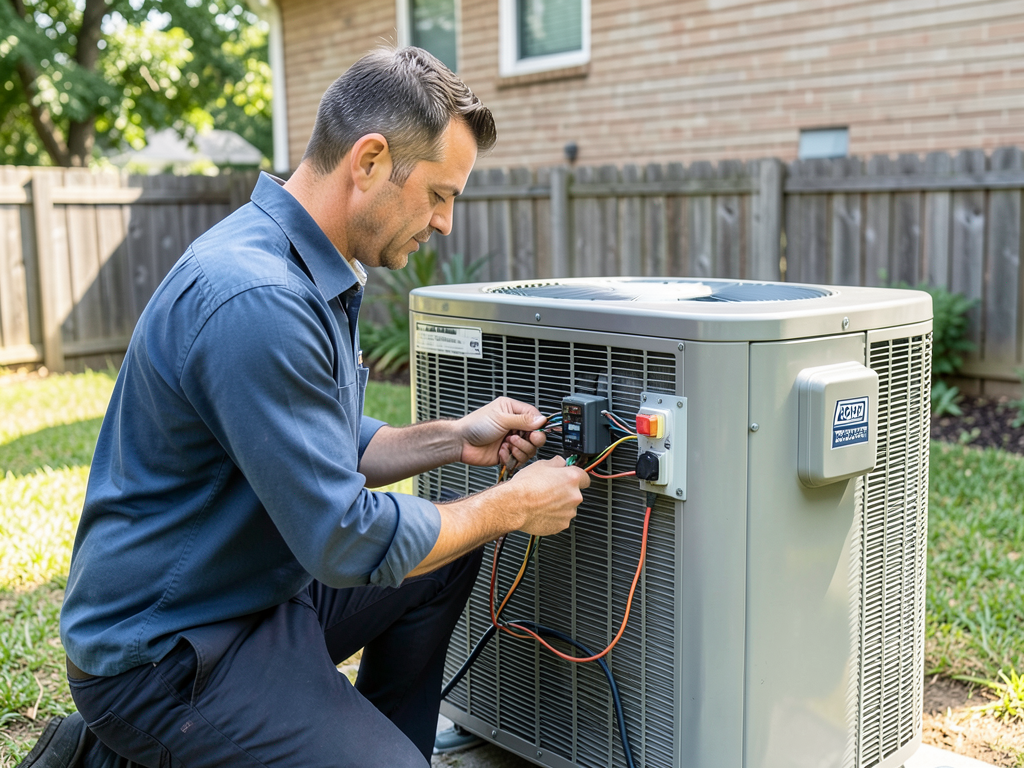
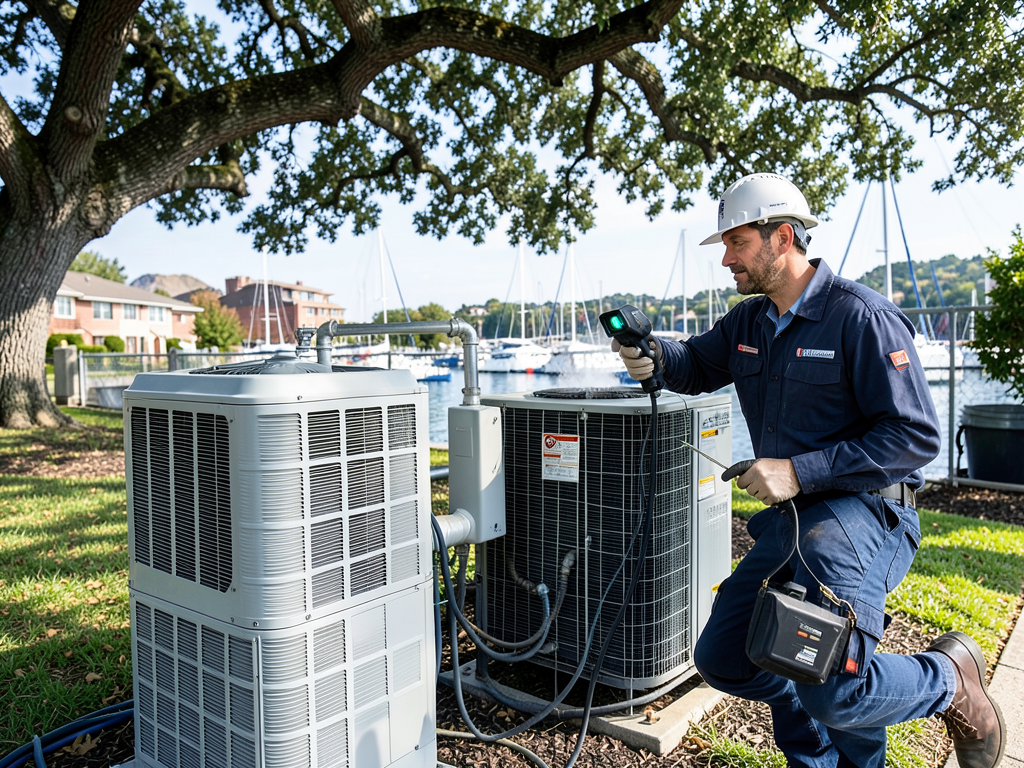
HVAC Services in The Houston Area

Titan HVAC is proud to serve Houston and the surrounding areas with expert heating and cooling solutions. Our central location allows us to respond quickly to both residential and commercial clients. Whether you need an emergency fix or scheduled service, we’re never far away. Explore our service area and see how close comfort really is. We're just a call or click away—connect with us today.

Address:
Titan HVAC Houston, 3730 Kirby DrHouston, Houston, TX, 77098

Additional Services We Offer

Our news updates

Latest Articles & News from The Blogs

Updating the HVAC in an Eastwood Brick Bungalow Without Ruining the Character Eastwood’s brick bungalows built in the 1920s and…

Updating the HVAC in an Eastwood Brick Bungalow Without Ruining the Character

Updating the HVAC in an Eastwood Brick Bungalow Without Ruining the Character Eastwood’s brick bungalows built in the 1920s and…

Clever Ways to Hide an Outdoor AC Unit Without Breaking Woodlands HOA Rules

Clever Ways to Hide an Outdoor AC Unit Without Breaking Woodlands HOA Rules Living in The Woodlands means enjoying tree-lined…

Why a Radiant Barrier Might Be the Missing Piece for Your Aliana AC System

Why a Radiant Barrier Might Be the Missing Piece for Your Aliana AC System If your Aliana home feels like…

Contact Us

Your family should not suffer through another hour of dangerous heat. Call Titan HVAC Houston now at (281) 552-7766 for immediate emergency cooling service. We answer 24/7 and dispatch technicians fast. Stop sweating and start cooling.