
Preparing Your HVAC System to Run on a Whole-Home Generator in Park Ten
Power outages in Houston can leave your home sweltering within minutes. If you live in Park Ten, a whole-home generator can keep your HVAC system running when the grid goes down. But connecting your air conditioner to a backup power source isn’t as simple as flipping a switch. The startup surge from your AC compressor can overload even a large generator if it’s not properly prepared.
Your central air conditioner needs clean, stable power with enough capacity to handle both running watts and starting amps. A typical 3-ton system might run on 3,500 watts but needs up to 10,000 watts to start. Without the right setup, you risk damaging your expensive HVAC equipment or tripping your generator. Let’s walk through what Park Ten homeowners need to know. Why Your Memorial Home Needs a High-Efficiency AC Unit Right Now.
Understanding Your AC’s Power Requirements
Every air conditioner has two power measurements you need to know. Running Load Amps (RLA) tells you how much power the unit needs to operate once it’s running. Locked Rotor Amps (LRA) shows the massive surge needed to start the compressor motor. In Houston’s heat, that startup surge happens every time your AC cycles on.
Most Park Ten homes have 2 to 5-ton units installed on concrete pads in side yards or back patios. The concrete helps protect against shifting clay soil common in this area. Your AC’s data plate shows both RLA and LRA numbers. A 3-ton unit typically needs 3,500 running watts but can spike to 9,000-11,000 starting watts.
Without proper preparation, that surge can trip a generator’s breaker or cause voltage drops that damage circuit boards. Modern high-efficiency units with inverter compressors are especially sensitive to power quality issues.
Why Soft Start Kits Matter for Park Ten Homes
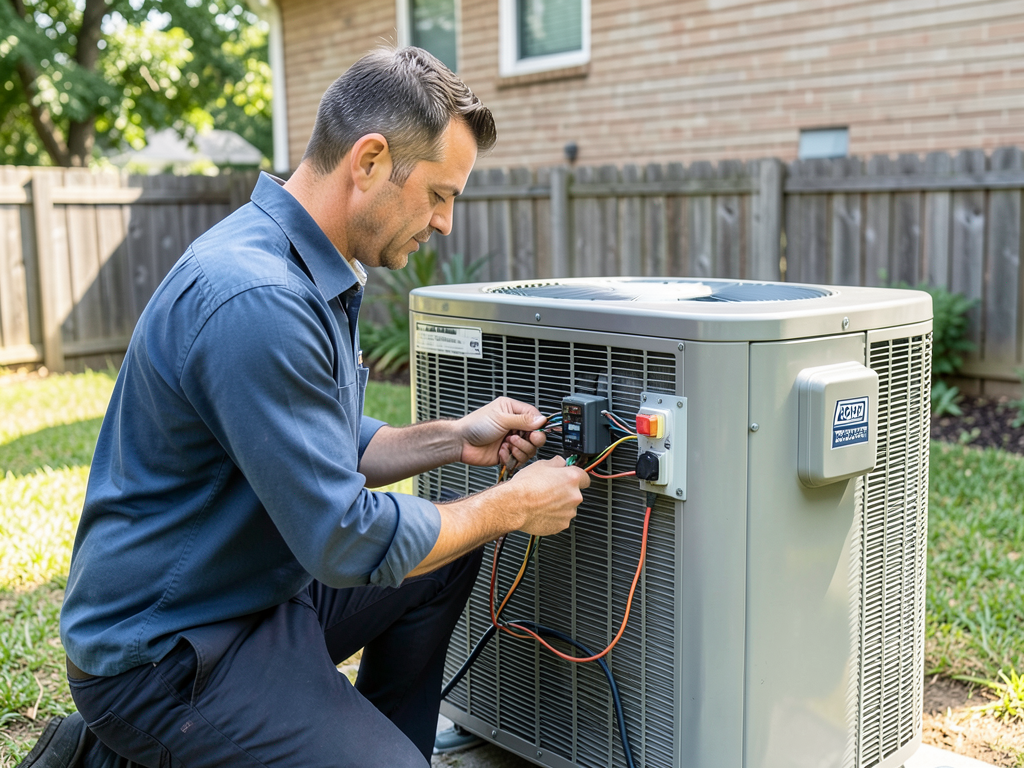
A soft start kit reduces the initial power surge when your AC starts up. Instead of drawing full LRA immediately, it ramps up gradually over several seconds. This simple addition can cut your startup power needs by 50-70%.
For Park Ten homeowners, soft start kits solve a critical problem. Many homes in this area were built between 1995 and 2010 when 14-16 SEER units became standard. These units have standard compressors that create massive startup surges. A soft start kit allows a smaller 10-12 kW generator to handle a 3-ton AC that would otherwise need a 20 kW unit.
The installation takes about 2 hours for a qualified technician. The kit mounts near your outdoor condenser and intercepts the power supply to the compressor. It’s particularly valuable in Park Ten where homes often have limited outdoor space for large generators. What a New AC Installation Actually Costs in The Woodlands.
Portable vs. Whole-Home Standby Generators
Portable generators offer flexibility but require manual setup during an outage. You’ll need heavy-duty extension cords, proper grounding, and safe outdoor placement at least 20 feet from windows. The setup process takes 15-30 minutes in the heat and humidity Park Ten experiences.
Whole-home standby generators connect permanently to your electrical system. They run on natural gas or propane and start automatically within 30 seconds of a power loss. For Park Ten’s hurricane-prone location, this automatic operation provides crucial peace of mind.
Natural gas standby units eliminate fuel storage concerns but depend on gas line pressure during widespread outages. Propane models offer independence but require tank monitoring. Both types need proper transfer switches to isolate your home from the grid safely.
Transfer Switches and Code Compliance
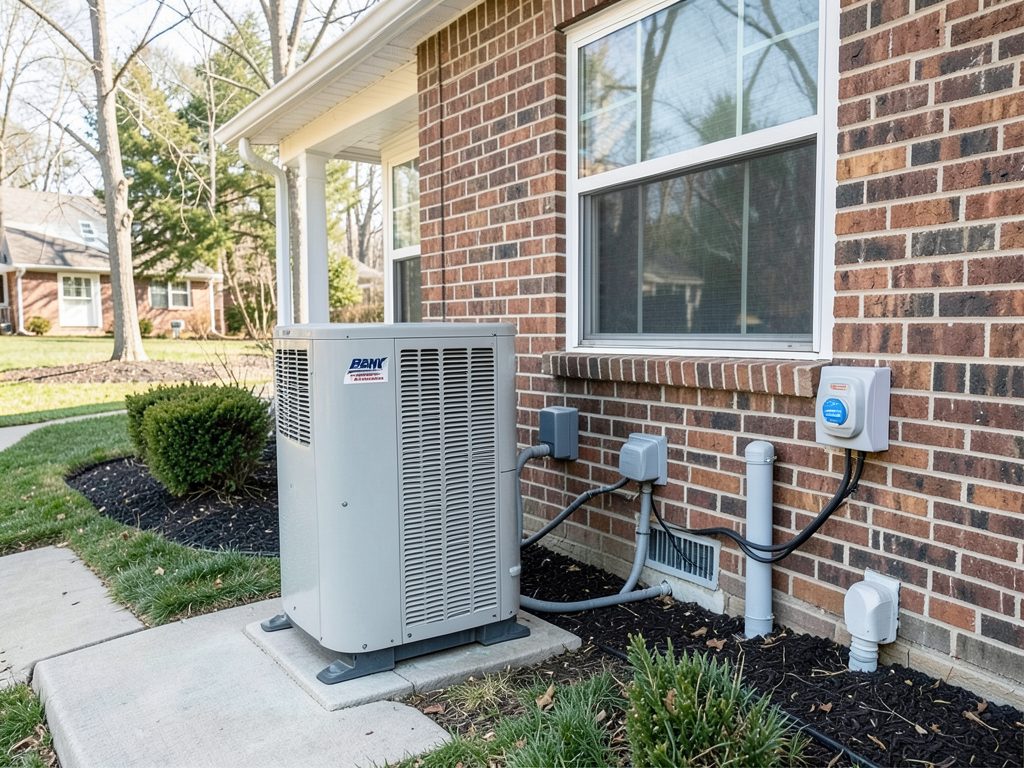
A transfer switch is mandatory for connecting any generator to your home’s electrical system. It prevents backfeeding power onto utility lines, which can electrocute utility workers and damage equipment. Houston city code requires UL-listed transfer switches installed by licensed electricians.
For HVAC applications, you need either a manual transfer switch with proper breaker interlocking or an automatic transfer switch (ATS). The ATS senses power loss and switches your home to generator power without intervention. This is crucial for Park Ten residents who may be away during storm season.
According to NEC Article 702, generator installations must include proper grounding, overcurrent protection, and clear labeling. The transfer switch must be accessible and clearly indicate when it’s in generator position. These requirements protect your family and ensure code compliance.
Managing Houston Humidity During Outages
Running your AC on a generator isn’t just about temperature. Houston’s 80%+ humidity creates serious mold and mildew risks when power fails. Your AC removes moisture from the air while cooling. Without it, indoor humidity can reach 90% within 24 hours.
Even with generator power, you need to manage humidity carefully. Set your thermostat to 78-80°F rather than the usual 72-74°F. This reduces the cooling load while still removing moisture. Run ceiling fans to circulate air and help the AC work more efficiently.
Many Park Ten homes have open floor plans that make humidity control harder. Consider closing interior doors to create smaller cooling zones. Focus on bedrooms and living areas first, then expand to the rest of the house as generator capacity allows.
Maintenance for Generator-Ready HVAC Systems
Preparing your HVAC for generator use requires ongoing maintenance. Clean condenser coils improve efficiency and reduce power draw. Dirty coils can increase power consumption by 30%, potentially overloading your generator.
Check your refrigerant charge annually. Low refrigerant makes your compressor work harder and draw more power. A qualified technician can measure superheat and subcooling to verify proper charge levels.
Replace air filters monthly during heavy use seasons. Restricted airflow forces your system to run longer cycles, increasing total power consumption. Consider high-efficiency filters that trap more particles without restricting flow.
Safety Considerations for Park Ten Residents
Carbon monoxide from portable generators kills dozens annually. Never operate a generator in a garage, carport, or enclosed space. The exhaust must vent away from windows, doors, and air intakes. In Park Ten’s dense residential layout, proper placement is critical.
Install battery-powered carbon monoxide detectors on every level of your home. Test them monthly and replace batteries annually. CO can seep through walls and windows, especially during calm weather common in Houston.
Keep generator fuel in approved containers away from living spaces. Gasoline vapors are heavier than air and can travel along the ground to ignition sources. Store propane tanks upright in well-ventilated areas.
Cost Considerations for Park Ten Homeowners
Preparing your HVAC for generator use involves several cost factors. A soft start kit costs $300-500 installed. Transfer switches range from $500-1,500 depending on capacity and features. Whole-home standby generators start around $4,000 for basic 10 kW units.
Installation costs vary based on your home’s electrical configuration and fuel source. Homes with natural gas service typically have lower installation costs than those needing propane tanks. Park Ten’s mix of 1990s-2000s construction means electrical panels vary widely in capacity.
Factor in annual maintenance costs of $200-400 for standby generators. This includes oil changes, filter replacements, and system testing. Some manufacturers offer maintenance plans that spread these costs over monthly payments.
Professional Installation Requirements
Connecting HVAC to a generator requires licensed professionals. In Texas, HVAC work needs a licensed contractor with TDLR registration. Electrical connections require a master electrician licensed in Harris County.
Look for contractors with experience in generator applications specifically. Not all HVAC technicians understand the nuances of power quality and startup surges. Ask about their experience with soft start installations and generator load calculations.
Verify insurance coverage and get written warranties on all work. Generator connections affect your home’s electrical system, which could impact insurance claims if done improperly. Professional installation protects your investment and your family’s safety.
Testing Your Generator-HVAC Setup
Don’t wait for a hurricane to discover problems. Test your generator-HVAC setup monthly during storm season. Run your generator for 30 minutes with your AC connected. Check for proper cooling, unusual noises, or tripped breakers.
Monitor voltage and frequency with a plug-in meter. Your AC needs 208-230 volts at 60 Hz ± 3 Hz. Voltage drops below 200 volts or frequency variations beyond 3 Hz can damage sensitive electronics.
Keep a maintenance log of all tests, repairs, and fuel usage. Note any changes in performance or unusual sounds. This information helps technicians diagnose problems quickly when you need emergency service. Finding Emergency AC Repair in Sugar Land Without Getting Ripped Off.
Alternative Cooling Strategies
Even with generator backup, consider alternative cooling methods. Battery-powered fans can make rooms feel 4-8 degrees cooler through air movement. They use minimal power and can run for days on a single charge.
Reflective window films reduce solar heat gain by up to 70%. Install them on south and west-facing windows where Houston’s afternoon sun is most intense. They work 24/7, reducing your AC load even when power is available.
Consider adding attic insulation if your home was built before 2010. Many Park Ten homes have 4-6 inches of insulation when 12-15 inches is recommended for our climate. Proper insulation reduces the cooling load on your generator.
Making the Right Choice for Your Home
The best generator-HVAC setup depends on your specific needs. If you’re away from home frequently, an automatic standby system provides the most protection. If you’re home during outages and comfortable with manual setup, a portable generator with proper accessories might suffice.
Consider your home’s size, insulation quality, and typical occupancy. A retired couple might need less cooling capacity than a family with young children. Your generator should handle your essential loads plus 20-30% buffer for unexpected needs.
Don’t forget about other critical loads. Sump pumps, refrigerators, and medical equipment might compete with your AC for generator power. Plan your load priorities before an outage occurs.
Emergency Contacts and Resources
Keep emergency contact numbers readily available. Your HVAC contractor, electrician, and generator service provider should be on speed dial. Many Park Ten residents find local, established companies provide faster response during widespread outages. Emergency 24-Hour AC Service for Families in Katy.
Know the location of your electrical panel, transfer switch, and generator connection points. In an emergency, you might need to explain your setup to a technician over the phone. Clear labeling helps everyone work more efficiently. Emergency Boiler Repair.
Consider joining neighborhood social media groups focused on emergency preparedness. Park Ten residents often share generator resources and information during extended outages. Community connections can make a big difference during prolonged power failures.
Frequently Asked Questions
Can I run my AC on a small portable generator?
Maybe, but you’ll likely need a soft start kit first. Without one, the startup surge will trip most portable generators. A 2,000-watt generator might run a small window unit but can’t handle central AC without additional equipment.
How long will a whole-home generator run on natural gas?
Most natural gas standby generators can run indefinitely as long as gas service remains operational. During major hurricanes, gas pressure might fluctuate. A 10 kW unit typically uses 100-150 cubic feet of gas per hour under full load.
Will my AC warranty be affected by generator use?
Using a properly installed generator with correct voltage and frequency shouldn’t void your warranty. However, damage from improper generator connections or power quality issues isn’t covered. Always use manufacturer-approved accessories and professional installation.
What size generator do I need for a 3-ton AC unit?
With a soft start kit, a 10-12 kW generator can handle a 3-ton unit. Without soft start, you’d need 18-20 kW to manage the startup surge. The soft start kit investment often pays for itself in generator size savings.
How much does it cost to add a soft start kit?
Professional installation of a soft start kit typically costs $300-500. The kit itself costs $150-250. This investment can allow you to use a smaller, less expensive generator while protecting your AC from power quality issues.
- Assess Your AC’s Power Requirements
Check your unit’s data plate for RLA and LRA numbers. Calculate total running and starting watts needed.
- Install a Soft Start Kit
Have a licensed technician install a soft start kit to reduce startup surge by 50-70%.
- Choose the Right Transfer Switch
Select either a manual transfer switch with proper interlocking or an automatic transfer switch based on your needs.
- Test the Complete System
Run a full test with your generator connected to verify proper operation and voltage stability.
Take Action Before the Next Outage
Don’t wait for hurricane season to prepare your HVAC for generator use. The time to act is now, before the next storm threatens Houston’s power grid. A few hours of preparation can save you thousands in potential damage and keep your family comfortable during extended outages.
Call (281) 552-7766 today to schedule your HVAC generator readiness assessment. Our licensed technicians will evaluate your current system, recommend the right soft start kit, and ensure your setup meets all local codes. We serve Park Ten and all surrounding Houston neighborhoods with emergency and scheduled services.
Pick up the phone and call (281) 552-7766 before the next storm hits. Your comfort and safety during Houston’s unpredictable weather depend on proper preparation. Let our experienced team help you stay cool and protected no matter what Mother Nature sends our way. For more information, visit U.S. Department of Energy energy assessments. For more information, visit National Association of Certified Home Inspectors generator safety guide.
{
“@context”: “https://schema.org”,
“@type”: “BlogPosting”,
“headline”: “Preparing Your HVAC System to Run on a Whole-Home Generator in Park Ten”,
“description”: “Learn how to safely power your HVAC system during Houston outages. Find out about sizing, soft start kits, and transfer switches for Park Ten homes.”,
“wordCount”: 2209,
“datePublished”: “2026-06-15T06:54:00.000Z”,
“dateModified”: “2026-06-15T06:54:00.000Z”,
“inLanguage”: “en-US”,
“mainEntityOfPage”: {
“@type”: “WebPage”,
“@id”: “https://titanhvachouston.com”
},
“publisher”: {
“@type”: “LocalBusiness”,
“name”: “Titan HVAC Houston”,
“url”: “https://titanhvachouston.com”
},
“author”: {
“@type”: “Organization”,
“name”: “Titan HVAC Houston”,
“url”: “https://titanhvachouston.com”
},
“image”: {
“@type”: “ImageObject”,
“url”: “https://titanhvachouston.com/wp-content/uploads/2026/03/preparing-your-hvac-system-to-run-on-a-whole-home-1.png”
}
}
{
“@context”: “https://schema.org”,
“@type”: “HVACBusiness”,
“name”: “Titan HVAC Houston”,
“url”: “https://titanhvachouston.com”,
“address”: {
“@type”: “PostalAddress”,
“addressLocality”: “Houston”
},
“areaServed”: {
“@type”: “City”,
“name”: “Houston”
}
}
{
“@context”: “https://schema.org”,
“@type”: “FAQPage”,
“mainEntity”: [
{
“@type”: “Question”,
“name”: “Can I run my AC on a small portable generator?”,
“acceptedAnswer”: {
“@type”: “Answer”,
“text”: “Maybe, but you’ll likely need a soft start kit first. Without one, the startup surge will trip most portable generators. A 2,000-watt generator might run a small window unit but can’t handle central AC without additional equipment.”
}
},
{
“@type”: “Question”,
“name”: “How long will a whole-home generator run on natural gas?”,
“acceptedAnswer”: {
“@type”: “Answer”,
“text”: “Most natural gas standby generators can run indefinitely as long as gas service remains operational. During major hurricanes, gas pressure might fluctuate. A 10 kW unit typically uses 100-150 cubic feet of gas per hour under full load.”
}
},
{
“@type”: “Question”,
“name”: “Will my AC warranty be affected by generator use?”,
“acceptedAnswer”: {
“@type”: “Answer”,
“text”: “Using a properly installed generator with correct voltage and frequency shouldn’t void your warranty. However, damage from improper generator connections or power quality issues isn’t covered. Always use manufacturer-approved accessories and professional installation.”
}
},
{
“@type”: “Question”,
“name”: “What size generator do I need for a 3-ton AC unit?”,
“acceptedAnswer”: {
“@type”: “Answer”,
“text”: “With a soft start kit, a 10-12 kW generator can handle a 3-ton unit. Without soft start, you’d need 18-20 kW to manage the startup surge. The soft start kit investment often pays for itself in generator size savings.”
}
},
{
“@type”: “Question”,
“name”: “How much does it cost to add a soft start kit?”,
“acceptedAnswer”: {
“@type”: “Answer”,
“text”: “Professional installation of a soft start kit typically costs $300-500. The kit itself costs $150-250. This investment can allow you to use a smaller, less expensive generator while protecting your AC from power quality issues.”
}
}
]
}
{
“@context”: “https://schema.org”,
“@type”: “HowTo”,
“name”: “How to Prepare Your HVAC for Generator Use”,
“step”: [
{
“@type”: “HowToStep”,
“position”: 1,
“name”: “Assess Your AC’s Power Requirements”,
“text”: “Check your unit’s data plate for RLA and LRA numbers. Calculate total running and starting watts needed.”
},
{
“@type”: “HowToStep”,
“position”: 2,
“name”: “Install a Soft Start Kit”,
“text”: “Have a licensed technician install a soft start kit to reduce startup surge by 50-70%.”
},
{
“@type”: “HowToStep”,
“position”: 3,
“name”: “Choose the Right Transfer Switch”,
“text”: “Select either a manual transfer switch with proper interlocking or an automatic transfer switch based on your needs.”
},
{
“@type”: “HowToStep”,
“position”: 4,
“name”: “Test the Complete System”,
“text”: “Run a full test with your generator connected to verify proper operation and voltage stability.”
}
],
“image”: “https://titanhvachouston.com/wp-content/uploads/2026/03/preparing-your-hvac-system-to-run-on-a-whole-home-1.png”
}
{
“@context”: “https://schema.org”,
“@type”: “BreadcrumbList”,
“itemListElement”: [
{
“@type”: “ListItem”,
“position”: 1,
“name”: “Home”,
“item”: “https://titanhvachouston.com”
},
{
“@type”: “ListItem”,
“position”: 2,
“name”: “Blog”,
“item”: “https://titanhvachouston.com/blog”
},
{
“@type”: “ListItem”,
“position”: 3,
“name”: “Preparing Your HVAC System to Run on a Whole-Home Generator in Park Ten”
}
]
}
{
“@context”: “https://schema.org”,
“@type”: “Service”,
“serviceType”: “HVAC”,
“provider”: {
“@type”: “LocalBusiness”,
“name”: “Titan HVAC Houston”,
“url”: “https://titanhvachouston.com”
},
“areaServed”: {
“@type”: “City”,
“name”: “Houston”
},
“description”: “Learn how to safely power your HVAC system during Houston outages. Find out about sizing, soft start kits, and transfer switches for Park Ten homes.”
}