




Importance of Air Filter Changes in Houston – Protect Your System from Gulf Coast Humidity and Airborne Contaminants

Houston's coastal climate drives higher particulate infiltration and moisture-related efficiency loss. Regular air filter replacement prevents compressor strain, reduces energy waste, and maintains indoor air quality in one of the nation's most challenging HVAC environments.

Slider Image 1
Slider Image 2
Slider Image 3
Slider Image 4
Slider Image 5
Slider Image 7
Slider Image 8
Slider Image 9
Slider Image 10
Slider Image 11

Why Houston's Climate Makes Air Filter Maintenance Critical

Houston sits 50 feet above sea level with average humidity levels hovering between 75 and 90 percent year-round. This Gulf Coast moisture pulls pollen, mold spores, industrial particulates from the Ship Channel, and vehicle emissions into your home. Your HVAC system processes this contaminated air every time it cycles.

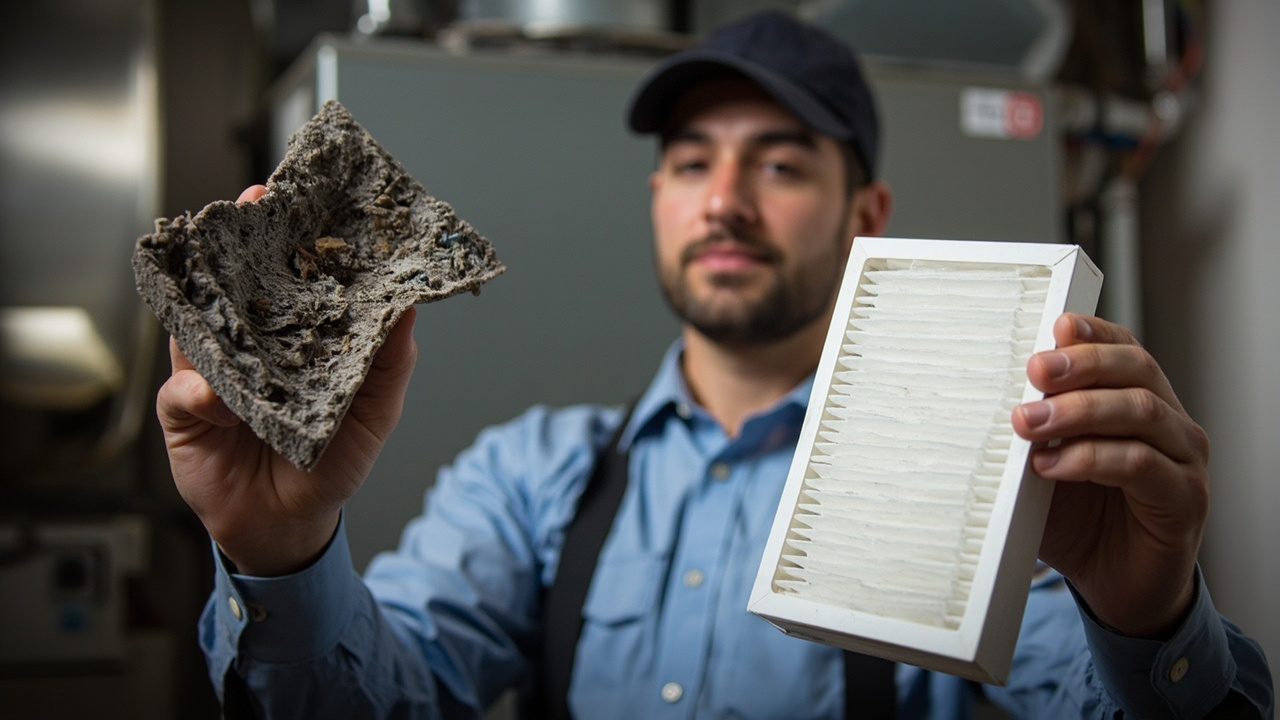
A clogged filter forces your blower motor to work harder. The compressor compensates for restricted airflow by running longer cycles. You pay more in utility costs while shortening the lifespan of expensive components. The reasons for changing AC filters go beyond comfort. They include system longevity and indoor health.

Dirty filters cannot trap new particles. Dust accumulates on evaporator coils, reducing heat exchange efficiency. Mold grows in damp environments when airflow drops. Residents in Midtown, the Heights, and Clear Lake see this pattern repeat every cooling season. The impact of dirty air filters compounds quickly in Houston's humid conditions.

Your system moves thousands of cubic feet of air daily. Without proper filtration, that air carries allergens, bacteria, and chemical off-gassing from furniture and building materials. Children, elderly family members, and anyone with respiratory conditions feel the effects first. The significance of air filter replacement extends to health outcomes, not just equipment performance.

Ignoring filter changes creates a cascade. Reduced airflow increases static pressure. Higher pressure stresses ductwork seals. Conditioned air leaks into attics and wall cavities. You lose money on wasted cooling while your system degrades faster than necessary.

Why Houston's Climate Makes Air Filter Maintenance Critical
How Regular Filter Changes Protect Your HVAC Investment

How Regular Filter Changes Protect Your HVAC Investment

The benefits of changing air filters center on three core areas: efficiency, air quality, and component protection. Each filter change removes accumulated particulate load before it migrates downstream into your system's mechanical components.

Start with the blower assembly. When a filter reaches capacity, the blower motor draws higher amperage to maintain design airflow. This increased electrical load generates excess heat. Motor windings degrade faster under sustained thermal stress. A motor replacement costs significantly more than a year's worth of filter changes.

Next, consider the evaporator coil. This component removes heat and humidity from your indoor air. A dirty filter allows fine dust to coat the coil fins. Reduced surface area means diminished heat transfer. Your system runs longer to achieve thermostat setpoints. Longer run times mean higher energy consumption and increased wear on the compressor.

Refrigerant performance depends on precise airflow across the evaporator. When airflow drops below design specifications, the coil temperature falls. Ice forms on the coil surface. The system loses cooling capacity entirely. You end up calling for emergency service on a 98-degree afternoon because a filter change was deferred.

Why replace HVAC filters on schedule? Because controlled maintenance costs less than reactive repairs. A fouled coil requires chemical cleaning or replacement. A failed blower motor means no airflow until the part arrives and a technician installs it. Both scenarios create discomfort and expense that a simple filter change would have prevented.

Titan HVAC Houston sees these failures regularly during peak cooling season. Homeowners assume their system broke randomly. The root cause traces back to months of neglected filtration. The investment in regular filter changes protects thousands of dollars in equipment while maintaining the indoor environment your family expects.

What Happens During a Filter Inspection and Replacement

Importance of Air Filter Changes in Houston – Protect Your System from Gulf Coast Humidity and Airborne Contaminants
01

System Access and Inspection

We locate your filter housing, whether it sits in a return grille, at the air handler, or in a dedicated filter rack. The existing filter comes out for visual inspection. We check for gaps around the frame that allow bypass airflow. We note the MERV rating and filter dimensions. This step confirms whether you have been using the correct filter type for your system and air quality needs.
02

Filter Housing Cleaning

Dust and debris accumulate in the filter track and housing over time. We vacuum this area before installing the new filter. Any gaps or damaged gaskets get noted. Proper sealing ensures all system airflow passes through the filter media rather than bypassing around the edges. This attention to detail maintains filtration effectiveness and protects downstream components from contamination.
03

Installation and Verification

The new filter goes in with correct airflow orientation. We verify the seal around the frame. The system runs through a full cycle while we monitor static pressure and airflow at the registers. You receive documentation of the filter change date and recommendations for the next replacement interval based on your system usage and local air quality conditions.

Why Houston Homeowners Trust Titan HVAC Houston for Filter Maintenance

We operate in an environment where cooling systems run eight to ten months annually. That extended runtime accelerates filter saturation compared to northern climates. Our technicians understand how Houston's humidity, industrial air quality near the petrochemical corridor, and seasonal pollen loads affect filtration requirements.

A homeowner in West University faces different air quality challenges than someone in Kingwood or League City. Distance from industrial zones, proximity to bayous, and vegetation density all influence how quickly filters load with particulates. We tailor filter recommendations to your specific neighborhood and home characteristics.

Many providers treat filter changes as an afterthought. They sell you the cheapest option or whatever they have on the truck. We stock filters across the MERV spectrum because different homes need different filtration levels. A family with asthma requires higher filtration than a household with no respiratory concerns. The wrong filter either fails to protect health or restricts airflow excessively.

Houston's building codes require specific air exchange rates for residential HVAC systems. We verify that filter selection maintains these requirements. An overly restrictive filter can reduce airflow below code minimums, creating humidity problems and comfort complaints. Proper filter selection balances air cleaning with system performance.

Our clients stay on consistent maintenance schedules. We track filter change dates and send reminders. This proactive approach prevents the forgotten filter scenario that leads to compressor failure during July. You get reliable performance because filtration stays ahead of system degradation.

Titan HVAC Houston built our reputation on preventing failures rather than profiting from emergency repairs. Regular filter maintenance represents the foundation of that preventive approach. You invest small amounts consistently to avoid large expenses later.

What You Can Expect from Professional Filter Service

Rapid Response and Scheduling Flexibility

We schedule filter changes around your availability, including evenings and weekends. Service visits typically take 15 to 30 minutes depending on system accessibility and whether we identify additional maintenance needs. Our technicians arrive with common filter sizes and MERV ratings, reducing delays from parts procurement. For customers on maintenance plans, we coordinate filter changes with seasonal tune-ups to minimize disruption and maximize efficiency.

Comprehensive System Assessment

Every filter change includes a visual inspection of accessible system components. We check for signs of airflow restriction, abnormal condensation, or component wear. This quick assessment catches developing problems before they become emergencies. You receive verbal feedback on system condition and written recommendations if we identify concerns. This transparency helps you plan maintenance budgets and avoid surprise failures during peak cooling season.

Improved Indoor Air Quality and Efficiency

A fresh filter immediately improves airflow and filtration effectiveness. You will notice stronger air movement from registers and often detect reduced dust accumulation on furniture. Energy consumption drops as your system achieves setpoints without extended runtime. These improvements compound over time. Consistent filter maintenance keeps your system operating at design efficiency rather than gradually degrading toward failure. The result is lower utility bills and extended equipment lifespan.

Ongoing Maintenance Tracking and Support

We document every filter change in your service history. This record helps identify patterns in filter loading rates and system performance. If you have questions about indoor air quality or unusual dust accumulation, this historical data provides context for troubleshooting. We send reminders when the next filter change approaches based on your system type and usage patterns. This tracking removes the burden of remembering maintenance schedules while ensuring your system receives consistent care.

Frequently Asked Questions

You Have Questions,
We Have Answers

Is changing the air filter important? +

Changing your air filter is critical for your HVAC system's health and your indoor air quality. The filter traps dust, pollen, pet dander, and airborne contaminants before they circulate through your home. In Houston's humid, high-pollen environment, filters clog faster than in drier climates. A dirty filter restricts airflow, forcing your AC to work harder, which increases energy bills and accelerates wear on the blower motor and compressor. Regular filter changes protect your equipment, improve cooling efficiency, and reduce allergens. This simple maintenance task prevents expensive repairs and extends your system's lifespan.

What can happen if I don't change my air filter? +

Skipping filter changes leads to multiple problems. First, your system struggles to pull air through the clogged filter, reducing cooling capacity and spiking energy costs. The blower motor works overtime, shortening its life. Dust bypasses the saturated filter and coats the evaporator coil, reducing heat transfer and potentially freezing the coil. In Houston's humidity, a dirty filter traps moisture, promoting mold growth inside ductwork. You'll notice weaker airflow, uneven temperatures, longer run times, and higher electric bills. Severe neglect can cause compressor failure, a repair costing thousands. Regular changes prevent all these issues.

What happens if you haven't changed your air filter in 2 years? +

Two years without a filter change causes serious damage. The filter becomes completely blocked, forcing your AC to run constantly while barely cooling. The blower motor may burn out from overwork. Dust accumulation on the evaporator coil drastically reduces efficiency and can cause freezing, leading to water damage. Houston's airborne mold spores and humidity worsen the problem, creating biological growth inside the system. You'll see dramatically higher energy bills, frequent cycling, poor indoor air quality, and potential system failure. At this point, you likely need professional duct cleaning and a full system inspection beyond just replacing the filter.

Does changing the air filter improve air quality? +

Absolutely. A clean filter is your first defense against indoor air pollution. It captures dust, pollen, mold spores, pet dander, and other particulates before they circulate through your home. In Houston, where oak pollen counts spike in spring and humidity encourages mold, a fresh filter significantly reduces allergens. Higher MERV-rated filters capture smaller particles, improving air quality further. However, the filter only works when it's not saturated. A clogged filter stops trapping contaminants and may release trapped particles back into your air. Replace filters every 1-3 months depending on household conditions to maintain clean indoor air.

Can I just clean my air filter instead of replacing it? +

Most residential filters are disposable and should not be cleaned. Attempting to vacuum or wash a pleated disposable filter damages the fibers, creating gaps that allow contaminants through. You'll also never remove embedded particles fully. Some systems use washable, reusable filters, which can be rinsed and dried completely before reinstalling. However, these typically have lower filtration efficiency. In Houston's dusty, humid conditions, disposable pleated filters with MERV 8-11 ratings provide better protection and easier maintenance. Check your system documentation to confirm filter type, but plan to replace standard filters rather than clean them for best performance and air quality.

What is the life expectancy of an air filter? +

Standard 1-inch pleated filters last 1-3 months depending on conditions. Homes with pets, smokers, or allergy sufferers need monthly changes. Houston's high pollen counts in spring and constant AC use in summer accelerate filter saturation. Thicker 4-5 inch media filters last 6-12 months due to greater surface area. Check your filter monthly by holding it to light. If you cannot see through it, replace it immediately. Homes near construction sites, heavily wooded areas, or with poor outdoor air quality need more frequent changes. Write the installation date on each filter and set phone reminders to maintain your schedule.

What is the $5000 AC rule? +

The $5,000 rule is a replacement guideline for aging AC systems. Multiply the repair cost by your system's age in years. If the result exceeds $5,000, replacement usually makes more financial sense than repair. For example, a $500 repair on a 12-year-old unit equals $6,000, suggesting replacement. This rule accounts for efficiency improvements in newer systems and the likelihood of additional failures in older equipment. In Houston's brutal summer heat, system reliability matters. This formula helps homeowners make rational decisions instead of emotional ones when facing expensive repairs on aging equipment. Consult an HVAC professional for personalized guidance.

Will I notice a difference with a new air filter? +

You will notice immediate improvements with a fresh filter. Airflow from vents increases noticeably, and rooms cool faster. The system runs shorter cycles because it moves air efficiently again. You'll hear less strain from the blower motor. Energy consumption drops, though you'll see this reflected in next month's electric bill. Indoor air feels fresher, and allergy sufferers often experience relief within days. In Houston's cooling season, the temperature difference between a clogged and clean filter can mean the difference between comfortable and muggy. The change is particularly dramatic if you've gone several months without replacing the filter.

Will my AC be ok without a filter? +

Never run your AC without a filter, even temporarily. The filter protects the internal components from dust and debris. Without it, dirt coats the evaporator coil within days, reducing efficiency and potentially causing the coil to freeze. Dust enters the blower assembly, increasing wear and noise. In Houston's environment, you'll also pull in pollen, mold spores, and outdoor pollutants directly into your ductwork and living spaces. Some systems have safety switches that shut down if they detect no filter. Running filterless voids most warranties and leads to expensive repairs. Always keep spare filters and replace them immediately when due.

What are the symptoms of a dirty air filter? +

A dirty filter creates multiple warning signs. You'll notice weak airflow from vents and uneven cooling between rooms. The system runs constantly without reaching the set temperature. Energy bills increase noticeably. You may see dust accumulation on furniture faster than normal or experience worsening allergies. The area around return vents shows visible dust buildup. You might hear the blower motor straining or whistling sounds from restricted airflow. In Houston homes, increased humidity indoors despite the AC running signals poor airflow from a clogged filter. If you pull the filter and cannot see light through it, replace it immediately to avoid system damage.

How Houston's Ship Channel and Coastal Location Accelerate Filter Contamination

Industrial activity along the Houston Ship Channel releases particulates that travel inland on prevailing winds. Combine this with pollen from live oak, pine, and ragweed, plus salt-laden moisture from Galveston Bay, and you have an aggressive filtration challenge. Homes east of Highway 59 and south of I-10 experience heavier particulate loading. The significance of air filter replacement increases when your home sits in these high-contamination zones. Filters saturate faster here than in suburban areas farther from industrial and coastal influences.

Houston's HVAC contractors see the full range of filtration failures. We know which neighborhoods face mold problems from humidity, which areas deal with construction dust from ongoing development, and where seasonal pollen overwhelms standard filters. This local knowledge guides our filter recommendations. A MERV 8 filter works in some homes. Others need MERV 11 or higher to maintain acceptable indoor air quality. Generic national advice does not account for Houston's unique combination of industrial activity, humidity, and year-round cooling demand.
HVAC Services in The Houston Area

Titan HVAC is proud to serve Houston and the surrounding areas with expert heating and cooling solutions. Our central location allows us to respond quickly to both residential and commercial clients. Whether you need an emergency fix or scheduled service, we’re never far away. Explore our service area and see how close comfort really is. We're just a call or click away—connect with us today.

Address:
Titan HVAC Houston, 3730 Kirby DrHouston, Houston, TX, 77098

Additional Services We Offer

Our news updates

Latest Articles & News from The Blogs

Updating the HVAC in an Eastwood Brick Bungalow Without Ruining the Character Eastwood’s brick bungalows built in the 1920s and…

Updating the HVAC in an Eastwood Brick Bungalow Without Ruining the Character

Updating the HVAC in an Eastwood Brick Bungalow Without Ruining the Character Eastwood’s brick bungalows built in the 1920s and…

Clever Ways to Hide an Outdoor AC Unit Without Breaking Woodlands HOA Rules

Clever Ways to Hide an Outdoor AC Unit Without Breaking Woodlands HOA Rules Living in The Woodlands means enjoying tree-lined…

Why a Radiant Barrier Might Be the Missing Piece for Your Aliana AC System

Why a Radiant Barrier Might Be the Missing Piece for Your Aliana AC System If your Aliana home feels like…

Contact Us

Your system needs consistent filtration to survive Houston's demanding climate. Call Titan HVAC Houston at (281) 552-7766 to schedule a filter inspection and replacement. We will evaluate your current filter setup and recommend the optimal maintenance interval for your home.