
Fighting Constant Dust in Your Pasadena Home Through Better Filtration
Living near Houston’s industrial corridors means dealing with more than just summer heat. The combination of coastal humidity, industrial particulates, and older Pasadena homes creates a perfect storm for dust accumulation. If you’re constantly cleaning surfaces only to see dust return within hours your HVAC system might be working against you rather than for you.. Read more about Industrial Strength Air Purifiers for Residential Homes in Texas City.
Constant dust isn’t just a cleaning nuisance. It affects your indoor air quality triggers allergies and can even damage sensitive electronics and HVAC components over time. The good news is that most dust problems have identifiable causes and practical solutions that go beyond simply buying more cleaning supplies.. Read more about Controlling Indoor Pollen and Springtime Allergies in Southside Place.
Why Pasadena Homes Battle Excessive Dust
Pasadena’s location near the Houston Ship Channel and industrial areas means outdoor air carries more particulates than many other Houston suburbs. These microscopic particles find their way into homes through various pathways with your HVAC system being either your best defense or your biggest contributor to the problem.. Read more about How to Block Industrial Odors and Chemical Pollutants from Entering Your La Porte Home.
The region’s high humidity often exceeding 80% during summer months creates another layer of complexity. Moist air causes dust particles to clump together and stick to surfaces more aggressively. It also creates ideal conditions for dust mites microscopic creatures that thrive in humid environments and produce allergens that become airborne with normal air circulation.
Many Pasadena homes were built during the 1960s through 1980s construction boom. These homes often have aging ductwork with gaps disconnected joints or deteriorating insulation that allows attic dust and insulation particles to be pulled into your living spaces. The return air system designed to pull air back to your HVAC unit can become a dust highway if not properly sealed.
Pasadena’s unique soil composition consisting of clay-rich Beaumont Formation combined with the area’s high water table creates foundation movement that can crack ductwork and create gaps in walls. These gaps become entry points for dust infiltration. The Texas Property Code Section 5.043 requires proper sealing of all HVAC penetrations through exterior walls to prevent air and dust infiltration. Texas Commission on Environmental Quality.
The HVAC Connection: How Your AC System Controls (or Creates) Dust
Your HVAC system is the lungs of your home constantly circulating air through every room. When properly maintained it filters out dust and allergens. When compromised it becomes a dust distribution system that never stops running.
The Role of MERV Ratings in Dust Control
Standard HVAC filters come in various efficiency levels measured by MERV (Minimum Efficiency Reporting Value) ratings. Most builders install MERV 4-6 filters which capture only the largest particles. For homes battling constant dust upgrading to MERV 11-13 filters can make a dramatic difference.
MERV 8 filters capture particles as small as 3 microns including dust mite debris mold spores and pollen. MERV 11 filters go further capturing particles down to 1 micron including pet dander and fine dust. MERV 13 filters often used in hospitals capture particles as small as 0.3 microns including bacteria and smoke.
However higher MERV ratings aren’t always better for every system. Filters that are too dense can restrict airflow causing your HVAC system to work harder and potentially leading to frozen coils or system failure. A NATE-certified technician can test your system’s static pressure to determine the optimal filter rating for your specific equipment.
The Danger of Leaky Return Ducts Pulling in Attic Insulation
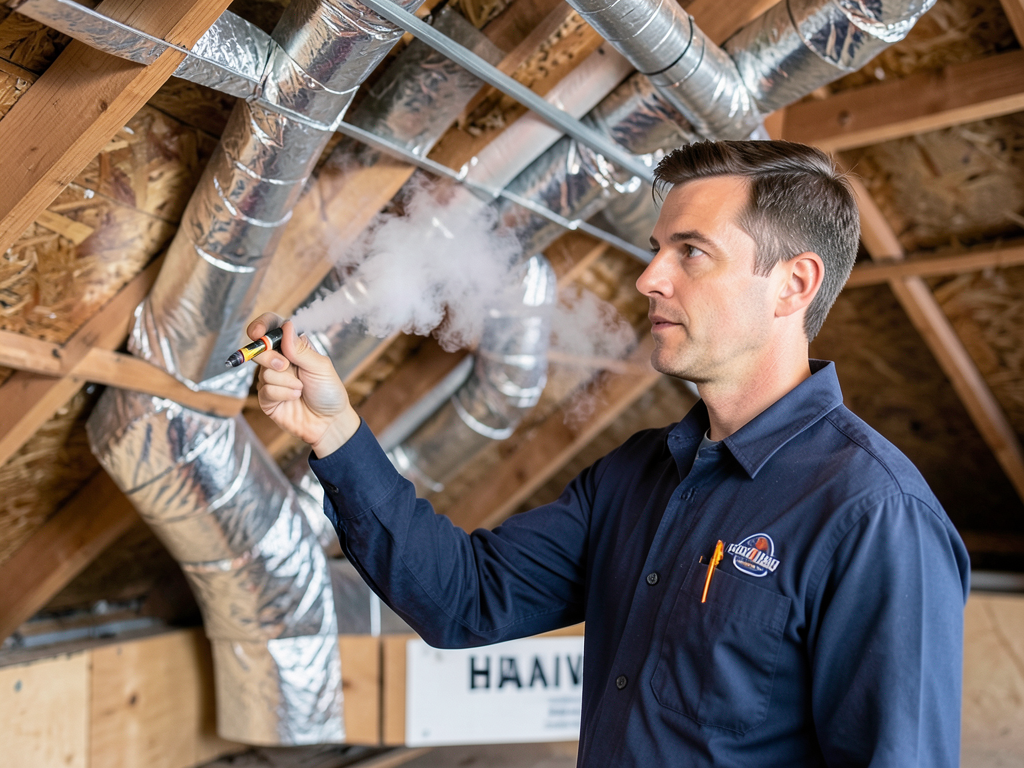
One of the most common dust sources in Pasadena homes is leaky return ductwork in the attic. Return ducts operate under negative pressure meaning they pull air toward your HVAC unit. When these ducts have gaps or disconnected joints they don’t just pull air from your living spaces—they pull in attic air filled with insulation fibers construction dust and outdoor particulates.
During a diagnostic inspection technicians use smoke pencils or infrared cameras to identify air leaks in ductwork. A single 1-inch gap in return ductwork can pull in as much contaminated air as a window left open year-round. In Pasadena’s older homes it’s common to find multiple gaps allowing attic contaminants to continuously cycle through your home.
Sealing these leaks with mastic sealant or specialized duct tape (not standard hardware store duct tape) can reduce dust levels by 50-80% while also improving your system’s efficiency. The EPA estimates that sealing leaky ducts can reduce energy costs by 20% while simultaneously improving indoor air quality. EPA duct cleaning guidelines.
Whole-Home Air Purifiers vs. Standard Filters
While high-quality filters are essential they work at the point of entry. Whole-home air purifiers clean the air throughout your entire duct system capturing particles that bypass standard filtration. These systems use multiple technologies including HEPA filtration activated carbon and sometimes UV light to neutralize airborne contaminants.
Electronic air cleaners use an electrical charge to attract particles to collector plates similar to how a magnet works. These can capture particles as small as 0.1 microns including many viruses and bacteria. The plates need monthly cleaning but provide superior filtration compared to disposable filters.
UV germicidal lights installed inside your ductwork kill mold bacteria and viruses that pass by the light. While they don’t capture dust particles they prevent biological growth on your evaporator coil and in your ducts which can contribute to musty odors and reduced system efficiency.
5 Immediate DIY Steps to Lower Dust Levels
Before calling a professional several simple steps can significantly reduce dust in your Pasadena home. These methods work by either preventing dust entry or making existing dust easier to manage.
- Upgrade Your Filter Immediately – Replace your current filter with a MERV 11 filter rated for your system. Look for filters labeled “hypoallergenic” or “allergy reduction.” Change them every 30-60 days during peak usage seasons.
- Clean Return Vent Grilles – Remove and wash your return air vent covers with warm soapy water. Dust accumulates on these surfaces and gets pulled into your system every time the fan runs.
- Vacuum with HEPA Filtration – Standard vacuums recirculate fine dust back into the air. HEPA-filtered vacuums trap 99.97% of particles 0.3 microns and larger preventing dust from simply moving from one surface to another.
- Wash Bedding Weekly in Hot Water – Your bedding collects dead skin cells dust mites and tracked-in particles. Washing in water above 130°F kills dust mites and removes accumulated debris.
- Manage Dust Magnets – Heavy drapes upholstered furniture and carpeted floors trap dust. Consider swapping heavy curtains for washable blinds and adding washable throw rugs over wall-to-wall carpeting.
Advanced Solutions for Houston Homeowners
When basic steps aren’t enough advanced HVAC solutions can provide comprehensive dust control tailored to Houston’s unique climate challenges.
Humidity Control to Prevent Dust Mites
Dust mites cannot survive when relative humidity drops below 50%. Installing a whole-home dehumidifier connected to your HVAC system can maintain optimal humidity levels year-round. This not only reduces dust mite populations but also prevents the sticky dust accumulation that occurs in humid conditions.
Many Pasadena homes experience humidity spikes during spring and fall when outdoor temperatures fluctuate dramatically. A smart thermostat with humidity sensors can automatically adjust your system to maintain consistent indoor conditions preventing the dust-attracting moisture that plagues Houston homes.
Air Duct Sanitization and Replacement
Over time air ducts accumulate dust debris and sometimes mold. Professional duct cleaning removes this buildup using specialized vacuums and brushes. However cleaning alone isn’t always sufficient for older Pasadena homes.
Ducts installed before 1980 often contain asbestos insulation or have deteriorated to the point where cleaning causes more problems than it solves. In these cases complete duct replacement with modern insulated flex duct provides the best long-term solution. New ducts seal properly maintain consistent airflow and don’t release particles into your home.
The City of Pasadena requires permits for any HVAC duct replacement under Section 15-50 of the Building Code. Licensed contractors must test for proper airflow and seal all connections according to current energy efficiency standards.
Golden Nuggets: Pasadena-Specific Dust Solutions
Pasadena’s unique characteristics require targeted solutions. The area’s proximity to industrial zones means outdoor air contains higher levels of sulfur compounds and metallic particulates than other Houston suburbs. These particles are smaller and stickier than typical household dust making standard filtration less effective.
Many Pasadena homes sit on expansive clay soil that shifts with moisture changes. This movement can create gaps around windows doors and baseboards allowing fine dust to enter. Weatherstripping and caulking these gaps provides an additional defense layer beyond HVAC filtration.
Pasadena’s older neighborhoods like Southmore and Forestbrook feature homes built with different construction methods than modern houses. These homes often have plaster walls with hairline cracks that serve as dust highways. Repairing these cracks with paintable caulk can significantly reduce dust infiltration.
The area’s frequent temperature swings especially during Houston’s mild winters cause HVAC systems to cycle on and off more frequently. Each cycle disturbs settled dust sending it airborne again. Installing a variable-speed air handler that maintains consistent airflow can reduce this dust-stirring effect.
When to Call a Professional
While DIY steps help persistent dust problems often require professional diagnosis. If you’ve tried higher-quality filters sealed visible gaps and maintained your home but still battle constant dust it’s time for expert intervention.
Professional HVAC technicians use specialized tools to identify dust sources you cannot see. They measure air pressure in your ducts test for duct leaks with specialized equipment and can identify if your system is creating negative pressure that pulls in attic air.
Professional air quality testing can identify specific particle types helping target the right solution. For example if testing shows high levels of fiberglass particles you know you have insulation issues in your ductwork. If pollen levels are high your home may need better sealing against outdoor air infiltration.
Don’t let constant dust affect your family’s health and comfort. Call (281) 552-7766 today for a comprehensive dust analysis of your Pasadena home. Our NATE-certified technicians understand the unique challenges of Houston’s industrial corridor and can recommend solutions that actually work for your specific situation. What a New AC Installation Actually Costs in The Woodlands.
Long-Term Dust Prevention Strategy
Winning the battle against constant dust requires a comprehensive approach. Start with the basics: upgrade your filters maintain your HVAC system and seal obvious gaps. Then address the root causes: fix leaky ducts control humidity and consider whole-home air purification for severe cases.
Remember that dust control isn’t a one-time fix but an ongoing process. Your HVAC system needs regular maintenance just like your car. Filters need replacement coils need cleaning and ducts need inspection. With consistent attention and the right solutions you can transform your home from a dust magnet to a clean comfortable sanctuary even in the heart of Houston’s industrial zone. Why Your Memorial Home Needs a High-Efficiency AC Unit Right Now.
The investment in proper dust control pays dividends in better health lower cleaning costs and improved HVAC efficiency. Most homeowners find that solving their dust problems actually reduces their energy bills by allowing their HVAC system to operate more efficiently without the strain of restricted airflow or contaminated components. For more information, visit ASHRAE filtration standards.
You may also find this helpful. Reliable Medical Office HVAC Maintenance for Healthcare Practices in Webster.