




Carbon Monoxide Leak Detection in Houston – Emergency Response in 60 Minutes or Less

Professional CO leak inspection protecting Houston families with immediate dispatch, advanced gas detection equipment, and certified technicians who locate invisible threats before they become fatal.

Slider Image 1
Slider Image 2
Slider Image 3
Slider Image 4
Slider Image 5
Slider Image 7
Slider Image 8
Slider Image 9
Slider Image 10
Slider Image 11

Carbon Monoxide Poisoning Kills Fast in Houston Homes

You cannot see it. You cannot smell it. You just feel dizzy, confused, or nauseous. Then you pass out. Carbon monoxide poisoning moves fast, and Houston's high humidity creates conditions where combustion appliances work harder, producing more exhaust. Your furnace, water heater, or gas range can leak CO without warning.

Houston's aging housing stock compounds the risk. Many homes in neighborhoods like Montrose, the Heights, and Bellaire still operate with original HVAC systems and poorly maintained flue pipes. When these systems corrode or crack, CO escapes into living spaces. Add in Houston's stop-and-start winter heating patterns, where furnaces sit dormant for months then fire up during cold snaps, and you create the perfect scenario for dangerous buildup.

You need emergency carbon monoxide testing the moment your CO detector alarms, or if you experience headaches, dizziness, nausea, or confusion with no clear cause. These symptoms mirror flu or food poisoning, but they signal something far more dangerous. Professional CO leak inspection identifies the source immediately. Our technicians use calibrated gas detection instruments that measure CO concentration in parts per million, pinpointing leaks your detector cannot locate.

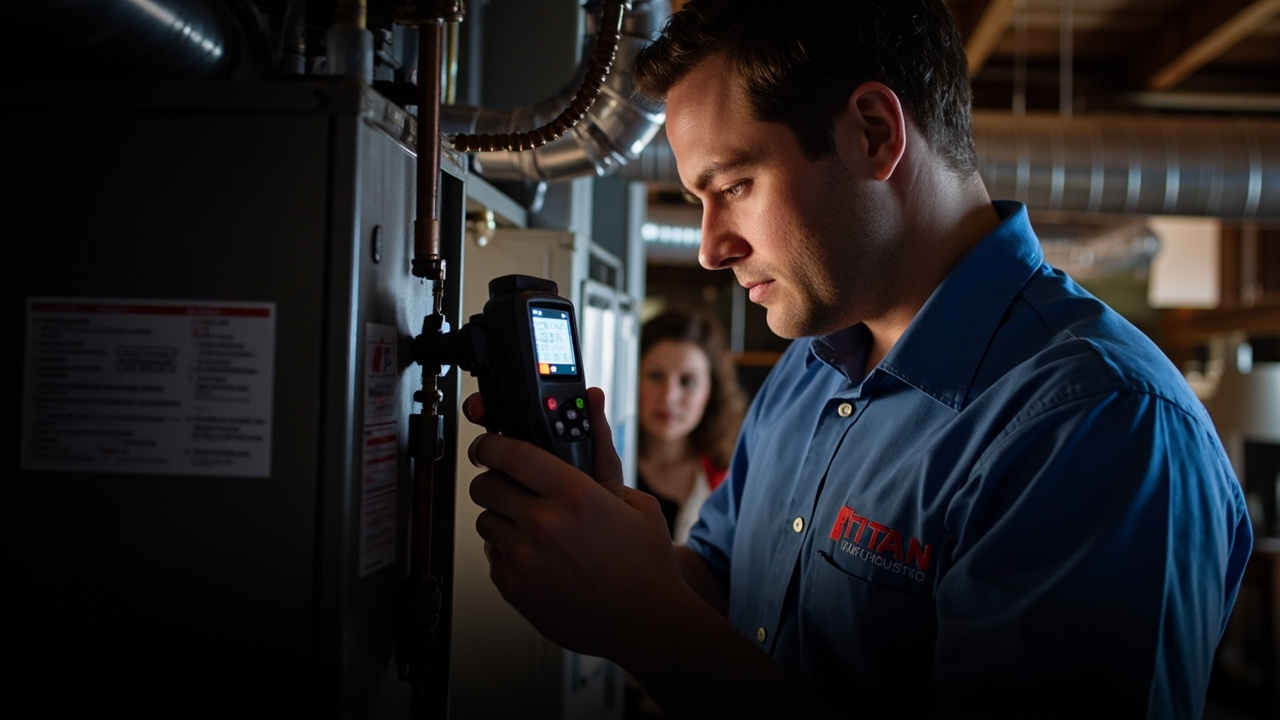
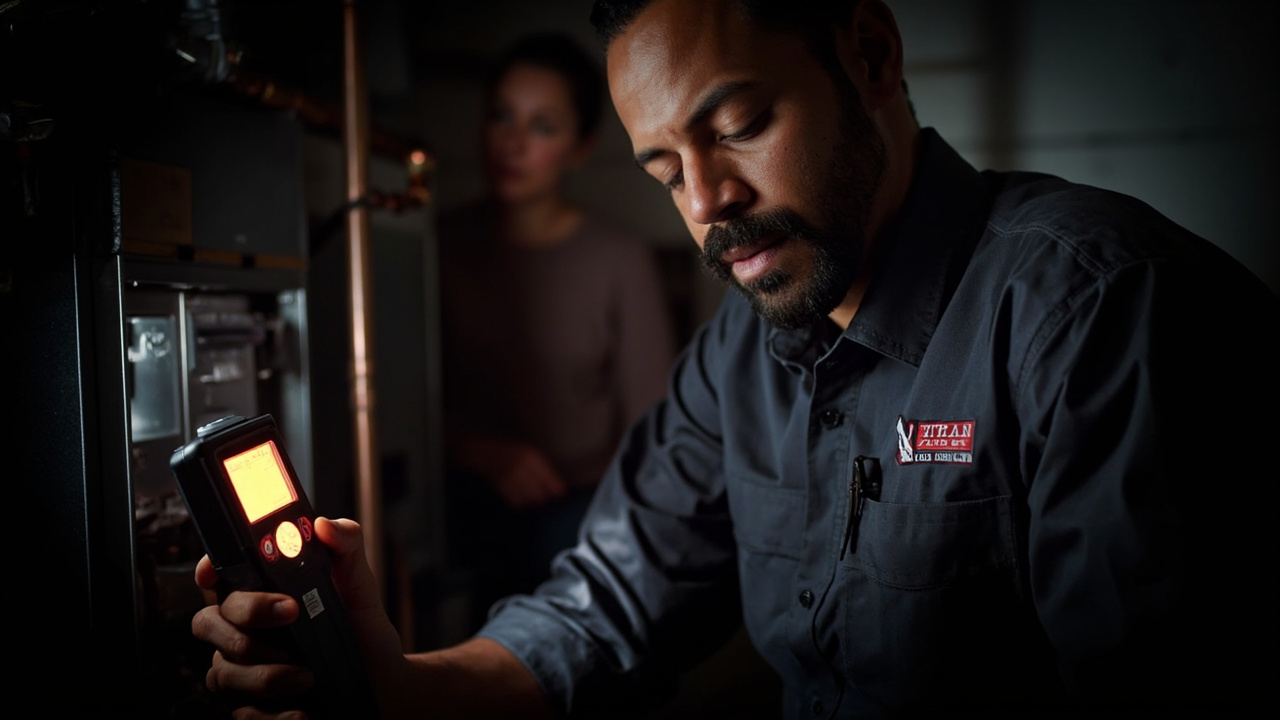
Titan HVAC Houston responds to urgent carbon monoxide check requests across the greater Houston metro within 60 minutes. We arrive with industrial-grade CO gas detection service equipment, thermal imaging cameras, and combustion analyzers. We locate the leak, shut down the compromised appliance, ventilate your home, and provide immediate carbon monoxide leak testing documentation for your safety records. Speed matters. Call (281) 552-7766 now if you suspect CO exposure.

Carbon Monoxide Poisoning Kills Fast in Houston Homes
How We Find Carbon Monoxide Leaks Other Companies Miss

How We Find Carbon Monoxide Leaks Other Companies Miss

Most HVAC companies show up with a handheld CO meter and call it done. We deploy a systematic carbon monoxide leak testing protocol that traces gas movement through your entire HVAC system and living space.

First, we establish baseline CO levels in every room using multi-point measurements. Normal outdoor air contains 0.1 to 0.2 parts per million. Indoor levels should stay below 9 ppm. Anything above 35 ppm triggers alarms. We map your home's CO signature to identify concentration gradients that reveal leak locations.

Next, we inspect every combustion appliance. Gas furnaces produce CO during normal operation, but properly functioning heat exchangers and flue systems vent it outside. Cracked heat exchangers, disconnected vent pipes, or blocked flues push CO into your ductwork. We use combustion analyzers to measure exhaust gas composition directly at the furnace outlet. If CO readings exceed manufacturer specifications, we isolate the unit immediately.

We inspect draft conditions using smoke pencils and digital manometers. Negative pressure pulls combustion gases backward through your home. This happens when bathroom exhaust fans, kitchen range hoods, or dryer vents overpower your furnace draft. Houston's tight energy-efficient homes make backdrafting more common.

Water heaters, gas ranges, and fireplaces receive the same scrutiny. We check vent terminations for bird nests, debris, or code violations. We test pilot lights for proper flame color and shape. Yellow or orange flames signal incomplete combustion and higher CO output.

Our final step involves source elimination verification. We repair or replace the defective component, retest all zones, and document safe CO levels before we leave. You receive a detailed report showing before and after readings.

What Happens During Your Emergency CO Inspection

Carbon Monoxide Leak Detection in Houston – Emergency Response in 60 Minutes or Less
01

Immediate Safety Assessment

Our technician arrives within 60 minutes and immediately measures ambient CO levels in your home using calibrated detection equipment. If concentrations exceed 35 ppm, we evacuate occupants, open windows and doors, and shut down all gas-burning appliances. We contact emergency services if anyone shows poisoning symptoms. Your safety comes before diagnosis. We establish safe conditions first, then begin systematic leak tracing.
02

Precision Leak Tracing

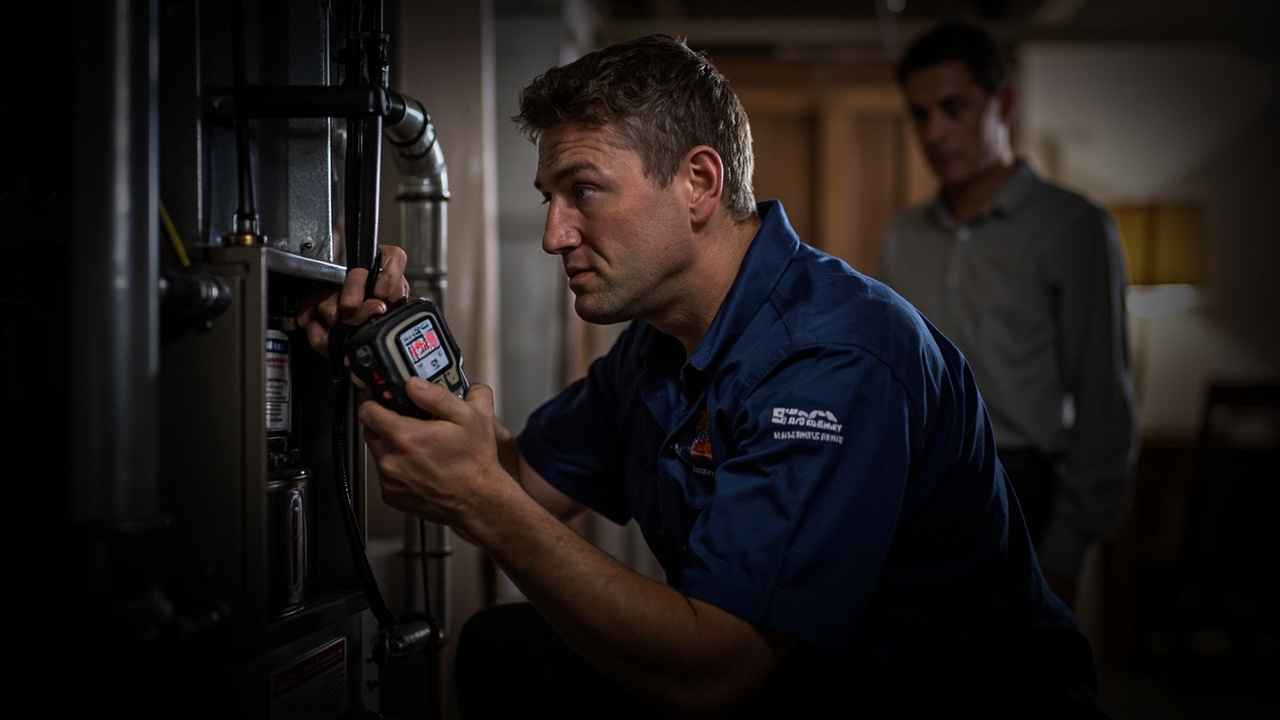
We inspect your furnace heat exchanger, flue pipe connections, and draft hood using thermal imaging and combustion analysis. We test your water heater vent system, gas range burners, and any other fuel-burning equipment. We measure CO concentrations at strategic points to map gas flow patterns. This multi-instrument approach locates leaks missed by basic CO meters. We identify the exact failure point, whether it's a cracked component or poor ventilation.
03

Verified Safe Resolution

After repairing or isolating the CO source, we conduct complete retesting throughout your home. We verify all readings drop below 9 ppm and stay there. You receive documentation showing pre-repair and post-repair CO levels, identified defects, corrective actions taken, and safety compliance confirmation. We install fresh CO detector batteries and confirm alarm functionality. You get written proof your home is safe before we leave the property.

Why Houston Families Trust Titan HVAC for CO Emergencies

Carbon monoxide detection requires specific training and calibrated equipment. Not every HVAC company invests in proper CO leak testing tools or maintains current certification on combustion analysis. Titan HVAC Houston specializes in emergency carbon monoxide testing across the greater Houston area, from Katy to Clear Lake, Cypress to Pearland.

We understand Houston's unique housing challenges. Our technicians work daily with the pier and beam foundations common in older neighborhoods like River Oaks and West University. These elevated structures create crawl space ventilation patterns that affect furnace combustion air supply. We know how Houston's clay soil expansion pushes on gas lines and vent pipes, creating stress fractures. We see the corrosion humidity causes on flue systems.

Our response time matters during CO emergencies. We dispatch from multiple service areas across Houston, which means faster arrival than companies operating from a single location. You get a certified technician at your door within 60 minutes, equipped with professional-grade detection equipment, not a dispatcher telling you to wait until tomorrow.

We carry replacement parts for common CO-producing failures on every service vehicle. Cracked heat exchangers, failed draft inducers, and corroded vent connectors do not require special orders. We stock them. If your furnace created the leak and needs immediate replacement, we provide options on site. No return trips. No delays.

Houston building codes require specific clearances and venting configurations for combustion appliances. Titan HVAC Houston knows these local requirements. We ensure repairs meet both manufacturer specifications and city compliance standards. You get documentation that satisfies insurance requirements and home sale disclosure obligations. Call (281) 552-7766 for immediate CO leak inspection.

What to Expect During Your CO Leak Inspection

Emergency Response Speed

We dispatch immediately upon your call to (281) 552-7766. Our service vehicles carry complete CO detection and testing equipment, ready for deployment. You get a certified technician at your location within 60 minutes during standard hours. After-hours emergencies receive priority dispatch with slightly extended arrival times depending on your specific Houston location. We do not schedule CO emergencies for next-day appointments. Carbon monoxide exposure requires immediate professional response. Our technicians arrive ready to test, diagnose, and resolve the threat the same day.

Complete System Diagnosis

Your inspection includes ambient air testing in all occupied spaces, combustion appliance performance analysis, heat exchanger integrity verification, flue system draft measurement, and ventilation adequacy assessment. We use calibrated CO meters, combustion analyzers, thermal imaging cameras, and digital manometers. You receive detailed readings for each tested area. We identify all CO sources, not just the obvious one. Your furnace might test clean while your water heater leaks undetected. We check everything that burns fuel. The inspection takes 60 to 90 minutes depending on home size and appliance count.

Documented Safe Results

After repairs, we conduct verification testing that proves CO levels throughout your home meet safety standards. You receive a written report showing before and after measurements, identified defects, corrective actions, and compliance confirmation. This documentation satisfies insurance company requirements and provides legal protection if your CO issue relates to recent service work by another contractor. We photograph defective components. We explain what failed and why. You understand the threat and the fix. Our report includes recommendations for preventing future CO hazards.

Ongoing Safety Monitoring

Carbon monoxide risk does not disappear after one inspection. Combustion systems degrade over time. We recommend annual furnace maintenance that includes CO testing as part of your seasonal tune-up. During routine service, we measure combustion efficiency and CO production to catch developing problems before they create dangerous leaks. You can also schedule standalone CO testing if you install new gas appliances, complete home renovations that affect ventilation, or simply want peace of mind. We offer residential maintenance plans that include priority emergency response and annual safety inspections at reduced rates.

Frequently Asked Questions

You Have Questions,
We Have Answers

How do you tell if you have a carbon monoxide leak? +

You cannot see or smell carbon monoxide. Install a CO detector on every level of your home. Physical symptoms appear first: headache, dizziness, nausea, confusion, or flu-like feelings without fever. If multiple people feel sick simultaneously, evacuate immediately. Check fuel-burning appliances for yellow or flickering flames instead of blue. Soot buildup around furnaces or water heaters signals incomplete combustion. In Houston's humid climate, condensation on windows near gas appliances can indicate poor ventilation. If your CO alarm sounds, get everyone outside and call 911. Do not re-enter until professionals clear your home.

What's the most common household thing to cause a carbon monoxide leak? +

Furnaces cause the most carbon monoxide incidents in Houston homes. Cracked heat exchangers, blocked vents, or improper combustion create deadly CO buildup. Houston's high humidity accelerates corrosion in HVAC systems, weakening metal components faster than in dry climates. Gas water heaters rank second, especially older units with pilot lights. Neglected annual maintenance allows rust and blockages to form. Attached garages with running vehicles also pose serious risk. Never warm up your car in a closed garage. CO from exhaust seeps through small gaps into living spaces within minutes.

Can you test carbon monoxide with your phone? +

No. Your phone cannot detect carbon monoxide. Some smart home systems connect to plug-in CO detectors and send alerts to your phone, but the phone itself has no CO sensing capability. Do not rely on apps claiming to detect CO through your camera or microphone. Install UL-listed carbon monoxide alarms with electrochemical sensors. In Houston's heat, battery-powered units degrade faster. Replace batteries twice yearly and replace the entire detector every five to seven years. Combination smoke and CO detectors work well, but ensure they meet current safety standards for both threats.

How quickly does CO dissipate? +

Carbon monoxide dissipates slowly without proper ventilation. Opening windows and doors allows fresh air to dilute CO, but complete clearance takes 30 minutes to several hours depending on concentration levels and airflow. Do not assume your home is safe because you feel better. CO lingers in enclosed spaces, basements, and rooms with poor air circulation. Houston's tight building envelopes for energy efficiency trap CO longer. After evacuation, let fire department technicians test air quality with calibrated meters before re-entry. Only professionals can confirm safe CO levels below nine parts per million.

What are two warning signs of carbon monoxide? +

Unexplained headaches and sudden dizziness are the two most common carbon monoxide warning signs. Symptoms worsen the longer you breathe contaminated air. You might feel fine outside but sick when you return home. Pets often show distress first, appearing lethargic or vomiting without obvious cause. A second critical warning is your CO detector alarm sounding. Never ignore beeping alarms or assume false triggers. In Houston homes, increased symptoms during winter when furnaces run constantly signals potential CO problems. If anyone experiences confusion, chest pain, or loss of consciousness, call 911 immediately while evacuating.

How long can you live in a house with a carbon monoxide leak? +

You cannot safely live in a house with a carbon monoxide leak. Exposure duration and concentration determine survival time. Low-level leaks cause chronic symptoms over weeks: fatigue, memory problems, and respiratory issues. High concentrations kill within minutes. A level of 400 parts per million causes death in three hours. At 1,600 ppm, you have 20 minutes. Children, elderly residents, and those with heart conditions succumb faster. Evacuate immediately if CO is detected. Do not sleep in the home or attempt repairs yourself. Professional HVAC technicians must locate the source, make repairs, and verify safe air quality.

What can falsely set off a carbon monoxide detector? +

High humidity can trigger false alarms in cheaper CO detectors. Houston's moisture-heavy air affects sensor accuracy, especially in bathrooms or near windows. Dust buildup, insect infiltration, and extreme temperature fluctuations also cause false readings. Detectors placed too close to fuel-burning appliances may react to normal combustion byproducts during startup. Chemical fumes from paint, solvents, or cleaning products temporarily set off sensors. An aging detector past its replacement date gives erratic readings. Never disable a beeping alarm. If it sounds repeatedly without obvious cause, evacuate and call professionals to test your home with calibrated equipment.

How long does it take for a stove to be on to cause carbon monoxide poisoning? +

A gas stove alone rarely produces fatal carbon monoxide levels in ventilated spaces. Running all burners continuously for two hours in a small, closed kitchen can create dangerous concentrations above 100 ppm. The risk increases dramatically in Houston homes with undersized range hoods or no ventilation. Older stoves with yellow flames or visible soot produce more CO than properly tuned blue flames. Symptoms appear within 30 minutes at moderate levels. Never use your stove or oven for heating. Always use exhaust fans when cooking. If you feel dizzy or nauseous while cooking, shut off burners and ventilate immediately.

How can I test for CO in my home? +

Install UL-listed carbon monoxide detectors on every floor, near sleeping areas, and near fuel-burning appliances. Digital detectors display real-time CO levels in parts per million. For immediate testing, hire certified HVAC technicians with calibrated gas analyzers. They measure ambient CO levels and test appliances under operating conditions. Houston residents should schedule annual furnace inspections before winter. Technicians check heat exchangers, venting systems, and combustion efficiency. Do not use color-changing cards or disposable badges from hardware stores. These lack accuracy and provide false security. Professional testing costs less than emergency room visits for CO poisoning.

Houston's Humidity and Aging HVAC Systems Increase CO Leak Risk

Houston's 75 percent average humidity accelerates corrosion on metal furnace components and flue pipes. Moisture combines with combustion byproducts to create acidic condensation that eats through heat exchangers and vent connectors faster than in dry climates. Homes built before 1990 often have original HVAC equipment that has endured decades of this corrosive environment. The Heights, Montrose, and Bellaire contain thousands of properties with 30-plus-year-old furnaces still in operation. These aging systems require urgent carbon monoxide check services more frequently than newer equipment. Professional CO leak inspection catches deterioration before complete failure creates life-threatening conditions inside your home.

Houston adopted strict combustion appliance venting codes after recognizing increased CO poisoning incidents in tightly sealed energy-efficient homes. Local HVAC contractors who understand these requirements ensure repairs meet both safety standards and city compliance. Titan HVAC Houston works throughout Harris County and surrounding areas, maintaining current knowledge of local code updates and permit requirements. We provide emergency carbon monoxide testing that meets Houston Fire Department safety protocols and documentation standards insurance companies recognize. Choosing local expertise for CO gas detection service means faster response, better understanding of regional housing characteristics, and repairs that satisfy municipal inspectors.
HVAC Services in The Houston Area

Titan HVAC is proud to serve Houston and the surrounding areas with expert heating and cooling solutions. Our central location allows us to respond quickly to both residential and commercial clients. Whether you need an emergency fix or scheduled service, we’re never far away. Explore our service area and see how close comfort really is. We're just a call or click away—connect with us today.

Address:
Titan HVAC Houston, 3730 Kirby DrHouston, Houston, TX, 77098

Additional Services We Offer

Our news updates

Latest Articles & News from The Blogs

Why Your AC Is Freezing Up Even When It’s 100 Degrees in Sienna When your air conditioner freezes up on…

Why Your AC Is Freezing Up Even When It’s 100 Degrees in Sienna

Why Your AC Is Freezing Up Even When It’s 100 Degrees in Sienna When your air conditioner freezes up on…

What That Screeching Sound from Your AC Actually Means (Hint—It’s Not Good)

What That Screeching Sound from Your AC Actually Means (Hint—It’s Not Good) Your Houston air conditioner works overtime for most…

Safe Ways to Landscape Around Your AC Unit in Hedwig Village

Safe Ways to Landscape Around Your AC Unit in Hedwig Village Your air conditioner works hardest during Houston’s brutal summer…

Contact Us

Do not wait if you suspect CO exposure. Call Titan HVAC Houston at (281) 552-7766 for immediate dispatch. Our certified technicians arrive within 60 minutes with professional detection equipment ready to locate and eliminate the threat. Protect your family now.