
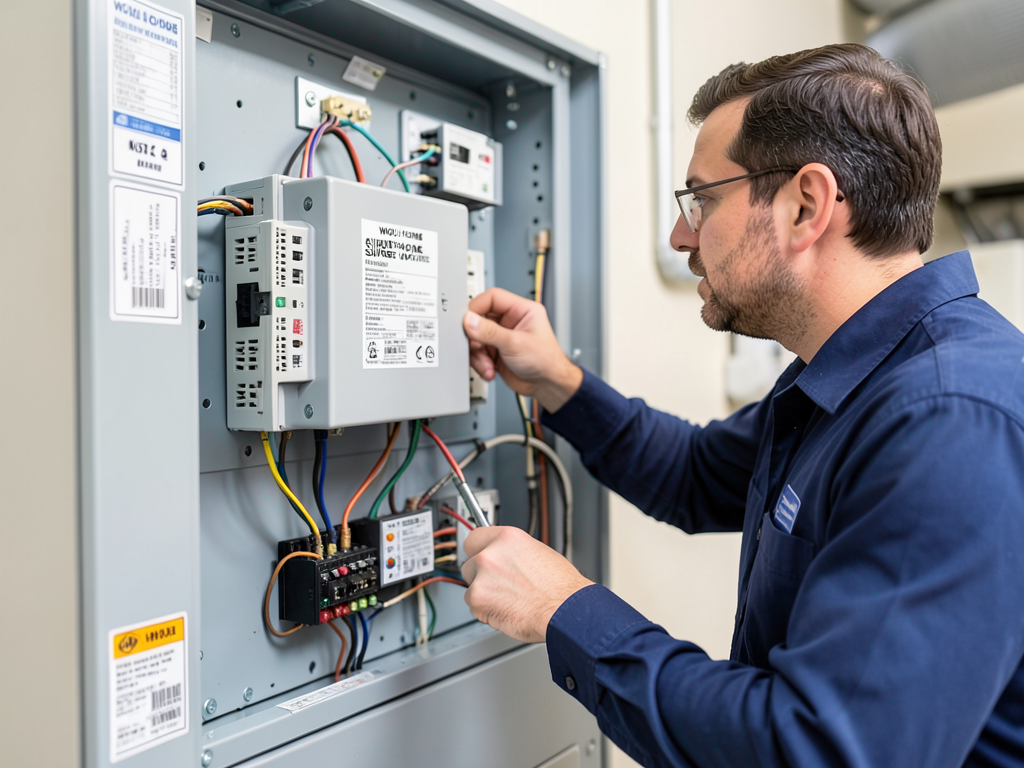
Protecting Your Expensive HVAC Equipment from Power Surges During Conroe Storms
Conroe’s summer thunderstorms can strike suddenly, sending dangerous voltage spikes through your home’s electrical system. These surges can instantly destroy your HVAC’s compressor, control board, and capacitor, leaving you without cooling during the hottest months. A properly installed surge protector acts as a shield, absorbing excess voltage before it reaches your expensive equipment.
Most homeowners don’t realize that lightning strikes within a mile of your home can generate surges powerful enough to jump through your electrical panel. Houston’s humid climate also contributes to corrosion and insulation breakdown, making your system more vulnerable. The good news is that modern surge protection devices can block up to 90% of these damaging spikes, potentially saving you thousands in repair costs. UL 1449 safety standard.
Why Conroe Homes Need Dedicated HVAC Surge Protection
Conroe experiences an average of 50-60 thunderstorm days per year, with lightning strikes concentrated during June through September. The combination of Gulf moisture and warm air creates ideal conditions for electrical storms that can send voltage spikes through your power lines. CenterPoint Energy’s grid in Montgomery County often struggles with these sudden load changes, causing what technicians call “dirty power” – small but frequent fluctuations that slowly degrade your HVAC components. CenterPoint Energy grid information.
Local soil conditions in Conroe add another layer of risk. The area’s sandy loam soil, common in neighborhoods like April Sound and Grand Central Park, has lower conductivity than clay soils. This means lightning strikes can travel differently through the ground, sometimes finding alternative paths through your home’s electrical grounding system. When a nearby strike occurs, the energy seeks the path of least resistance – often through your HVAC’s control board first. Finding Emergency AC Repair in Sugar Land Without Getting Ripped Off.
Internal vs External Surges: What’s Actually Damaging Your AC
Many homeowners think only lightning causes HVAC damage, but the reality is more complex. External surges from lightning strikes account for only about 20% of HVAC electrical failures. The remaining 80% come from internal sources – your own equipment cycling on and off, creating voltage spikes that weaken components over time.
Every time your AC compressor starts, it draws a massive inrush current. This momentary spike, though brief, stresses your system’s capacitors and control boards. In Conroe’s hot climate, where AC units run for extended periods, this cycling happens dozens of times daily. Add to this the power fluctuations from your neighborhood’s electrical grid, and you have a recipe for premature component failure.
Common internal surge sources include:
- Motor start-up inrush currents
- Power grid switching operations
- Faulty wiring or loose connections
- Nearby heavy equipment operation
How Surge Protectors Actually Work
Modern HVAC surge protectors use Metal Oxide Varistors (MOVs) that act like pressure relief valves for electricity. Under normal voltage conditions, these devices remain inactive. When voltage exceeds safe levels – typically above 330 volts for a standard home circuit – the MOVs conduct the excess electricity to ground, preventing it from reaching your equipment.
The effectiveness of a surge protector is measured in several ways:
- Joules rating: Higher numbers indicate greater energy absorption capacity
- Clamping voltage: Lower numbers mean the protector activates sooner
- Response time: Faster response protects against shorter duration spikes
For Houston’s climate, look for units with at least 1000 joules and a clamping voltage below 400 volts. The best protectors also include thermal fuses that disconnect the unit if it overheats from repeated surges.
Professional Installation vs DIY: Why Experience Matters
Installing an HVAC surge protector requires working with high-voltage electrical systems. A single mistake can result in electrocution, fire, or equipment damage. Professional installation ensures your protector is correctly sized for your specific HVAC system and properly grounded to your home’s electrical panel. What a New AC Installation Actually Costs in The Woodlands.
During installation, technicians perform several critical tests:
- Voltage drop measurements across your system
- Ground resistance testing to ensure proper earth connection
- Polarity checks on all wiring connections
- Insulation resistance testing of control circuits
These diagnostics identify existing problems that could make your system more vulnerable to surges. For example, a loose neutral connection might cause voltage imbalances that stress your compressor, making it more susceptible to surge damage.
Benefits of Dedicated HVAC Surge Protection
Investing in proper surge protection delivers multiple benefits beyond just preventing lightning damage. Your HVAC system represents one of the largest investments in your home, often costing $5,000-$15,000 for replacement. Protecting this investment makes financial sense.
Key benefits include:
- Extended equipment life: Reduces stress on compressors and control boards
- Maintained efficiency: Prevents voltage fluctuations that reduce SEER ratings
- Warranty protection: Many manufacturers require surge protection for warranty coverage
- Peace of mind: Protection during Conroe’s frequent summer storms
Additionally, some surge protectors come with connected equipment warranties. If a properly installed protector fails to prevent damage, the manufacturer may cover repair or replacement costs up to a specified amount.
Types of Surge Protection for Your HVAC System
Different protection strategies work better for different situations. Understanding your options helps you make the right choice for your Conroe home.
| Protection Type | Best For | Installation Location | Cost Range |
|---|---|---|---|
| Whole-home surge protector | Complete system protection | Main electrical panel | $300-$800 |
| HVAC-specific protector | Targeted AC/heat pump protection | Near outdoor unit disconnect | $150-$400 |
| Point-of-use protector | Thermostat and control board | Indoor air handler area | $75-$200 |
For maximum protection, many Conroe homeowners install a combination of whole-home and HVAC-specific protectors. This layered approach provides redundancy – if one device fails or becomes saturated, the other continues providing protection.
Maintenance and Testing Your Surge Protection
Surge protectors don’t last forever. Each time they absorb a surge, their protective components degrade slightly. After a major lightning storm or if your area experiences frequent small surges, your protector may need replacement.
Professional maintenance includes:
- Visual inspection for physical damage or corrosion
- Continuity testing of protective circuits
- Ground resistance verification
- Indicator light status check (most units have status LEDs)
- Replacement recommendation if protection level drops below 60%
In Conroe’s humid climate, corrosion can be a particular problem. Salt air from the Gulf can travel inland, especially during storm events, accelerating the degradation of metal components in surge protectors.
Cost Considerations and ROI
The cost of surge protection varies based on the level of protection and installation complexity. A basic point-of-use protector might cost $75-$150, while a comprehensive whole-home system with HVAC protection can run $500-$1,000 installed.
Consider the potential costs of not having protection:
- Compressor replacement: $1,500-$2,500
- Control board replacement: $500-$1,000
- Emergency service call during peak season: $150-$300 plus repair costs
- Food spoilage from extended outages: $200-$500
Most surge protection systems pay for themselves by preventing just one major repair over their 5-10 year lifespan. When you factor in the inconvenience of system failures during Houston’s hottest months, the investment becomes even more compelling.
Local Building Codes and Requirements
Montgomery County and the City of Conroe follow the 2021 National Electrical Code (NEC) for surge protection requirements. While whole-home surge protection isn’t mandatory for existing homes, it’s becoming standard practice for new construction and major electrical upgrades.
Key code considerations include:
- NEC Article 280 covers surge protection device installation requirements
- All surge protectors must be UL 1449 listed for safety certification
- Proper grounding per NEC Article 250 is mandatory
- Clear labeling of protected vs unprotected circuits
Professional installers ensure your protection system meets all local requirements, avoiding potential issues during home inspections or insurance claims.
Insurance and Surge Protection
Many insurance companies offer premium discounts for homes with whole-home surge protection. The logic is simple: protected homes file fewer claims for electrical damage. Some policies may even require surge protection for full coverage of expensive HVAC systems.
When filing claims for surge damage, documentation becomes critical. Keep records of:
- Installation dates and warranty information
- Maintenance and testing records
- Manufacturer specifications and ratings
- Professional installation certifications
These documents prove you took reasonable steps to protect your property, which can affect claim outcomes and premium adjustments.
Emergency Response During Storms
Even with surge protection, extreme weather events can overwhelm electrical systems. During severe thunderstorms, consider these additional precautions:
- Turn off your HVAC system at the thermostat
- Unplug sensitive electronics if possible
- Avoid using wired phones during active lightning
- Stay away from plumbing fixtures during storms
If your area experiences a direct lightning strike, have your electrical system inspected afterward. Even if everything appears to work, hidden damage to wiring or grounding systems could create future hazards.
Frequently Asked Questions
Will a surge protector prevent all lightning damage?
No protection system can guarantee 100% protection from a direct lightning strike. However, quality surge protectors can block up to 90% of surge energy, significantly reducing damage risk. For maximum protection, consider layered protection with whole-home and point-of-use devices.
How long do surge protectors last?
Most surge protectors last 3-5 years under normal conditions. In areas with frequent storms like Conroe, replacement may be needed every 2-3 years. Many units include indicator lights that show when protection is no longer active.
Can I install a surge protector myself?
While DIY installation is possible, it’s not recommended. Working with high-voltage electrical systems poses serious risks, and improper installation can void warranties or create fire hazards. Professional installation ensures proper sizing, grounding, and code compliance.
Will surge protection affect my HVAC warranty?
Many manufacturers require surge protection for warranty coverage. Installing approved protection often extends warranty terms and ensures you’re covered for electrical damage. Check your specific warranty terms or consult with a professional installer.
Schedule Your Houston HVAC Safety Inspection
Don’t wait for the next Conroe thunderstorm to realize your HVAC system is vulnerable. A professional safety inspection can identify existing electrical issues and recommend the right surge protection solution for your home. Our NATE-certified technicians understand Houston’s unique electrical challenges and can install protection that meets all local codes.
Call (281) 552-7766 today to schedule your inspection. We’ll evaluate your current system, test for existing vulnerabilities, and provide a written recommendation for protecting your investment. Don’t let the next storm cost you thousands in unnecessary repairs.
Remember, surge protection isn’t just about preventing lightning damage – it’s about protecting your comfort, your investment, and your peace of mind during Conroe’s stormy summers. Take action now before the next storm season hits.