
Updating the HVAC in an Eastwood Brick Bungalow Without Ruining the Character
Eastwood’s brick bungalows built in the 1920s and 1930s represent Houston’s architectural heritage but often struggle with outdated HVAC systems. These homes feature thick masonry walls, original plaster, and intricate woodwork that demand preservation during any modernization effort. The challenge lies in delivering modern comfort without compromising the historic character that makes these homes valuable. Houston Archaeological and Historical Commission.
Modern HVAC solutions can integrate seamlessly into Eastwood’s historic bungalows when approached with the right expertise. The key involves understanding the home’s structural limitations, Houston’s extreme climate demands, and the specific preservation guidelines that protect these architectural treasures. This guide walks through the technical and practical considerations for upgrading your Eastwood bungalow’s climate control system.
Understanding Eastwood’s Historic Bungalow Architecture
Eastwood’s bungalows typically feature pier-and-beam foundations, 4-inch brick exterior walls, and 9-foot ceilings with crown molding. These construction methods create unique HVAC challenges. The brick walls provide excellent thermal mass but complicate ductwork installation. Original plaster walls cannot withstand the vibration of traditional duct cutting, and the pier foundations limit crawl space access for routing equipment. What a New AC Installation Actually Costs in The Woodlands.
Most Eastwood bungalows lack central air conditioning entirely, relying on window units or room-by-room solutions. The original heating systems, when present, were often radiator-based or small gas furnaces in closets. This means complete system replacement is typically necessary, but the installation must preserve the home’s historic fabric. Getting Your Furnace Ready for a Houston Cold Snap (Katy and West Houston).
Eastwood falls under Houston Archaeological and Historical Commission guidelines, which means any exterior modifications require review. This includes condenser unit placement, roof penetrations, and any changes visible from the street. Understanding these requirements before beginning your HVAC project prevents costly redesigns and potential fines.
Modern HVAC Options for Historic Homes
Three primary HVAC solutions work well for Eastwood’s historic bungalows: ductless mini-splits, high-velocity systems, and variable refrigerant flow systems. Each offers distinct advantages for preserving architectural integrity while delivering modern comfort.
Ductless mini-splits require no ductwork, making them ideal for homes with plaster walls. The indoor units mount high on walls or in ceiling cavities, while outdoor condensers can be placed discreetly on the side or rear of the home. Modern mini-splits operate at SEER2 ratings of 20-24, exceeding current Texas efficiency requirements. Texas Department of Licensing and Regulation.
High-velocity systems use small, flexible ducts that fit within 2×4 wall cavities. The Unico or SpacePak systems deliver conditioned air through 2-inch diameter tubes, minimizing wall damage during installation. These systems work well in homes with limited attic or crawl space access and provide excellent dehumidification for Houston’s humid climate.. Read more about Preventing Humidity Damage to Hardwood Floors and Antique Furniture in South Houston.
Variable refrigerant flow systems offer zoned cooling with minimal visual impact. These systems use refrigerant piping instead of ductwork, allowing installation through small wall penetrations. VRF systems provide superior energy efficiency and can simultaneously heat and cool different zones, perfect for Eastwood’s mixed-use properties.
Navigating Houston’s Building Codes and Permits
City of Houston requires permits for all HVAC installations, with additional scrutiny for historic properties. The permit process involves submitting detailed plans showing equipment locations, electrical requirements, and any structural modifications. For Eastwood properties, the Houston Archaeological and Historical Commission must review exterior changes.
Texas Department of Licensing and Regulation mandates that all HVAC work be performed by licensed contractors. This ensures proper refrigerant handling, electrical connections, and system commissioning. The state’s 2026 building code updates require minimum SEER2 ratings of 15 for cooling systems in the Houston area.
Electrical upgrades often accompany HVAC installations in older homes. Eastwood bungalows typically have 60-amp service panels that cannot support modern HVAC equipment. Upgrading to 200-amp service may be necessary, requiring additional permits and coordination with CenterPoint Energy for service upgrades.
Preserving Architectural Details During Installation
Successful HVAC installation in historic homes requires specialized techniques to protect original features. For plaster walls, installers use oscillating tools with dust collection systems to minimize vibration damage. Where possible, new penetrations are made through existing wall openings like old radiator holes or unused chimney flues.
Crown molding and picture rails require careful removal and reinstallation. Experienced technicians photograph and label each piece before removal, ensuring accurate replacement. Baseboards can often be temporarily removed to run wiring or piping, then reinstalled with minimal visible impact.
Original hardwood floors present another challenge. Running refrigerant lines through floor cavities requires careful drilling between joists to avoid visible damage. In some cases, lines can be surface-mounted and concealed within built-in furniture or beneath raised platforms that match the home’s original style.
Managing Houston’s Extreme Humidity in Historic Homes
Houston’s 80%+ humidity creates specific challenges for historic home HVAC systems. Older homes were designed for natural ventilation and lack the air sealing that modern homes use to control moisture. This means HVAC systems must provide both cooling and dehumidification to prevent mold growth and structural damage.
Whole-home dehumidifiers work in conjunction with air conditioning to maintain indoor humidity between 45-55%. These systems remove excess moisture even when cooling isn’t needed, preventing the musty odors common in Houston’s historic homes. Modern dehumidifiers use minimal energy and can be installed in attics or mechanical closets.
Proper ventilation becomes critical in tightly sealed historic homes. Energy recovery ventilators (ERVs) exchange stale indoor air with fresh outdoor air while maintaining temperature and humidity levels. This prevents the buildup of indoor pollutants while preserving the conditioned environment.
Cost Considerations and Available Incentives
HVAC installation in historic Eastwood bungalows typically ranges from $12,000 to $28,000 depending on system complexity and home size. Ductless mini-splits often cost less initially but may require multiple indoor units for whole-home coverage. High-velocity systems cost more upfront but provide superior whole-home comfort.
Federal tax credits under the Inflation Reduction Act cover 30% of installation costs for qualifying high-efficiency systems, up to $2,000. CenterPoint Energy offers rebates of $300-$600 for SEER2-rated equipment installed by participating contractors. These incentives can reduce the net cost by 15-25%.
Additional costs include electrical panel upgrades ($2,000-$4,000), permit fees ($200-$500), and potential asbestos or lead paint abatement if discovered during installation. Historic preservation grants may be available through local organizations for documented architectural preservation work.
Step-by-Step Installation Process
Professional HVAC installation in historic homes follows a specific sequence to minimize disruption and protect architectural features. The process begins with detailed planning and system design, followed by careful demolition and preparation.
- Initial Assessment
Technicians evaluate the home’s structure, electrical capacity, and existing HVAC components. They measure room dimensions, assess insulation levels, and document all architectural features requiring protection.
- System Design
Engineers calculate heating and cooling loads using Manual J procedures. They select equipment that meets SEER2 requirements while fitting within the home’s spatial constraints.. Read more about Using Wireless Sensors to Fix Hot Spots in Older Hobby Area Homes.
- Permit Acquisition
Contractors submit plans to City of Houston for building permits. For historic properties, they coordinate with the Archaeological and Historical Commission for exterior modification approval.
- Preparation
Rooms are protected with plastic sheeting. Furniture is moved or covered. Dust barriers are installed to contain demolition debris.
- Installation
Equipment is installed according to the approved plans. All work follows TDLR licensing requirements and manufacturer specifications.
- Testing and Commissioning
Systems are tested for proper operation, airflow, and refrigerant charge. Technicians verify that all zones maintain desired temperatures.
- Final Walkthrough
Homeowners receive system operation training. All restored architectural features are inspected for proper reinstallation.
Maintenance Considerations for Historic Home HVAC
Historic home HVAC systems require specific maintenance approaches to preserve both comfort and architectural integrity. Regular filter changes prevent dust buildup in sensitive areas like plaster walls and original woodwork. Professional maintenance should include inspection of all concealed connections to prevent refrigerant leaks that could damage historic materials.
Seasonal adjustments may be necessary for Eastwood’s climate variations. During shoulder seasons, systems often need rebalancing to account for solar heat gain through original single-pane windows. Smart thermostats can automate these adjustments while respecting the home’s thermal characteristics.
Humidity control remains critical year-round. Even in winter, Houston’s humidity can cause condensation on cold surfaces, potentially damaging plaster or wood. Maintaining consistent indoor humidity levels prevents the expansion and contraction that can crack historic materials.
Common Mistakes to Avoid
Several common mistakes can compromise both HVAC performance and historic preservation. Installing oversized equipment causes short cycling, poor dehumidification, and increased wear on the system. Oversized units also require larger wall penetrations, increasing the risk of structural damage.
Neglecting electrical capacity leads to system failures and potential fire hazards. Eastwood bungalows often require electrical upgrades before HVAC installation can proceed safely. Attempting to install modern equipment on inadequate electrical service voids warranties and creates safety risks.
Ignoring Houston’s humidity requirements results in uncomfortable indoor environments and potential mold growth. Systems must be sized not just for cooling but for moisture removal. This often means selecting equipment with variable-speed compressors that can run continuously at low speeds for optimal dehumidification.
DIY installation or hiring unlicensed contractors violates Texas law and can result in fines, unsafe installations, and voided manufacturer warranties. Professional installation ensures compliance with all codes and proper system performance.
Choosing the Right HVAC Contractor
Selecting a contractor experienced with historic homes is crucial for successful HVAC installation. Look for companies with specific experience in Eastwood or similar historic districts. They should understand the unique challenges of working with plaster walls, original woodwork, and historic preservation requirements.
Verify contractor licensing through TDLR and check for proper insurance coverage. Experienced contractors carry liability insurance and workers’ compensation to protect both the homeowner and the workers. They should also provide references from similar historic home projects.
Ask about their preservation approach. Quality contractors will discuss specific techniques for protecting architectural features, provide detailed protection plans, and demonstrate understanding of historic preservation guidelines. They should be willing to work with your preservation goals rather than pushing one-size-fits-all solutions.
Request detailed written estimates that include all costs: equipment, labor, permits, electrical upgrades, and any necessary restoration work. Avoid contractors who provide vague pricing or pressure for quick decisions. Quality HVAC installation in historic homes requires careful planning and cannot be rushed.
Comparing System Options for Eastwood Bungalows
| System Type | Installation Impact | Energy Efficiency | Cost Range | Best For |
|---|---|---|---|---|
| Ductless Mini-Split | Minimal wall damage | SEER2 20-24 | $12,000-$18,000 | Plaster wall preservation |
| High-Velocity | Small duct penetrations | SEER2 16-18 | $15,000-$25,000 | Whole-home comfort |
| VRF System | Minimal penetrations | SEER2 18-22 | $18,000-$28,000 | Zoned cooling needs |
Future-Proofing Your Historic Home HVAC
Modern HVAC systems offer smart technology integration that can enhance both comfort and preservation. Smart thermostats learn occupancy patterns and adjust temperatures to protect historic materials while maintaining comfort. They can also monitor system performance and alert homeowners to potential issues before they cause damage.
Zone control systems allow different areas of the home to maintain different temperatures. This is particularly useful for Eastwood bungalows where some rooms may receive more solar heat gain than others. Zoning prevents overworking the system while maintaining consistent comfort throughout the home.
Air quality monitoring has become increasingly important for historic homes. Modern systems can monitor indoor air quality, humidity levels, and even detect potential gas leaks or carbon monoxide. This technology provides peace of mind while protecting the home’s valuable interior finishes.
Consider the long-term maintenance requirements when selecting your system. Some technologies require more frequent service than others. Choose equipment from manufacturers with strong local support and readily available replacement parts to ensure your system remains operational for decades.
Frequently Asked Questions
Will HVAC installation damage my plaster walls?
Experienced contractors use specialized techniques to minimize plaster damage. They typically work through existing openings when possible and use dust collection systems during any necessary cutting. Most plaster damage can be repaired invisibly if it occurs.
How long does HVAC installation take in a historic home?
Most installations require 3-5 days for complete system replacement. This includes equipment installation, electrical work, and system testing. Plaster repair and painting may extend the timeline by several days if needed.
Can I keep my radiators if I install central air?
Yes, many homeowners choose to retain original radiators while adding cooling. This requires a separate cooling system but preserves the historic heating elements. Some modern systems can provide both heating and cooling through the same ductwork.
Will my energy bills increase with new HVAC?
New high-efficiency systems typically reduce energy costs by 30-50% compared to old equipment or window units. The exact savings depend on your home’s insulation and the efficiency of your previous system.
Do I need special permits for HVAC in Eastwood?
Yes, City of Houston requires building permits for all HVAC installations. For Eastwood properties, the Houston Archaeological and Historical Commission must also approve any exterior modifications like condenser placement or roof penetrations.
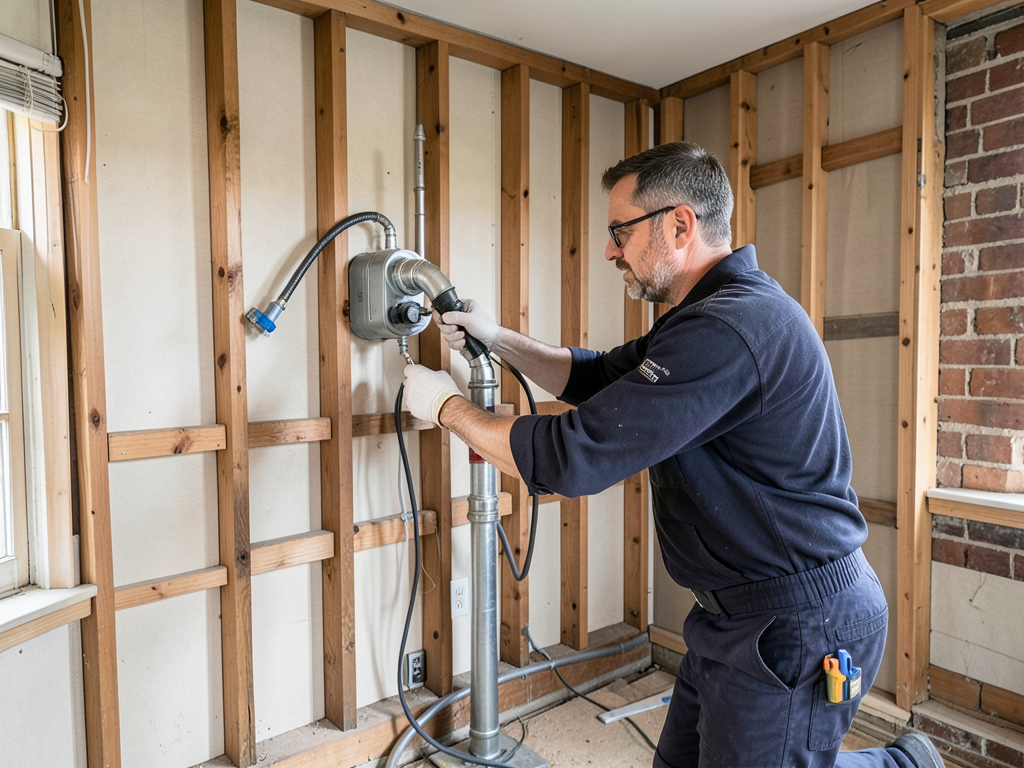
Diagram showing typical high-velocity duct routing through 2×4 wall cavities in historic homes

Technician using specialized tools to minimize vibration damage when cutting into plaster walls
Discreet outdoor condenser placement behind landscaping to preserve historic street view
Ready to Upgrade Your Eastwood Bungalow?
Modern HVAC installation in historic Eastwood bungalows requires specialized knowledge, careful planning, and respect for architectural heritage. The right system can provide decades of comfortable, efficient cooling while preserving the character that makes your home special.
Don’t risk damage to your historic home with inexperienced contractors or DIY attempts. Professional installation ensures compliance with all codes, protects your investment, and delivers the comfort you deserve.
Call (281) 552-7766 today to schedule your consultation. Our experienced technicians understand Eastwood’s unique requirements and will design a system that meets your comfort needs while preserving your home’s historic character. Pick up the phone and call (281) 552-7766 before the next Houston heat wave hits. Why Your Memorial Home Needs a High-Efficiency AC Unit Right Now.
{
“@context”: “https://schema.org”,
“@type”: “BlogPosting”,
“headline”: “Updating the HVAC in an Eastwood Brick Bungalow Without Ruining the Character”,
“description”: “Discover how to modernize HVAC in historic Eastwood brick bungalows while preserving architectural charm. Expert solutions for Houston’s climate and building codes.”,
“wordCount”: 2265,
“datePublished”: “2026-05-17T14:58:00.000Z”,
“dateModified”: “2026-05-17T14:58:00.000Z”,
“inLanguage”: “en-US”,
“mainEntityOfPage”: {
“@type”: “WebPage”,
“@id”: “https://titanhvachouston.com”
},
“publisher”: {
“@type”: “LocalBusiness”,
“name”: “Titan HVAC Houston”,
“url”: “https://titanhvachouston.com”
},
“author”: {
“@type”: “Organization”,
“name”: “Titan HVAC Houston”,
“url”: “https://titanhvachouston.com”
},
“image”: {
“@type”: “ImageObject”,
“url”: “https://titanhvachouston.com/wp-content/uploads/2026/03/updating-the-hvac-in-an-eastwood-brick-bungalow-wi-1.png”
}
}
{
“@context”: “https://schema.org”,
“@type”: “HVACBusiness”,
“name”: “Titan HVAC Houston”,
“url”: “https://titanhvachouston.com”,
“address”: {
“@type”: “PostalAddress”,
“addressLocality”: “Houston”
},
“areaServed”: {
“@type”: “City”,
“name”: “Houston”
}
}
{
“@context”: “https://schema.org”,
“@type”: “FAQPage”,
“mainEntity”: [
{
“@type”: “Question”,
“name”: “Will HVAC installation damage my plaster walls?”,
“acceptedAnswer”: {
“@type”: “Answer”,
“text”: “Experienced contractors use specialized techniques to minimize plaster damage. They typically work through existing openings when possible and use dust collection systems during any necessary cutting. Most plaster damage can be repaired invisibly if it occurs.”
}
},
{
“@type”: “Question”,
“name”: “How long does HVAC installation take in a historic home?”,
“acceptedAnswer”: {
“@type”: “Answer”,
“text”: “Most installations require 3-5 days for complete system replacement. This includes equipment installation, electrical work, and system testing. Plaster repair and painting may extend the timeline by several days if needed.”
}
},
{
“@type”: “Question”,
“name”: “Can I keep my radiators if I install central air?”,
“acceptedAnswer”: {
“@type”: “Answer”,
“text”: “Yes, many homeowners choose to retain original radiators while adding cooling. This requires a separate cooling system but preserves the historic heating elements. Some modern systems can provide both heating and cooling through the same ductwork.”
}
},
{
“@type”: “Question”,
“name”: “Will my energy bills increase with new HVAC?”,
“acceptedAnswer”: {
“@type”: “Answer”,
“text”: “New high-efficiency systems typically reduce energy costs by 30-50% compared to old equipment or window units. The exact savings depend on your home’s insulation and the efficiency of your previous system.”
}
},
{
“@type”: “Question”,
“name”: “Do I need special permits for HVAC in Eastwood?”,
“acceptedAnswer”: {
“@type”: “Answer”,
“text”: “Yes, City of Houston requires building permits for all HVAC installations. For Eastwood properties, the Houston Archaeological and Historical Commission must also approve any exterior modifications like condenser placement or roof penetrations.”
}
},
{
“@type”: “Question”,
“name”: “Ready to Upgrade Your Eastwood Bungalow?”,
“acceptedAnswer”: {
“@type”: “Answer”,
“text”: “Modern HVAC installation in historic Eastwood bungalows requires specialized knowledge, careful planning, and respect for architectural heritage. The right system can provide decades of comfortable, efficient cooling while preserving the character that makes your home special.”
}
}
]
}
{
“@context”: “https://schema.org”,
“@type”: “HowTo”,
“name”: “HVAC Installation Process”,
“step”: [
{
“@type”: “HowToStep”,
“position”: 1,
“name”: “Initial Assessment”,
“text”: “Technicians evaluate the home’s structure, electrical capacity, and existing HVAC components. They measure room dimensions, assess insulation levels, and document all architectural features requiring protection.”
},
{
“@type”: “HowToStep”,
“position”: 2,
“name”: “System Design”,
“text”: “Engineers calculate heating and cooling loads using Manual J procedures. They select equipment that meets SEER2 requirements while fitting within the home’s spatial constraints.”
},
{
“@type”: “HowToStep”,
“position”: 3,
“name”: “Permit Acquisition”,
“text”: “Contractors submit plans to City of Houston for building permits. For historic properties, they coordinate with the Archaeological and Historical Commission for exterior modification approval.”
},
{
“@type”: “HowToStep”,
“position”: 4,
“name”: “Preparation”,
“text”: “Rooms are protected with plastic sheeting. Furniture is moved or covered. Dust barriers are installed to contain demolition debris.”
},
{
“@type”: “HowToStep”,
“position”: 5,
“name”: “Installation”,
“text”: “Equipment is installed according to the approved plans. All work follows TDLR licensing requirements and manufacturer specifications.”
},
{
“@type”: “HowToStep”,
“position”: 6,
“name”: “Testing and Commissioning”,
“text”: “Systems are tested for proper operation, airflow, and refrigerant charge. Technicians verify that all zones maintain desired temperatures.”
},
{
“@type”: “HowToStep”,
“position”: 7,
“name”: “Final Walkthrough”,
“text”: “Homeowners receive system operation training. All restored architectural features are inspected for proper reinstallation.”
}
],
“image”: “https://titanhvachouston.com/wp-content/uploads/2026/03/updating-the-hvac-in-an-eastwood-brick-bungalow-wi-1.png”
}
{
“@context”: “https://schema.org”,
“@type”: “BreadcrumbList”,
“itemListElement”: [
{
“@type”: “ListItem”,
“position”: 1,
“name”: “Home”,
“item”: “https://titanhvachouston.com”
},
{
“@type”: “ListItem”,
“position”: 2,
“name”: “Blog”,
“item”: “https://titanhvachouston.com/blog”
},
{
“@type”: “ListItem”,
“position”: 3,
“name”: “Updating the HVAC in an Eastwood Brick Bungalow Without Ruining the Character”
}
]
}
{
“@context”: “https://schema.org”,
“@type”: “Service”,
“serviceType”: “HVAC”,
“provider”: {
“@type”: “LocalBusiness”,
“name”: “Titan HVAC Houston”,
“url”: “https://titanhvachouston.com”
},
“areaServed”: {
“@type”: “City”,
“name”: “Houston”
},
“description”: “Discover how to modernize HVAC in historic Eastwood brick bungalows while preserving architectural charm. Expert solutions for Houston’s climate and building codes.”
}