
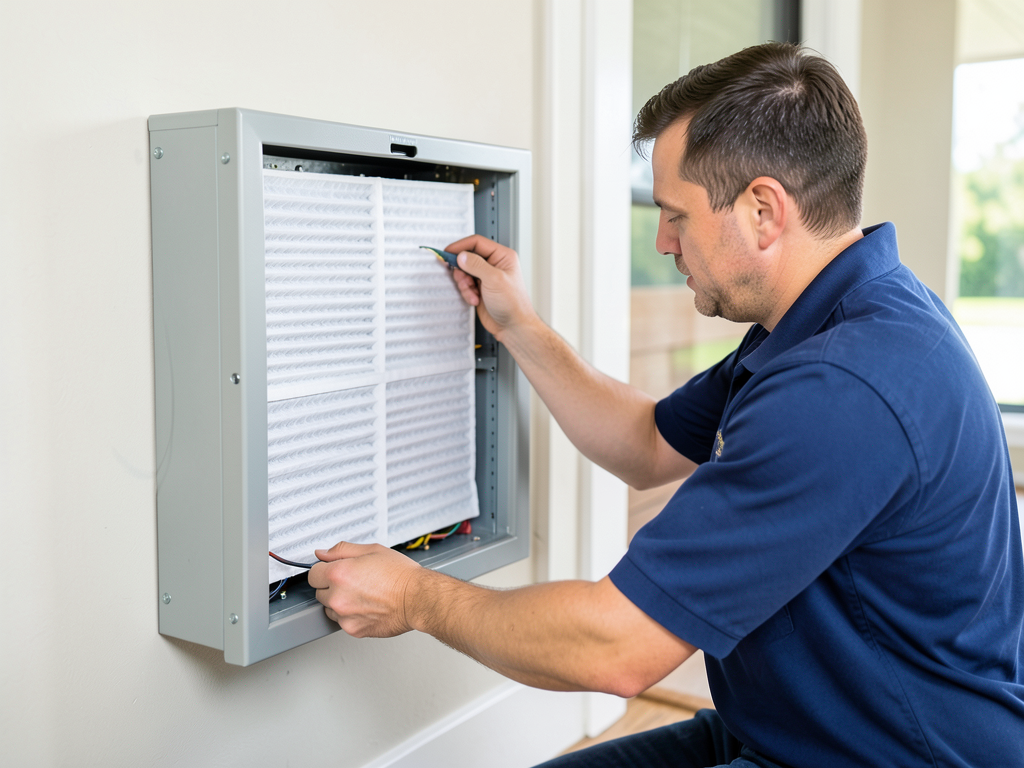
If your Houston acreage home sits near unpaved roads or open fields, your HVAC system is under constant assault from dust, pollen, and debris. Standard 1-inch pleated filters clog quickly in these conditions, forcing your system to work harder and reducing indoor air quality. Deep-pleated 4-5 inch media filters offer significantly more surface area, trap more particles, and last longer—making them the smarter choice for homes with high dust exposure.
What Makes High-Capacity Pleated Filters Different?
Standard 1-inch pleated filters have a thin layer of media folded into pleats. Deep-pleated filters use a much thicker block of pleated media—typically 4 to 5 inches deep—packed into a rigid cabinet. This design increases the total filtration surface area from about 2-3 square feet to 75-100 square feet. More surface area means more dust can be trapped before airflow resistance becomes a problem.
The deeper media also allows for higher MERV ratings (8-13) without the pressure drop that would choke a standard filter. This is critical in Houston’s humid climate, where mold spores and pollen are year-round concerns. The increased capacity means you replace these filters once or twice a year instead of every 30-90 days.
How Houston’s Climate Impacts Filter Performance
Houston’s average summer humidity often exceeds 80%, and the region experiences high pollen counts from live oak, ragweed, and other allergens. Acreage properties near Friendswood or League City face additional dust from unpaved roads and agricultural activity. These conditions cause standard filters to saturate quickly, reducing airflow and forcing your blower motor to work harder. HVAC Friendswood.
According to the EPA’s Energy Star program, a clogged filter can increase HVAC energy consumption by up to 15%. In Houston’s long cooling season, that translates to hundreds of dollars in extra utility costs. Deep-pleated filters maintain better airflow even as they collect debris, protecting both your system and your wallet. EPA’s Energy Star program.
Technical Comparison: Standard vs. Deep-Pleated Filters
| Feature | Standard 1-Inch Pleated | Deep-Pleated 4-5 Inch |
|---|---|---|
| Surface Area | 2-3 sq. ft. | 75-100 sq. ft. |
| Typical MERV Rating | 6-8 | 8-13 |
| Replacement Interval | 1-3 months | 6-12 months |
| Initial Cost | $10-20 | $60-150 |
| Annual Cost (2 replacements) | $20-40 | $60-150 |
| Pressure Drop at Full Load | 0.25-0.35 in. w.c. | 0.10-0.20 in. w.c. |
Static Pressure and Blower Motor Health
Static pressure is the resistance air encounters as it moves through your HVAC system. Standard filters with high MERV ratings can create excessive pressure drop, causing your blower motor to overheat and fail prematurely. The National Electrical Manufacturers Association (NEMA) recommends keeping total static pressure below 0.50 inches of water column for most residential systems.
Deep-pleated filters distribute dust across a much larger surface, maintaining lower pressure drop even when dirty. This reduces stress on the blower motor and evaporator coil, extending equipment life. A study by the Air-Conditioning, Heating, and Refrigeration Institute (AHRI) found that systems with properly sized media filters experienced 20% fewer blower motor failures over a 10-year period. Air-Conditioning, Heating, and Refrigeration Institute.
Installation Considerations for Acreage Homes
Deep-pleated filters require a dedicated media filter cabinet, which isn’t standard in most Houston homes. Installation involves retrofitting the return air box and adding a cabinet that can accommodate the 4-5 inch depth. This typically costs $300-600 in parts and labor, depending on your system configuration. What a New AC Installation Actually Costs in The Woodlands.
For homes in The Woodlands or Katy with large lot sizes, the investment pays off quickly. The larger cabinet allows for thicker media that captures more dust without restricting airflow. This is especially important for properties with multiple pets, nearby construction, or unpaved driveways where dust levels are consistently high.
Cost-Benefit Analysis Over Time
While the upfront cost of a deep-pleated system is higher, the long-term savings are substantial. Consider a typical Houston home running its AC 3,000 hours per year. A clogged standard filter can increase energy use by 10-15%, costing an extra $75-150 annually in electricity. Over five years, that’s $375-750 in added utility costs.
Deep-pleated filters also reduce the frequency of professional duct cleaning. The EPA recommends cleaning ducts every 3-5 years, but homes with standard filters in dusty environments may need it every 2-3 years. Skipping one duct cleaning saves $300-500, further offsetting the initial investment.
Indoor Air Quality Benefits
Higher MERV ratings in deep-pleated filters capture smaller particles, including bacteria, smoke, and certain viruses. For families with asthma or allergies, this can significantly improve indoor air quality. The American Lung Association notes that indoor air can be 2-5 times more polluted than outdoor air, making effective filtration crucial.
In Houston’s humid climate, deep-pleated filters also help control mold spores. The thicker media doesn’t become saturated as quickly, maintaining filtration efficiency even during peak pollen seasons. This consistent performance means fewer airborne contaminants circulating through your home.
Maintenance and Replacement Schedule
Deep-pleated filters typically last 6-12 months, depending on your home’s dust load. Check the filter every 3 months by removing it and holding it up to a light. If you can’t see light through the media, it’s time for replacement. Most homeowners find they need to replace once a year, usually in spring before the heavy cooling season.
Keep a log of replacement dates and pressure drop readings if your system has a static pressure gauge. This data helps you optimize the replacement schedule and identify when your home’s dust load increases, such as after nearby construction or during drought conditions.
Is Your System Compatible?
Most modern HVAC systems can accommodate deep-pleated filters, but some older units may have limitations. Systems installed before 2000 often have smaller return air boxes that require significant modification. A qualified technician can measure your system’s static pressure and determine if a media filter cabinet is appropriate.
Look for signs your current filter is causing problems: frequent cycling, weak airflow from vents, or ice formation on the evaporator coil. These symptoms indicate your system is struggling against filter resistance. Upgrading to a deep-pleated system often resolves these issues while improving overall performance.
Frequently Asked Questions
Can I just use a higher MERV rating on my standard filter?
Higher MERV ratings on standard 1-inch filters increase pressure drop significantly. This can restrict airflow, cause your blower motor to overheat, and reduce cooling efficiency. Deep-pleated filters achieve high MERV ratings without these drawbacks due to their larger surface area.
How much does installation cost for a deep-pleated system?
Installation typically ranges from $300-600, including the media filter cabinet and professional installation. The exact cost depends on your system’s configuration and whether any return air box modifications are needed.
Will a deep-pleated filter eliminate the need for duct cleaning?
No, but it will extend the time between cleanings. Deep-pleated filters capture more dust before it enters your ductwork, but some particles still bypass the filter. Most homes still need professional duct cleaning every 3-5 years.
Making the Right Choice for Your Home
For Houston acreage homes dealing with constant dust exposure, deep-pleated 4-5 inch filters offer superior performance, better indoor air quality, and long-term cost savings. The combination of higher MERV ratings, lower pressure drop, and extended replacement intervals makes them the logical choice for properties near unpaved roads or open fields.
Before upgrading, have a qualified HVAC technician evaluate your system’s static pressure and return air configuration. This ensures you get a filter that improves performance rather than creating new problems. The investment typically pays for itself within 2-3 years through energy savings and reduced maintenance costs.
Ready to improve your home’s air quality and protect your HVAC system? Call (281) 552-7766 today to schedule your inspection. Our technicians will evaluate your current setup and recommend the best filtration solution for your specific needs. Why Your Memorial Home Needs a High-Efficiency AC Unit Right Now.
You may also find this helpful. How Cooking and Scented Candles Clog Up Your HVAC Filters in First Ward Lofts.
{
“@context”: “https://schema.org”,
“@type”: “BlogPosting”,
“headline”: “Why High-Capacity Pleated Filters are Better for the Dusty Roads Around Acreage Homes”,
“description”: “Learn why deep-pleated 4-5 inch filters outperform standard 1-inch filters for Houston acreage homes. Discover MERV ratings, static pressure, and long-term HVAC savings.”,
“wordCount”: 1286,
“datePublished”: “2026-06-02T13:19:00.000Z”,
“dateModified”: “2026-06-02T13:19:00.000Z”,
“inLanguage”: “en-US”,
“mainEntityOfPage”: {
“@type”: “WebPage”,
“@id”: “https://titanhvachouston.com”
},
“publisher”: {
“@type”: “LocalBusiness”,
“name”: “Titan HVAC Houston”,
“url”: “https://titanhvachouston.com”
},
“author”: {
“@type”: “Organization”,
“name”: “Titan HVAC Houston”,
“url”: “https://titanhvachouston.com”
},
“image”: {
“@type”: “ImageObject”,
“url”: “https://titanhvachouston.com/wp-content/uploads/2026/03/why-high-capacity-pleated-filters-are-better-for-t-1.png”
}
}
{
“@context”: “https://schema.org”,
“@type”: “HVACBusiness”,
“name”: “Titan HVAC Houston”,
“url”: “https://titanhvachouston.com”,
“address”: {
“@type”: “PostalAddress”,
“addressLocality”: “Houston”
},
“areaServed”: {
“@type”: “City”,
“name”: “Houston”
}
}
{
“@context”: “https://schema.org”,
“@type”: “FAQPage”,
“mainEntity”: [
{
“@type”: “Question”,
“name”: “What Makes High-Capacity Pleated Filters Different?”,
“acceptedAnswer”: {
“@type”: “Answer”,
“text”: “Standard 1-inch pleated filters have a thin layer of media folded into pleats. Deep-pleated filters use a much thicker block of pleated media—typically 4 to 5 inches deep—packed into a rigid cabinet. This design increases the total filtration surface area from about 2-3 square feet to 75-100 square feet. More surface area means more dust can be trapped before airflow resistance becomes a problem.”
}
},
{
“@type”: “Question”,
“name”: “Is Your System Compatible?”,
“acceptedAnswer”: {
“@type”: “Answer”,
“text”: “Most modern HVAC systems can accommodate deep-pleated filters, but some older units may have limitations. Systems installed before 2000 often have smaller return air boxes that require significant modification. A qualified technician can measure your system’s static pressure and determine if a media filter cabinet is appropriate.”
}
},
{
“@type”: “Question”,
“name”: “Can I just use a higher MERV rating on my standard filter?”,
“acceptedAnswer”: {
“@type”: “Answer”,
“text”: “Higher MERV ratings on standard 1-inch filters increase pressure drop significantly. This can restrict airflow, cause your blower motor to overheat, and reduce cooling efficiency. Deep-pleated filters achieve high MERV ratings without these drawbacks due to their larger surface area.”
}
},
{
“@type”: “Question”,
“name”: “How much does installation cost for a deep-pleated system?”,
“acceptedAnswer”: {
“@type”: “Answer”,
“text”: “Installation typically ranges from $300-600, including the media filter cabinet and professional installation. The exact cost depends on your system’s configuration and whether any return air box modifications are needed.”
}
},
{
“@type”: “Question”,
“name”: “Will a deep-pleated filter eliminate the need for duct cleaning?”,
“acceptedAnswer”: {
“@type”: “Answer”,
“text”: “No, but it will extend the time between cleanings. Deep-pleated filters capture more dust before it enters your ductwork, but some particles still bypass the filter. Most homes still need professional duct cleaning every 3-5 years.”
}
}
]
}
{
“@context”: “https://schema.org”,
“@type”: “BreadcrumbList”,
“itemListElement”: [
{
“@type”: “ListItem”,
“position”: 1,
“name”: “Home”,
“item”: “https://titanhvachouston.com”
},
{
“@type”: “ListItem”,
“position”: 2,
“name”: “Blog”,
“item”: “https://titanhvachouston.com/blog”
},
{
“@type”: “ListItem”,
“position”: 3,
“name”: “Why High-Capacity Pleated Filters are Better for the Dusty Roads Around Acreage Homes”
}
]
}
{
“@context”: “https://schema.org”,
“@type”: “Service”,
“serviceType”: “HVAC”,
“provider”: {
“@type”: “LocalBusiness”,
“name”: “Titan HVAC Houston”,
“url”: “https://titanhvachouston.com”
},
“areaServed”: {
“@type”: “City”,
“name”: “Houston”
},
“description”: “Learn why deep-pleated 4-5 inch filters outperform standard 1-inch filters for Houston acreage homes. Discover MERV ratings, static pressure, and long-term HVAC savings.”
}