
Managing HVAC Pet Dander and Fur for Animal Lovers in Neartown
Pet dander and fur can quickly overwhelm your HVAC system especially in Houston’s humid climate. The microscopic particles that shed from your furry companions can clog filters reduce airflow and even trigger allergies for your family. In Neartown’s older homes with their unique architectural features managing pet dander requires a strategic approach that goes beyond simply changing your air filter.
Understanding how your HVAC system interacts with pet dander is the first step toward creating a healthier home environment. The constant shedding of dander fur and even skin cells from your pets creates a continuous challenge for your heating and cooling equipment. These particles are so small they can pass through standard filters and accumulate in your ductwork evaporator coils and blower motor. In Neartown’s historic bungalows and craftsman-style homes the ductwork often runs through unconditioned spaces making the problem even more complex.. Read more about Fighting Constant Dust in Your Pasadena Home Through Better Filtration.
The good news is that with the right combination of filtration air purification and maintenance you can significantly reduce pet dander in your home while keeping your HVAC system running efficiently. Let’s explore the specific challenges and solutions that work best for Neartown residents who share their homes with beloved pets.
The Challenge: Why Houston Humidity Makes Pet Dander Worse
Houston’s notorious humidity creates a perfect storm for pet dander problems. When relative humidity exceeds 60% as it often does in Neartown during summer months dander particles absorb moisture and become heavier. This causes them to settle more quickly on surfaces but also makes them stickier and more likely to adhere to your HVAC components.
Inside your evaporator coil the combination of moisture and dander creates an ideal environment for microbial growth. The dark damp conditions inside your air handler become a breeding ground for mold and bacteria when dander provides organic material for them to feed on. This not only reduces your system’s efficiency but can also spread allergens throughout your home.
Neartown’s older homes often have ductwork that was designed for much simpler filtration systems. The narrow passages and multiple bends in these systems trap dander and fur creating areas where airflow becomes restricted. When your blower motor has to work harder to push air through these clogged passages it uses more energy and wears out faster.
According to the Environmental Protection Agency indoor air can be two to five times more polluted than outdoor air. In pet households this pollution level increases significantly especially when humidity prevents proper air circulation and filtration.. Read more about Controlling Indoor Pollen and Springtime Allergies in Southside Place.

Image description: Technician using a particle counter to measure dander levels in a Neartown home’s return air duct showing high concentrations near the filter.
High-Efficiency Air Filtration (MERV Ratings for Pet Owners)
Choosing the right air filter is critical for managing pet dander but higher MERV ratings aren’t always better. Standard fiberglass filters rated MERV 1-4 capture less than 20% of particles in the 3-10 micron range which includes most pet dander. Upgrading to a MERV 8 filter increases capture to about 85% but may still allow microscopic dander particles to pass through.
For pet owners a MERV 11 filter strikes the best balance between filtration efficiency and system compatibility. These filters capture 85-95% of particles between 3-10 microns while maintaining adequate airflow for most residential HVAC systems. The American Society of Heating Refrigerating and Air-Conditioning Engineers (ASHRAE) recommends MERV 11-13 for homes with pets. ASHRAE HVAC standards and recommendations.
MERV 13 filters provide superior filtration capturing 90% of particles as small as 1 micron including many bacteria and smoke particles. However they also create significantly more resistance to airflow. In Neartown’s older homes where ductwork may already be undersized a MERV 13 filter could strain your blower motor and reduce overall system efficiency.
The Texas Department of Licensing and Regulation requires HVAC contractors to verify that any filter upgrade won’t compromise system performance. A professional assessment should include measuring static pressure across your filter and checking your blower motor’s capacity to handle the increased resistance. EPA Indoor Air Quality information.
Consider these factors when selecting your filter:
- Change frequency: Homes with multiple pets may need filter changes every 30-45 days instead of the standard 90 days
- Filter depth: Thicker filters (4-5 inches) provide more surface area and last longer than standard 1-inch filters
- Material type: Pleated filters trap more particles than flat fiberglass options
- Electrostatic properties: Some filters use static charge to attract and hold particles
Whole-Home Air Purifiers and Scrubbers
Beyond standard filtration whole-home air purification systems can dramatically reduce pet dander in your Neartown home. These systems work by installing additional equipment directly into your existing HVAC ductwork creating multiple layers of protection against airborne contaminants.
UV light systems installed near your evaporator coil use ultraviolet radiation to neutralize bacteria mold and viruses. While UV light doesn’t directly capture dander it prevents the biological growth that dander can feed. The National Air Filtration Association recommends UV systems for homes with allergy sufferers and pets.
Photocatalytic oxidation (PCO) technology takes air purification further by using UV light with a catalyst to create oxidizing agents that break down organic compounds. These systems can reduce pet odors as well as dander particles. The oxidation process converts contaminants into harmless carbon dioxide and water vapor.
REME HALO and similar ionized air scrubbers release charged particles that cause airborne contaminants to clump together becoming heavy enough to fall out of the air or be captured by your filter. These systems actively clean the air throughout your entire home rather than just treating air as it passes through your HVAC system.
The International Indoor Air Quality Commission has found that properly installed air purification systems can reduce airborne particles by 85-99% depending on the technology used and the specific contaminants present in your home.
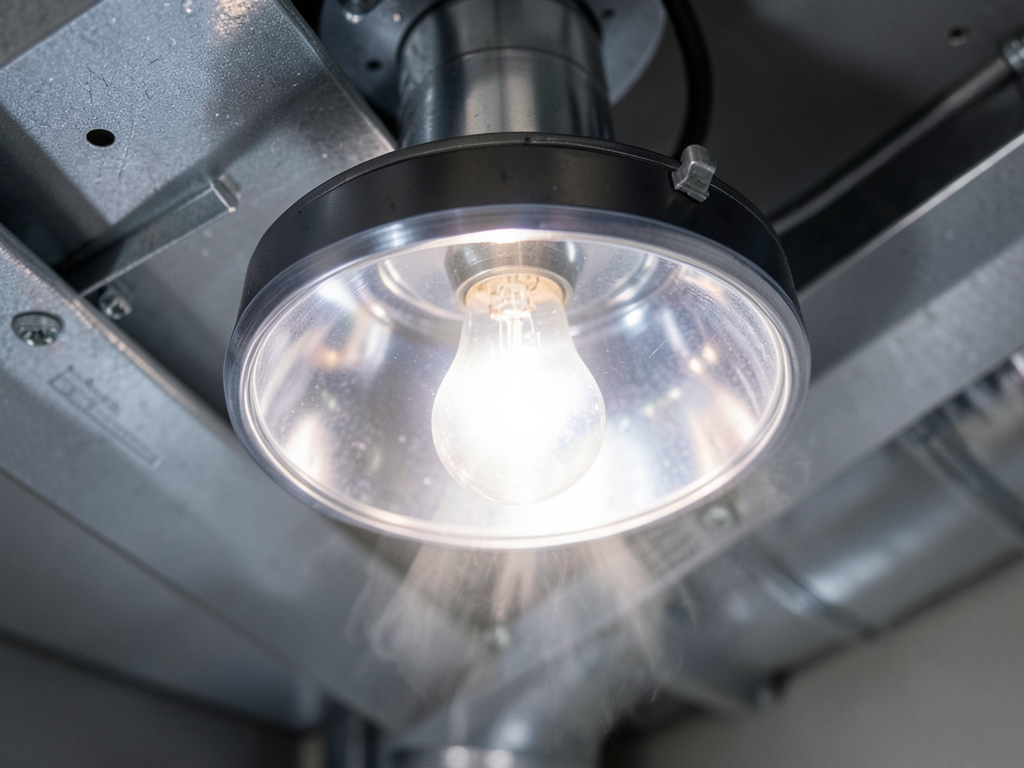
Image description: Close-up of a UV light air purifier installed in an HVAC plenum showing the bulb and reflective housing that maximizes exposure to passing air.
The Role of Duct Cleaning in Dander Management
Duct cleaning becomes necessary when pet dander accumulates to the point where it restricts airflow or creates unpleasant odors. The National Air Duct Cleaners Association recommends inspection every 3-5 years for homes with pets though some Neartown homes may need more frequent service depending on the number and type of animals.
Professional duct cleaning involves using specialized equipment to dislodge debris and vacuum it out of your ductwork. High-powered vacuums with HEPA filtration prevent the contaminants from spreading into your living spaces during the cleaning process. The entire system including supply ducts return ducts and the air handler should be cleaned for maximum effectiveness.
In Neartown’s older homes duct cleaning often reveals unexpected issues. Many historic homes have ductwork that was added long after the original construction making it difficult to access certain areas. Some systems may have sections that are completely disconnected or have developed leaks that allow contaminants to enter.
After cleaning technicians should apply an antimicrobial treatment to prevent rapid regrowth of mold and bacteria. However the EPA cautions that biocides should only be used after mechanical cleaning has removed the bulk of contaminants since applying chemicals to dirty surfaces reduces their effectiveness.
Watch for these signs that indicate your ducts need cleaning:
- Visible dust blowing from vents when your system starts
- Musty odors when your HVAC runs
- Excessive dust accumulation on furniture despite regular cleaning
- Allergy symptoms that worsen when you’re at home
- Uneven airflow between different rooms
Strategic HVAC Maintenance for Multi-Pet Households
Homes with multiple pets require more frequent HVAC maintenance to keep systems running efficiently. The combination of fur dander and the increased wear from continuous operation means your equipment needs attention before minor issues become major problems. Why Your Memorial Home Needs a High-Efficiency AC Unit Right Now.
Professional maintenance should include these critical steps:
- Inspect and clean the blower motor and fan assembly removing accumulated pet hair and dander
- Check evaporator coil for buildup that can reduce heat transfer efficiency
- Examine ductwork for leaks that allow conditioned air to escape
- Test refrigerant levels since dirty coils can cause the system to work harder
- Verify proper condensate drain function to prevent moisture problems
Neartown’s humid climate means your AC runs more months per year than in many other regions. This extended operation time multiplies the impact of pet dander on your system. Scheduling maintenance twice yearly rather than annually can prevent the cascade of problems that starts with a dirty filter and ends with system failure.
During each service call technicians should use a combustion analyzer to verify that your system is burning fuel efficiently. For electric systems they should check amperage draw on all motors to identify any that are working harder than normal due to restricted airflow from dander buildup.
The Texas Air Conditioning Contractors Association recommends that homes with three or more pets have professional duct inspection annually. This inspection should include video scanning of the interior ductwork to identify problem areas that aren’t visible from the vents.
Consider upgrading to a smart thermostat that monitors your system’s run time and can alert you when maintenance is needed. Some models can even track filter life based on actual airflow rather than a simple timer providing more accurate reminders for replacement.
Image description: Technician performing maintenance on an HVAC blower assembly showing accumulated pet hair on the wheel and motor housing before cleaning.
Creating Your Pet-Friendly HVAC Strategy
Managing pet dander effectively requires a comprehensive approach that addresses both your home’s unique characteristics and your specific needs. Start by assessing your current situation including the number and type of pets you have the age and condition of your HVAC system and any allergy concerns among household members.
Develop a maintenance schedule that includes:
- Monthly filter inspections and changes as needed
- Quarterly vent and return grille cleaning
- Bi-annual professional maintenance visits
- Annual duct inspection and cleaning when recommended
Consider these additional strategies to reduce dander in your Neartown home:
- Install air purifiers in rooms where your pets spend the most time
- Use HEPA vacuum cleaners regularly to remove dander from carpets and furniture
- Wash pet bedding weekly in hot water to kill dust mites
- Brush pets outdoors when weather permits to reduce indoor shedding
- Maintain indoor humidity between 30-50% to prevent dander from becoming sticky
The combination of proper filtration air purification and regular maintenance can reduce airborne pet dander by up to 95% creating a healthier environment for both your family and your pets. This comprehensive approach not only improves indoor air quality but also extends the life of your HVAC equipment and reduces energy costs.
Remember that every home is different and what works for one household may not be ideal for another. A professional assessment can help you develop a customized plan that addresses your specific challenges and fits within your budget. The investment in proper dander management pays dividends in improved comfort lower energy bills and better health for everyone in your home.
Frequently Asked Questions
How often should I change my air filter if I have pets?
Homes with pets typically need air filter changes every 30-60 days depending on the number of animals and the filter type. Check your filter monthly and replace it when it appears dirty or every 30 days as a minimum.
Can pet dander damage my HVAC system?
Yes pet dander can restrict airflow through your system causing your blower motor to work harder and potentially fail prematurely. Dander also accumulates on evaporator coils reducing cooling efficiency and creating conditions for mold growth.
What MERV rating should I use for pet dander?
For most homes with pets MERV 11 provides the best balance of filtration and airflow. MERV 13 offers superior filtration but may restrict airflow in older systems. A professional assessment can determine the optimal rating for your specific equipment.
How do I know if my ducts need cleaning?
Signs include visible dust blowing from vents musty odors when your system runs excessive dust on furniture and worsening allergy symptoms at home. Homes with multiple pets may need duct cleaning every 2-3 years.
Are air purifiers worth the investment for pet owners?
Yes whole-home air purifiers can significantly reduce pet dander and odors. Systems with HEPA filtration and activated carbon can remove up to 99% of airborne particles including pet dander providing relief for allergy sufferers.
Does bathing my pets help reduce dander in my HVAC system?
Regular bathing reduces the amount of dander your pets shed but it’s not a complete solution. Combine bathing with proper filtration air purification and HVAC maintenance for the best results in managing indoor air quality.
Can I install a higher MERV filter without professional help?
While you can physically install a higher MERV filter doing so without professional assessment risks restricting airflow and damaging your system. Always have a technician verify that your equipment can handle the increased resistance before upgrading.
How does humidity affect pet dander in my home?
High humidity causes pet dander to absorb moisture becoming heavier and stickier. This makes it more likely to settle on surfaces and adhere to HVAC components. Maintaining indoor humidity between 30-50% helps manage dander more effectively.
Call (281) 552-7766 today to schedule your professional HVAC assessment and take the first step toward a healthier pet-friendly home in Neartown.
Don’t wait until pet dander causes system failure or allergy problems Pick up the phone and call (281) 552-7766 before the next Houston heat wave hits. Our certified technicians understand the unique challenges of managing pet dander in Neartown’s historic homes and can recommend solutions that work for your specific situation.
You may also find this helpful. Why Your AC Is Freezing Up Even When It’s 100 Degrees in Sienna.