
Why High Ceilings in Your Bridgeland Living Room Make Cooling More Difficult
High ceilings create stunning open spaces in Bridgeland homes but they also trap heat and humidity making your air conditioner work overtime. The physics is simple hot air rises and in a room with 15-foot or 20-foot ceilings that warm air collects far above your head where your thermostat can’t detect it. Your AC runs constantly trying to cool a space it can’t effectively reach. air sealing your home.
Most Bridgeland homes were built with standard square footage cooling calculations that don’t account for cubic volume. A 2000 square foot home with standard 8-foot ceilings contains about 16000 cubic feet of air. The same 2000 square feet with 20-foot ceilings contains 40000 cubic feet of air. That’s 2.5 times more air to cool using the same equipment.
The Houston humidity makes this problem worse. When warm air rises and cools near your ceiling it can’t hold as much moisture. This moisture condenses on surfaces creating that damp sticky feeling even when your thermostat reads 75 degrees. Your body feels warmer because the air is holding more heat energy as latent moisture.
High ceilings also create thermal stratification where temperature differences between floor and ceiling can exceed 10 degrees. Your thermostat sits at about 5 feet reading the cool air at that level while the upper 15 feet bakes in collected heat. This is why some rooms feel comfortable near the floor but stuffy near the ceiling.
Standard return air vents installed near the ceiling pull the warmest air from the top of the room creating a convection loop that actually makes stratification worse. The cool air you paid to condition gets pulled back to your AC unit before it can mix with the warm air below. What a New AC Installation Actually Costs in The Woodlands.
Call (281) 552-7766 today to schedule your inspection. We’ll measure your room volume and design a cooling solution that actually works for high-ceiling spaces.
The Physics of High Ceilings Why Your AC is Struggling

Thermal stratification occurs when warm air rises and cool air sinks creating distinct temperature layers in a room. In standard construction this effect is minimal because ceiling heights are low. With 15-foot or 20-foot ceilings the effect becomes dramatic.
Your air conditioner measures temperature at one point near the center of your home. In a vaulted space it can’t detect the heat trapped in the upper third of the room. The system runs until the air at thermostat level reaches 75 degrees but the air above remains much warmer.
This creates a comfort problem even when your AC is working perfectly. The room feels uneven with cold spots near the floor and warm zones near the ceiling. People naturally gravitate toward lower areas creating awkward furniture arrangements.
Volume matters more than area in high-ceiling spaces. A room that measures 20×20 feet with 8-foot ceilings contains 3200 cubic feet. The same footprint with 16-foot ceilings contains 6400 cubic feet. Your AC must move twice the air volume to achieve the same temperature change.
Humidity compounds the issue in Houston’s climate. Warm air holds more moisture than cool air. When that warm air rises and cools near your ceiling the moisture condenses creating that damp feeling. Your body loses its ability to cool itself through evaporation making the room feel several degrees warmer than the actual temperature.
5 Engineering-Backed Solutions for Vaulted Ceilings
Ceiling fans become essential in high-ceiling spaces but direction matters. In summer set fans to rotate counterclockwise when viewed from below. This creates a downward airflow that breaks up thermal stratification. The moving air also helps moisture evaporate from your skin making you feel cooler even if the room temperature stays the same.
HVAC zoning systems divide your home into separate temperature zones. Each zone has its own thermostat and dampers that control airflow. For high-ceiling rooms you can create a zone that runs longer or at a lower temperature than the rest of your home. This ensures the upper air volume gets conditioned even when the lower areas feel comfortable.
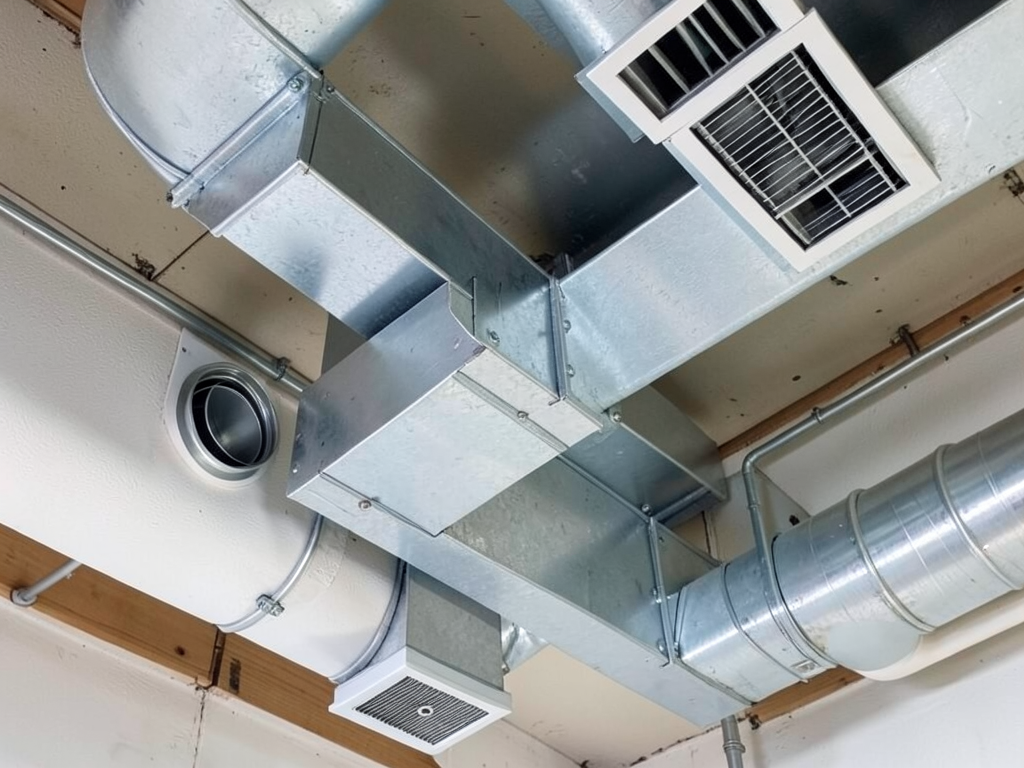
Ductwork modifications can dramatically improve high-ceiling cooling. Adding supply registers at different heights ensures air reaches all levels of the room. Low sidewall returns pull cool air from occupied spaces while high returns capture the warm air that rises. This creates a more even temperature distribution.
Solar film installation on high windows reduces heat gain from sunlight. Many Bridgeland homes feature large transom windows above standard windows that let in tremendous heat. Modern solar films reject up to 80% of solar heat while maintaining visibility. This reduces the cooling load on your AC system.
Smart thermostats with remote sensors solve the thermostat location problem. Place sensors at head height in different areas of the room. The system can then average temperatures from multiple points rather than relying on a single location. This prevents the AC from shutting off when the lower air is cool but the upper air remains warm. smart thermostat technology.
The Houston Factor Humidity vs High Ceilings
Houston’s subtropical climate creates unique challenges for high-ceiling cooling. Our average relative humidity exceeds 75% during summer months. This moisture in the air holds tremendous heat energy that your AC must remove.
Standard Manual J calculations used for AC sizing assume 8-foot ceilings and moderate humidity. They calculate cooling loads based on square footage and basic climate data. These calculations fail completely for high-ceiling spaces where volume matters more than area.
The latent heat load from humidity often exceeds the sensible heat load from temperature in Houston. Your AC must remove moisture from the air before it can effectively cool it. In a high-ceiling space this process takes longer because the air volume is larger and the moisture is distributed throughout the entire space.
Whole-home dehumidifiers become essential for high-ceiling homes in humid climates. These systems remove moisture from all the air in your home including the air trapped in high spaces. By reducing humidity to 50% or below you can set your thermostat several degrees higher while maintaining the same comfort level.
The stack effect becomes more pronounced in tall spaces. Warm air rises creating positive pressure at the top of the room and negative pressure at the bottom. This pressure difference drives air movement and can actually pull warm air from your attic into your living space through tiny gaps and cracks.
Is a Ductless Mini-Split the Answer
Mini-split systems offer targeted cooling for high-ceiling problem areas without replacing your entire HVAC system. These systems consist of an outdoor compressor and one or more indoor air handlers mounted high on walls.
The main advantage is precise temperature control for specific zones. You can install a mini-split in your vaulted living room and set it to run whenever that space needs cooling regardless of what your central system is doing. This prevents the central system from short cycling trying to cool a space it can’t effectively reach. Why Your Memorial Home Needs a High-Efficiency AC Unit Right Now.
Mini-splits also handle humidity exceptionally well. Their variable speed compressors can run at low capacity for extended periods removing moisture without overcooling. This is perfect for Houston’s climate where humidity removal matters more than temperature reduction.
Installation flexibility allows you to place indoor units high on walls where they can distribute air throughout the tall space. Many models include built-in air circulation features that help break up thermal stratification without running the cooling function.
The downside is cost. Quality mini-split systems range from $3000 to $8000 installed depending on capacity and features. However this is often less expensive than replacing your entire central system with one sized for high-ceiling volumes.
Energy efficiency ratings for mini-splits often exceed those of central systems. Many achieve SEER2 ratings above 20 compared to 16-18 for standard central AC. This efficiency gain can offset the higher initial cost over time.
Maintenance Checklist for High-Volume Spaces
High-ceiling spaces require specific maintenance to maintain efficiency. Standard AC maintenance often misses issues that become critical in tall rooms.
Air filter changes become more important in high-volume spaces. The larger air volume means more dust and debris circulates through your system. Change filters every 30-45 days instead of the standard 90 days. Use high-quality pleated filters with MERV 8 or higher ratings.
Coil cleaning takes on new importance. Dirty evaporator coils reduce heat transfer efficiency dramatically. In high-ceiling spaces this means your system runs longer trying to cool the same space. Annual professional coil cleaning prevents this efficiency loss.
Attic insulation above high-ceiling rooms requires special attention. Many Bridgeland homes have bonus rooms or vaulted spaces with attics above them. Radiant barriers in these attics reflect heat before it enters your living space. Without proper insulation these spaces become heat traps that radiate warmth into your room even after sunset.. Read more about Why a Radiant Barrier Might Be the Missing Piece for Your Aliana AC System.
Return air vent inspection should focus on location and sizing. High-ceiling rooms often need additional return vents to handle the larger air volume. Make sure existing returns are clear of furniture and obstructions. Consider adding low sidewall returns to capture cool air from occupied spaces.
Refrigerant charge becomes critical in systems struggling with high loads. Undercharged systems can’t remove enough heat from large volumes. Professional pressure and temperature testing ensures your system operates at peak efficiency. This testing requires specialized equipment and training.
Cost-Benefit Analysis of High-Ceiling Cooling Solutions
| Solution | Initial Cost | Energy Savings | Comfort Improvement | Best For |
|---|---|---|---|---|
| Enhanced Ceiling Fans | $200 – $500 | 5-10% | Moderate | DIY Quick Fix |
| HVAC Zoning System | $2000 – $4000 | 15-25% | High | Whole Home Upgrade |
| Ductwork Modifications | $1500 – $3000 | 10-20% | High | Existing System |
| Ductless Mini-Split | $3000 – $8000 | 20-30% | Very High | Problem Rooms |
| Whole-Home Dehumidifier | $2000 – $4000 | 10-15% | High | Houston Humidity |
Don’t let high ceilings turn your Bridgeland living room into an uncomfortable heat trap. Call (281) 552-7766 today to schedule your inspection. Our technicians will measure your room volume calculate your actual cooling load and recommend solutions that actually work for your specific space.
We’ve helped hundreds of Bridgeland homeowners solve high-ceiling cooling problems. From simple fan adjustments to complete system redesigns we have the experience and equipment to make your vaulted spaces comfortable year-round.
Pick up the phone and call (281) 552-7766 before the next Houston heat wave hits. Your comfort is too important to leave to chance.
Frequently Asked Questions
Why does my high-ceiling room feel warmer than the rest of my house?
Hot air rises and collects in the upper portion of high-ceiling rooms. Your thermostat can’t detect this trapped heat so your AC shuts off when the lower air reaches the set temperature while the upper air remains warm. This creates temperature differences of 10 degrees or more between floor and ceiling.
Can I just run my ceiling fan in the opposite direction to solve this problem?
Ceiling fans help but they’re not a complete solution. Set fans to rotate counterclockwise in summer to push air downward and break up thermal stratification. However fans only move air they don’t condition it. You still need proper HVAC design to remove heat and humidity from the entire air volume.
How much more does it cost to cool a room with 20-foot ceilings versus 8-foot ceilings?
A room with 20-foot ceilings contains 2.5 times more air than the same room with 8-foot ceilings. This means your AC must move 2.5 times more air and remove 2.5 times more heat to achieve the same temperature change. Energy costs can increase by 150% or more without proper system design. For more information, visit ASHRAE standards.
You may also find this helpful. How Your Roof Color Affects the Lifespan of Your AC in Independence Heights.
You may also find this helpful. How Smart Leak Detectors Can Save Your Shadow Creek Ranch Home from Ceiling Damage.
You may also find this helpful. Optimizing Your Summerwood Home with the Right Ceiling Fan and AC Combo.
{
“@context”: “https://schema.org”,
“@type”: “BlogPosting”,
“headline”: “Why High Ceilings in Your Bridgeland Living Room Make Cooling More Difficult”,
“description”: “High ceilings in Bridgeland homes trap heat and humidity making AC systems work harder. Learn why vaulted spaces struggle to cool and discover proven solutions.”,
“wordCount”: 1931,
“datePublished”: “2026-05-01T12:32:00.000Z”,
“dateModified”: “2026-05-01T12:32:00.000Z”,
“inLanguage”: “en-US”,
“mainEntityOfPage”: {
“@type”: “WebPage”,
“@id”: “https://titanhvachouston.com”
},
“publisher”: {
“@type”: “LocalBusiness”,
“name”: “Titan HVAC Houston”,
“url”: “https://titanhvachouston.com”
},
“author”: {
“@type”: “Organization”,
“name”: “Titan HVAC Houston”,
“url”: “https://titanhvachouston.com”
},
“image”: {
“@type”: “ImageObject”,
“url”: “https://titanhvachouston.com/wp-content/uploads/2026/03/why-high-ceilings-in-your-bridgeland-living-room-m-1.png”
}
}
{
“@context”: “https://schema.org”,
“@type”: “HVACBusiness”,
“name”: “Titan HVAC Houston”,
“url”: “https://titanhvachouston.com”,
“address”: {
“@type”: “PostalAddress”,
“addressLocality”: “Houston”
},
“areaServed”: {
“@type”: “City”,
“name”: “Houston”
}
}
{
“@context”: “https://schema.org”,
“@type”: “FAQPage”,
“mainEntity”: [
{
“@type”: “Question”,
“name”: “Why does my high-ceiling room feel warmer than the rest of my house?”,
“acceptedAnswer”: {
“@type”: “Answer”,
“text”: “Hot air rises and collects in the upper portion of high-ceiling rooms. Your thermostat can’t detect this trapped heat so your AC shuts off when the lower air reaches the set temperature while the upper air remains warm. This creates temperature differences of 10 degrees or more between floor and ceiling.”
}
},
{
“@type”: “Question”,
“name”: “Can I just run my ceiling fan in the opposite direction to solve this problem?”,
“acceptedAnswer”: {
“@type”: “Answer”,
“text”: “Ceiling fans help but they’re not a complete solution. Set fans to rotate counterclockwise in summer to push air downward and break up thermal stratification. However fans only move air they don’t condition it. You still need proper HVAC design to remove heat and humidity from the entire air volume.”
}
},
{
“@type”: “Question”,
“name”: “How much more does it cost to cool a room with 20-foot ceilings versus 8-foot ceilings?”,
“acceptedAnswer”: {
“@type”: “Answer”,
“text”: “A room with 20-foot ceilings contains 2.5 times more air than the same room with 8-foot ceilings. This means your AC must move 2.5 times more air and remove 2.5 times more heat to achieve the same temperature change. Energy costs can increase by 150% or more without proper system design. For more information, visit ASHRAE standards.”
}
}
]
}
{
“@context”: “https://schema.org”,
“@type”: “BreadcrumbList”,
“itemListElement”: [
{
“@type”: “ListItem”,
“position”: 1,
“name”: “Home”,
“item”: “https://titanhvachouston.com”
},
{
“@type”: “ListItem”,
“position”: 2,
“name”: “Blog”,
“item”: “https://titanhvachouston.com/blog”
},
{
“@type”: “ListItem”,
“position”: 3,
“name”: “Why High Ceilings in Your Bridgeland Living Room Make Cooling More Difficult”
}
]
}
{
“@context”: “https://schema.org”,
“@type”: “Service”,
“serviceType”: “HVAC”,
“provider”: {
“@type”: “LocalBusiness”,
“name”: “Titan HVAC Houston”,
“url”: “https://titanhvachouston.com”
},
“areaServed”: {
“@type”: “City”,
“name”: “Houston”
},
“description”: “High ceilings in Bridgeland homes trap heat and humidity making AC systems work harder. Learn why vaulted spaces struggle to cool and discover proven solutions.”
}