
Getting an Insurance Claim Approved for AC Hail Damage in Tomball
Hail storms in Tomball can leave your AC condenser looking like it survived a rock concert. The good news is that most comprehensive homeowners insurance policies cover hail damage to HVAC equipment. The bad news is that insurance adjusters and contractors often disagree on what constitutes a “total loss” versus a simple repair. This guide walks you through exactly what to look for, how to document the damage, and what steps to take to get your claim approved without unnecessary delays. EPA HVAC technician certification requirements.
Houston’s position in “Hail Alley” means Tomball homeowners face increased risk during spring and fall storm seasons. When hail strikes your condenser coils, it creates microscopic fractures in the aluminum fins that reduce heat transfer efficiency by up to 30%. Left unrepaired, this damage forces your compressor to work harder, leading to premature failure during Houston’s brutal summer heat. Understanding the claim process now can save you thousands in out-of-pocket repair costs later.
How to Identify Hail Damage on Your Houston AC Unit
Identifying hail damage requires more than a casual glance at your outdoor unit. Professional HVAC technicians use specific diagnostic methods to determine if your system has sustained impact damage that affects performance.. Read more about How Your Roof Color Affects the Lifespan of Your AC in Independence Heights.
Start with a visual inspection during daylight hours. Look for these telltale signs:
- Crushed or bent condenser fins that appear as white streaks or indentations on the coil surface
- Round dents in the metal casing surrounding the unit, typically 1/4″ to 1″ in diameter
- Refrigerant line damage including small punctures or crimped sections
- Cracked or broken fan blades that may produce unusual noise during operation
The most critical damage often occurs inside the coil where you cannot see it. Hail impacts create microscopic fractures in the copper tubing that lead to refrigerant leaks within 30-90 days after the storm. These leaks typically start small but grow larger as vibration and thermal cycling stress the damaged areas.
Professional technicians use a fin comb to measure the severity of coil damage. If more than 30% of the fins show impact damage, the coil’s efficiency drops below acceptable levels. At this point, replacement becomes more cost-effective than repair. The technician will also perform a refrigerant pressure test to check for slow leaks that may not be visible to the naked eye.
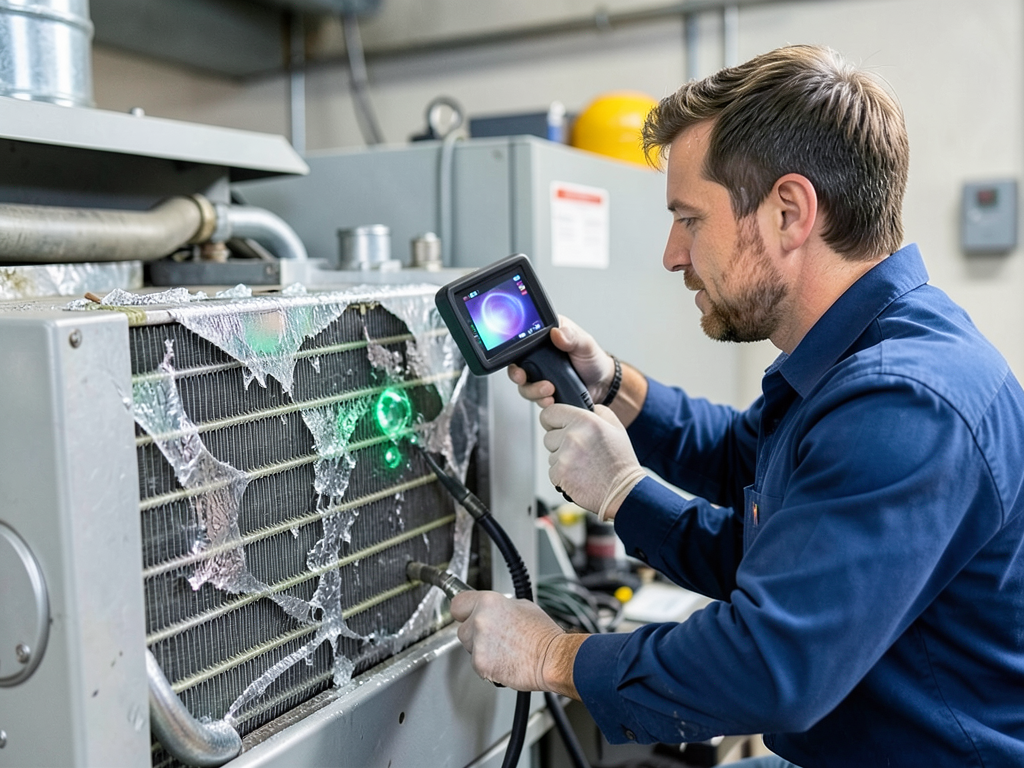
Technical diagram showing hail damage progression from initial impact to refrigerant leak development over time.
The Texas Insurance Claim Process for HVAC Systems
Filing an insurance claim for hail-damaged HVAC equipment follows a specific process that differs from standard home repair claims. Understanding this process helps you avoid common pitfalls that lead to claim denials.
Step 1: Professional Inspection and Documentation
Before contacting your insurance company, schedule a no-cost inspection with a licensed HVAC contractor who specializes in insurance claims. The technician will document all damage using:
- High-resolution photos of exterior damage with date stamps
- Thermal imaging to show reduced heat transfer efficiency
- Detailed written estimates using Xactimate software (the same program insurance adjusters use)
- Manufacturer specifications showing pre-storm efficiency ratings
This documentation serves as your “proof of loss” and establishes the claim’s foundation. Without professional documentation, adjusters may underestimate the damage or deny the claim entirely.
Step 2: Filing the Claim
Contact your insurance company within 30 days of the hailstorm. Texas law requires insurers to acknowledge claims within 15 business days. Provide your contractor’s inspection report and request a specific claim number for tracking purposes. Texas Department of Insurance consumer information.
Important: Do not repair or replace any damaged components before the insurance adjuster inspects the unit. Making repairs first can void your claim or reduce the settlement amount significantly.
Step 3: The Adjuster Meeting
Your HVAC contractor should attend the adjuster’s inspection. This meeting often determines whether your claim gets approved for repair or replacement. The contractor explains:. Read more about A Plain English Guide to New SEER2 Ratings for Fall Creek Homeowners.
- How hail damage affects system efficiency and longevity
- Why certain components need replacement rather than repair
- The cost difference between repairing old equipment versus installing new, more efficient units
Adjusters look for evidence of pre-existing conditions, so having a contractor present who can distinguish between storm damage and normal wear provides crucial credibility.
Step 4: Claim Approval and Payment
Once approved, you’ll receive two payments: the actual cash value (ACV) based on your unit’s age and condition, and the replacement cost value (RCV) minus your deductible. The RCV payment arrives after you complete the repairs or replacement.
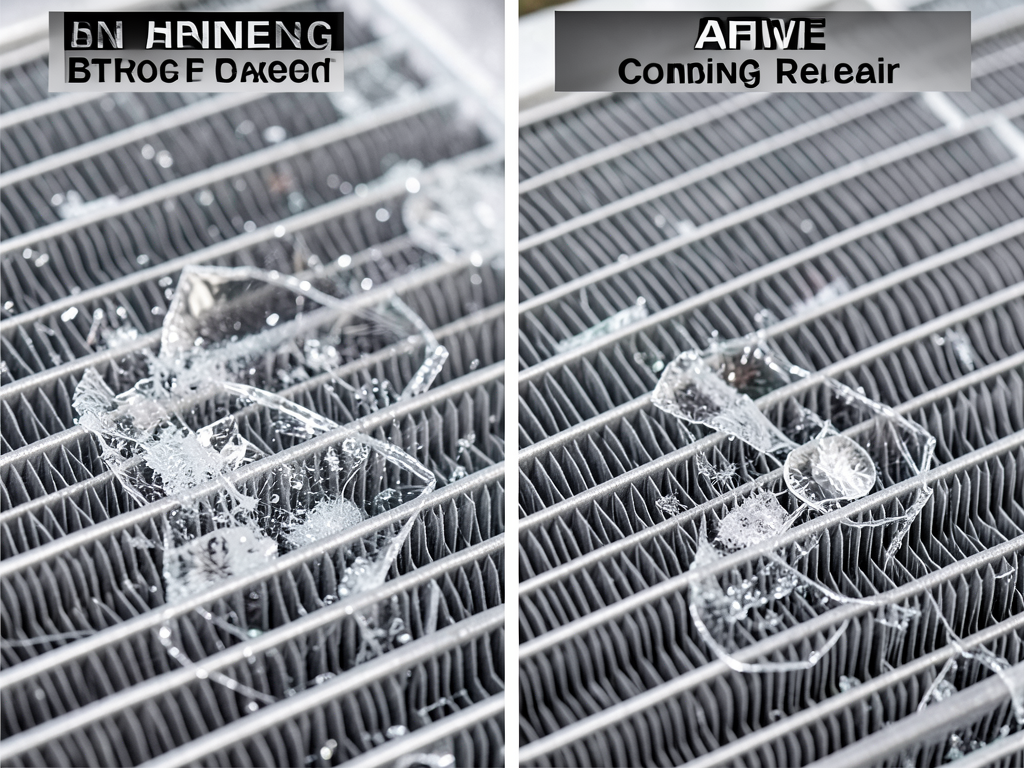
Photo series showing before/after comparisons of hail-damaged condenser coils with documentation forms.
Why Houston’s Humidity Makes Immediate Repair Critical
Houston’s average relative humidity exceeds 75% during summer months, creating unique challenges for hail-damaged AC systems. The combination of high moisture and reduced heat transfer efficiency accelerates component failure in ways that don’t occur in drier climates.
When hail damages condenser fins, the reduced airflow causes the coil temperature to rise by 15-20 degrees above normal operating levels. In Houston’s humid conditions, this excess heat combines with moisture to create ideal conditions for:
- Corrosion of aluminum fins at an accelerated rate
- Bacteria and mold growth inside the coil housing
- Refrigerant breakdown that reduces cooling capacity by up to 25%
The compressor becomes the most vulnerable component. Designed to operate within specific temperature ranges, a damaged coil forces the compressor to run 20-30% hotter than intended. Houston’s 95+ degree days push these overheated compressors past their thermal limits, causing internal bearing failure within 60-90 days of the initial hail damage.
Additionally, Houston’s salt-laden air from the Gulf of Mexico accelerates corrosion on damaged aluminum fins. Hail-created pits and scratches expose raw metal that corrodes 3-4 times faster than intact surfaces. This corrosion leads to refrigerant leaks that may not appear until weeks after the storm, making timely inspection crucial.
According to the Texas Department of Insurance, homeowners have up to two years to file hail damage claims, but waiting beyond 30 days significantly reduces your chances of full coverage. Insurance companies argue that delays make it impossible to prove the damage originated from the specific storm in question.
Repair vs. Replacement: What Will Your Insurance Cover?
Insurance companies use specific criteria to determine whether hail-damaged HVAC equipment qualifies for repair or requires complete replacement. Understanding these criteria helps you negotiate effectively with adjusters.
Repair Criteria
Insurance will typically approve repairs when:
- Less than 30% of the condenser fins show hail impact damage
- The compressor and fan motor show no signs of overheating
- Refrigerant pressure tests show no leaks
- The unit is less than 8 years old and still under manufacturer warranty
Common repairs include fin combing to straighten bent fins, replacing damaged fan blades, and sealing minor refrigerant leaks. However, these repairs often provide only temporary solutions in Houston’s harsh climate.
Replacement Criteria
Insurance companies more readily approve replacements when:
- Damage affects critical components like the compressor or evaporator coil
- The unit is over 10 years old and approaching end-of-life
- Repair costs exceed 60% of replacement value
- SEER2 efficiency standards require upgrading to meet current building codes
Since 2023, Texas building codes require all new AC installations to meet SEER2 standards, which are 4-5% more efficient than previous SEER ratings. Insurance companies must cover these efficiency upgrades when replacing hail-damaged equipment, even if your original unit didn’t meet current standards. What a New AC Installation Actually Costs in The Woodlands.
The age of your system significantly impacts the settlement. A 12-year-old unit might only receive 40-50% of replacement cost based on depreciation. However, if the damage affects multiple major components, insurance may approve a full system replacement at current market value.
Cost Comparison Table
| Repair Option | Typical Cost Range | Expected Lifespan Extension | Insurance Coverage Likelihood |
|---|---|---|---|
| Fin combing only | $300-$600 | 1-2 years | High if damage minimal |
| Coil replacement | $1,800-$3,200 | 8-12 years | Medium if compressor intact |
| Full system replacement | $4,500-$8,500 | 15-20 years | High if multiple components damaged |
According to Xactimate pricing data for the Houston area, the average insurance claim for hail-damaged HVAC equipment settles between $3,200 and $5,800, depending on the extent of damage and the age of the system.
Frequently Asked Questions
How long do I have to file a hail damage claim in Texas?
Most insurance policies require you to file within 12-24 months of the hailstorm. However, filing within 30 days provides the strongest evidence that the damage occurred during the specific storm event. Some insurers may deny claims filed after one year, arguing that pre-existing conditions caused the damage.
Will my insurance rates increase if I file a hail damage claim?
Hail damage claims are typically considered “acts of God” and shouldn’t affect your rates. However, if your area experiences repeated hailstorms, your insurer might raise rates for all policyholders in your zip code. Texas law prohibits insurers from singling out individual homeowners for rate increases based on weather-related claims.
What if the insurance adjuster says the damage is pre-existing?
Request a second inspection with a different adjuster or ask your contractor to provide a detailed report showing the difference between normal wear and hail impact damage. Hail creates distinctive round dents and crushed fins that differ from corrosion or age-related deterioration. Photos with date stamps from before the storm can help prove your case.
Should I get multiple repair estimates?
Yes, but ensure all contractors use Xactimate software for their estimates. This standardization allows fair comparison between quotes. Also, verify that each contractor is licensed by the Texas Department of Licensing and Regulation and carries both liability and workers’ compensation insurance.
Can I keep the insurance payout and not repair the damage?
Technically yes, but this violates most insurance policies and could result in claim denial for future damage. Additionally, leaving hail-damaged equipment unrepaired leads to efficiency losses that increase your monthly utility bills by $30-$80 depending on the extent of damage.
Preventative Maintenance After Storm Damage
Once you’ve addressed the immediate hail damage, implementing a preventative maintenance plan helps protect your investment from future storms and extends equipment life in Houston’s challenging climate.
Schedule bi-annual maintenance visits during spring and fall. These visits should include:
- Coil cleaning to remove debris and prevent corrosion
- Refrigerant level checks to detect slow leaks early
- Electrical connection inspections to prevent power failures
- Thermostat calibration to ensure accurate temperature control
Consider installing hail guards or protective cages around your condenser unit. These devices reduce hail impact damage by up to 70% while maintaining adequate airflow. The initial investment of $200-$400 often pays for itself within two storm seasons.
Document all maintenance activities and keep receipts for at least seven years. This documentation proves you’ve maintained the equipment properly, which strengthens future insurance claims if additional damage occurs.
Monitor your system’s performance throughout the year. A 15% increase in cooling time or a $25+ monthly increase in utility bills often indicates developing problems that require professional attention before they become major failures.
Photo showing hail guard installation on a residential condenser unit with airflow measurements.
Take Action Before the Next Storm Hits
Hail damage to your AC system isn’t just an inconvenience—it’s a ticking time bomb that can leave you without cooling during Houston’s hottest months. The combination of reduced efficiency and accelerated corrosion means small problems become expensive failures quickly.
Don’t wait until your compressor fails on a 98-degree day to discover the extent of hail damage. A professional inspection costs nothing but could save you thousands in emergency repairs and insurance claim denials. Finding Emergency AC Repair in Sugar Land Without Getting Ripped Off.
Call (281) 552-7766 today to schedule your free hail damage inspection. Our technicians use the same diagnostic equipment and documentation methods that insurance adjusters require, ensuring your claim has the best chance of approval. We’ll provide a detailed written report with photos, thermal imaging, and Xactimate estimates that speak the insurance company’s language.
Time matters. The longer you wait, the more likely it becomes that corrosion and refrigerant leaks will worsen, potentially turning a covered repair into an uncovered replacement. Pick up the phone and call (281) 552-7766 before the next storm hits Tomball. Your comfort—and your wallet—will thank you.
{
“@context”: “https://schema.org”,
“@type”: “BlogPosting”,
“headline”: “Getting an Insurance Claim Approved for AC Hail Damage in Tomball”,
“description”: “Learn how to identify hail damage on your AC unit and navigate the insurance claim process in Tomball. Expert HVAC guidance for Houston-area homeowners.”,
“wordCount”: 2005,
“datePublished”: “2026-04-29T07:23:00.000Z”,
“dateModified”: “2026-04-29T07:23:00.000Z”,
“inLanguage”: “en-US”,
“mainEntityOfPage”: {
“@type”: “WebPage”,
“@id”: “https://titanhvachouston.com”
},
“publisher”: {
“@type”: “LocalBusiness”,
“name”: “Titan HVAC Houston”,
“url”: “https://titanhvachouston.com”
},
“author”: {
“@type”: “Organization”,
“name”: “Titan HVAC Houston”,
“url”: “https://titanhvachouston.com”
},
“image”: {
“@type”: “ImageObject”,
“url”: “https://titanhvachouston.com/wp-content/uploads/2026/03/getting-an-insurance-claim-approved-for-ac-hail-da-1.png”
}
}
{
“@context”: “https://schema.org”,
“@type”: “HVACBusiness”,
“name”: “Titan HVAC Houston”,
“url”: “https://titanhvachouston.com”,
“address”: {
“@type”: “PostalAddress”,
“addressLocality”: “Houston”
},
“areaServed”: {
“@type”: “City”,
“name”: “Houston”
}
}
{
“@context”: “https://schema.org”,
“@type”: “FAQPage”,
“mainEntity”: [
{
“@type”: “Question”,
“name”: “Repair vs. Replacement: What Will Your Insurance Cover?”,
“acceptedAnswer”: {
“@type”: “Answer”,
“text”: “Insurance companies use specific criteria to determine whether hail-damaged HVAC equipment qualifies for repair or requires complete replacement. Understanding these criteria helps you negotiate effectively with adjusters.”
}
},
{
“@type”: “Question”,
“name”: “How long do I have to file a hail damage claim in Texas?”,
“acceptedAnswer”: {
“@type”: “Answer”,
“text”: “Most insurance policies require you to file within 12-24 months of the hailstorm. However, filing within 30 days provides the strongest evidence that the damage occurred during the specific storm event. Some insurers may deny claims filed after one year, arguing that pre-existing conditions caused the damage.”
}
},
{
“@type”: “Question”,
“name”: “Will my insurance rates increase if I file a hail damage claim?”,
“acceptedAnswer”: {
“@type”: “Answer”,
“text”: “Hail damage claims are typically considered \”acts of God\” and shouldn’t affect your rates. However, if your area experiences repeated hailstorms, your insurer might raise rates for all policyholders in your zip code. Texas law prohibits insurers from singling out individual homeowners for rate increases based on weather-related claims.”
}
},
{
“@type”: “Question”,
“name”: “What if the insurance adjuster says the damage is pre-existing?”,
“acceptedAnswer”: {
“@type”: “Answer”,
“text”: “Request a second inspection with a different adjuster or ask your contractor to provide a detailed report showing the difference between normal wear and hail impact damage. Hail creates distinctive round dents and crushed fins that differ from corrosion or age-related deterioration. Photos with date stamps from before the storm can help prove your case.”
}
},
{
“@type”: “Question”,
“name”: “Should I get multiple repair estimates?”,
“acceptedAnswer”: {
“@type”: “Answer”,
“text”: “Yes, but ensure all contractors use Xactimate software for their estimates. This standardization allows fair comparison between quotes. Also, verify that each contractor is licensed by the Texas Department of Licensing and Regulation and carries both liability and workers’ compensation insurance.”
}
}
]
}
{
“@context”: “https://schema.org”,
“@type”: “BreadcrumbList”,
“itemListElement”: [
{
“@type”: “ListItem”,
“position”: 1,
“name”: “Home”,
“item”: “https://titanhvachouston.com”
},
{
“@type”: “ListItem”,
“position”: 2,
“name”: “Blog”,
“item”: “https://titanhvachouston.com/blog”
},
{
“@type”: “ListItem”,
“position”: 3,
“name”: “Getting an Insurance Claim Approved for AC Hail Damage in Tomball”
}
]
}
{
“@context”: “https://schema.org”,
“@type”: “Service”,
“serviceType”: “HVAC”,
“provider”: {
“@type”: “LocalBusiness”,
“name”: “Titan HVAC Houston”,
“url”: “https://titanhvachouston.com”
},
“areaServed”: {
“@type”: “City”,
“name”: “Houston”
},
“description”: “Learn how to identify hail damage on your AC unit and navigate the insurance claim process in Tomball. Expert HVAC guidance for Houston-area homeowners.”
}