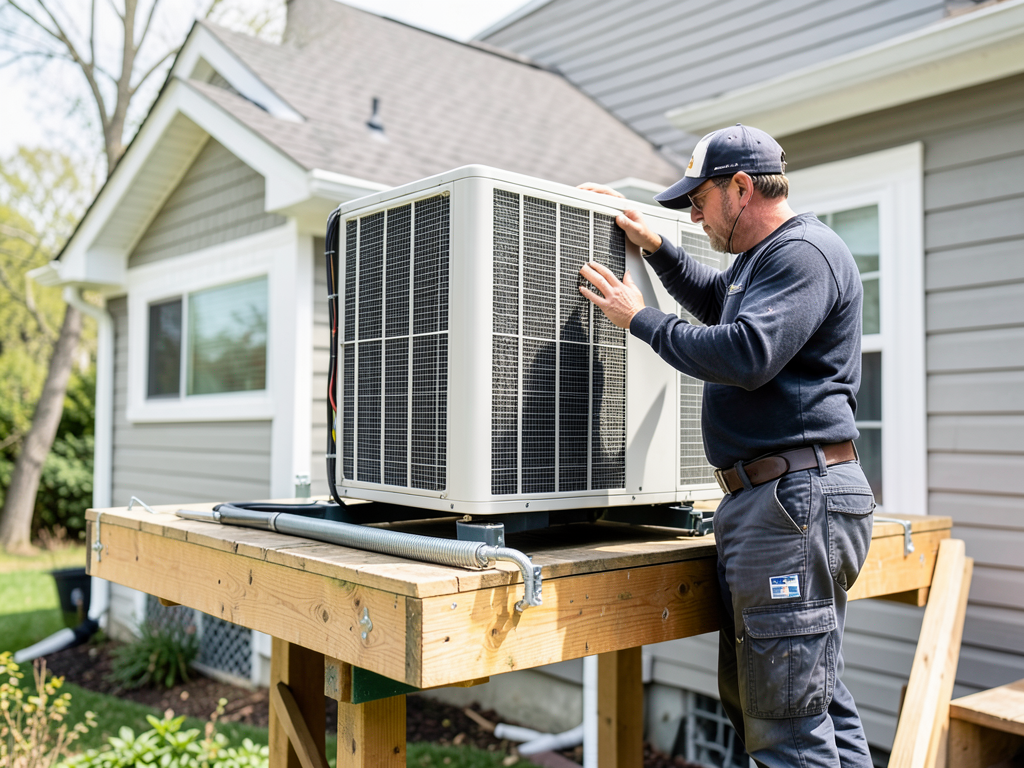






AC Blowing Warm Air in Houston – Expert Diagnosis and Same-Day Repair

When your air conditioner blowing hot air disrupts comfort in Houston's heat, our HVAC technicians diagnose refrigerant leaks, compressor failures, and airflow obstructions to restore cold air fast.

Slider Image 1
Slider Image 2
Slider Image 3
Slider Image 4
Slider Image 5
Slider Image 7
Slider Image 8
Slider Image 9
Slider Image 10
Slider Image 11

Why Your AC Is Blowing Warm Air Instead of Cold

You walk to the thermostat. It reads 76 degrees. The vents push air, but the air conditioning not blowing cold air. In Houston, where summer afternoons regularly hit 95 degrees with 70 percent humidity, an ac running but not cooling is not just uncomfortable. It is dangerous.

Warm air from your vents signals one of several mechanical failures. Your refrigerant may be leaking. The compressor may have failed. The evaporator coil may be frozen solid. The condenser outside may be choked with cottonwood debris or clogged with pollen. These failures are common in Houston because our climate works HVAC systems harder than almost any other region in the country. Your system runs six to eight months each year without pause. Parts wear faster here.

When your central air blowing warm air, you need to know the cause immediately. Waiting turns a refrigerant leak into a compressor burnout. A frozen coil becomes a flooded drain pan. The longer your ac vents blowing hot air, the higher your electric bill climbs as the system runs nonstop trying to cool a home it cannot cool.

Houston homeowners near the Heights, Montrose, and Clear Lake often call us after trying to troubleshooting alone. They replace filters. They check breakers. The air conditioner blowing hot air continues. The problem is not simple. It requires diagnostic tools, pressure gauges, and someone who understands how refrigerant cycles behave in extreme heat and humidity.

Why Your AC Is Blowing Warm Air Instead of Cold
How We Diagnose and Fix AC Systems Blowing Hot Air

How We Diagnose and Fix AC Systems Blowing Hot Air

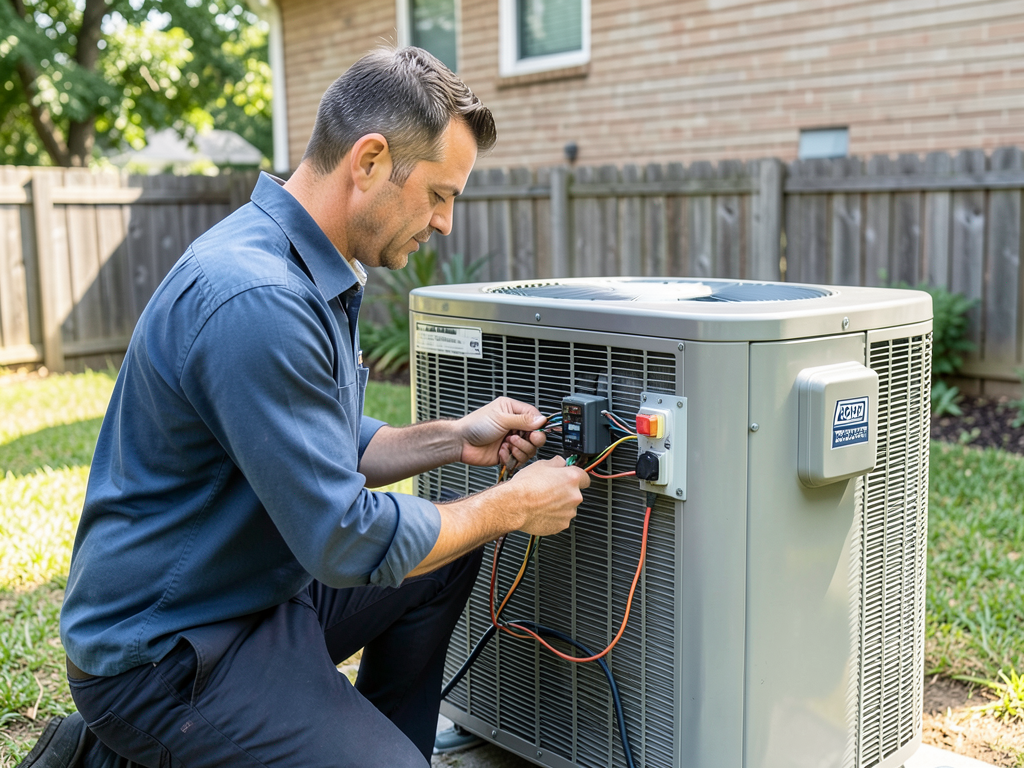
We do not guess. We measure. Our technicians arrive with manifold gauge sets, digital thermometers, and amp clamps. We check refrigerant pressures on both the suction and discharge sides of the compressor. We measure superheat and subcooling to determine if your system is undercharged, overcharged, or suffering from a restriction in the metering device.

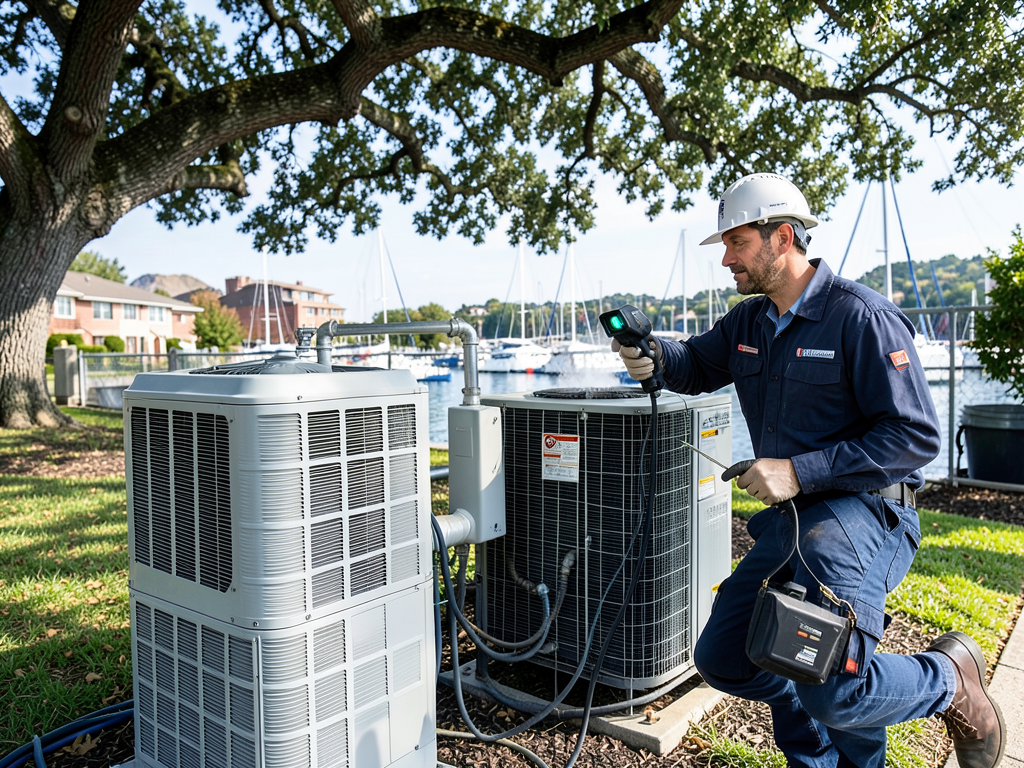
If your air conditioner blowing hot air is caused by low refrigerant, we find the leak. We pressurize the system with nitrogen and use electronic leak detectors to isolate the exact point of failure. We repair the leak, vacuum the system to remove moisture and air, then recharge it to factory specifications. We do not top off a leaking system. That is a bandaid.

If the compressor is failing, we test capacitor values and measure amp draw under load. A compressor drawing high amps signals internal wear. Compressors fail faster in Houston because of voltage sags during peak demand hours and because units cycle on and off repeatedly during high humidity days when latent cooling loads are extreme.

If the evaporator coil is frozen, we check airflow across the coil. Dirty blower wheels, undersized ductwork, and closed supply registers all reduce airflow and cause coil icing. We also check the metering device. A clogged orifice or a stuck thermostatic expansion valve will starve the evaporator of refrigerant and freeze the coil solid.

Once we isolate the failure, we repair it. Then we test the system under load to confirm supply air temperatures drop into the 55 to 60 degree range, which is where they should be.

What Happens During Your AC Warm Air Repair

AC Blowing Warm Air in Houston – Expert Diagnosis and Same-Day Repair
01

Initial System Diagnostics

We start by measuring supply and return air temperatures at the registers and at the air handler. We check thermostat calibration and wiring. Then we move outside to inspect the condenser unit. We check refrigerant pressures, compressor amp draw, and capacitor microfarad values. This tells us whether the failure is refrigerant-related, electrical, or mechanical. Most ac running but not cooling issues show up in these first measurements.
02

Component Repair or Replacement

Once we identify the failed component, we source the correct part. If the issue is a refrigerant leak, we repair the leak and pressure test the system. If the compressor is failing, we discuss replacement options and system age with you. If airflow is restricted, we clean the blower assembly or adjust ductwork dampers. We do not move forward without explaining what failed, why it failed, and what it takes to fix it correctly.
03

System Testing and Verification

After the repair, we run the system through a full cooling cycle. We measure supply air temperature, monitor refrigerant pressures, and check amp draw again. We verify the system holds steady pressures and delivers cold air consistently. Before we leave, we walk you through what we found, what we fixed, and what you should monitor. You get a detailed service report with pressure readings and temperature differentials documented.

Why Houston Homeowners Choose Titan HVAC Houston for Warm Air Repairs

We operate in Houston year-round. We understand how the Gulf Coast climate affects HVAC equipment. High humidity accelerates coil corrosion. Afternoon thunderstorms cause power surges that damage capacitors and contactors. Cottonwood, oak pollen, and dust from new construction in neighborhoods like Katy, Sugar Land, and The Woodlands clog condenser coils faster than in drier climates.

Our technicians are trained on the refrigerant cycle, airflow dynamics, and electrical diagnostics. They carry the tools required to measure system performance accurately. They do not rely on visual inspections alone. When your central air blowing warm air, they know how to isolate the failure quickly.

We also understand Houston building codes and permit requirements. If your repair involves replacing a compressor or condenser, we pull permits and schedule inspections. We do not cut corners. Systems installed or repaired without permits create problems during home sales and insurance claims.

Titan HVAC Houston has built a reputation in neighborhoods across Harris County, Fort Bend County, and Montgomery County by showing up on time, diagnosing problems correctly the first time, and repairing systems so they last. When your air conditioning not blowing cold air in July, you do not have time for trial and error. You need someone who knows what they are doing.

We also explain what we find. If your system is old and nearing end-of-life, we tell you. If the repair will buy you two more years, we tell you that too. You make the decision. We give you the information you need to make it.

What to Expect When You Call Titan HVAC Houston

Same-Day Service Availability

We dispatch technicians the same day you call in most cases. During peak summer months, when ac vents blowing hot air become a common emergency, we prioritize calls based on indoor temperatures and household needs. If you have young children, elderly family members, or medical conditions affected by heat, let us know. We get to you fast. Our service windows are tight. We call ahead when we are on the way so you are not waiting around all day.

Thorough Diagnostic Process

Our diagnostic process takes 30 to 60 minutes depending on system complexity. We check refrigerant pressures, electrical components, airflow, and ductwork. We do not charge extra for the diagnostic if you approve the repair. You get a clear explanation of what failed and what it takes to fix it. We walk you through the options. If the repair is expensive relative to system age, we discuss replacement. You decide what makes sense for your budget and timeline.

Cold Air Restored Quickly

Most repairs are completed the same day. Refrigerant leaks, capacitor replacements, and contactor failures take one to three hours. Compressor replacements take longer and may require a return visit depending on part availability. Once the repair is complete, your system delivers cold air immediately. We measure supply air temperatures to confirm performance. You feel the difference within minutes. If the system does not cool correctly after the repair, we stay until it does.

Repair Documentation and Follow-Up

You receive a detailed service report that documents what we found, what we repaired, and what system measurements looked like before and after the repair. This report is useful during home sales or if you file an insurance claim. We also provide maintenance recommendations. If your air filter is dirty or your condenser coil needs cleaning, we let you know. We do not upsell unnecessary services, but we do tell you what your system needs to run efficiently.

Frequently Asked Questions

You Have Questions,
We Have Answers

Why is my AC running but not cooling? +

Your AC runs but does not cool because of refrigerant leaks, a frozen evaporator coil, a clogged air filter, or a failed compressor. In Houston's high humidity, dirty coils reduce heat transfer fast. Check your filter first. If it is clogged, airflow drops and the coil freezes. A refrigerant leak means your system cannot absorb heat. The compressor may also fail due to age or electrical issues. Turn off the system if you see ice on the lines. A technician must diagnose refrigerant levels and compressor function safely.

What is the 3 minute rule for air conditioners? +

The 3 minute rule prevents compressor damage. After your AC shuts off, wait at least 3 minutes before restarting. This allows pressure to equalize between the high and low sides of the refrigerant system. If you restart too soon, the compressor works against unbalanced pressure, which strains the motor and can cause failure. Most modern systems have built-in time delays to enforce this rule automatically. In Houston's stop-and-start cooling cycles during shoulder seasons, this protection is critical for compressor longevity.

How to reset AC not blowing cold air? +

Turn off your AC at the thermostat. Wait 60 seconds, then turn it back on. If the outdoor unit does not start, locate your electrical panel and flip the AC breaker off, wait 30 seconds, then flip it back on. Check your thermostat batteries if the screen is blank. A reset clears minor glitches but does not fix refrigerant leaks, frozen coils, or compressor failure. If your system still blows warm air after resetting, you need a technician to diagnose the root cause.

How do I know if my AC is low on freon? +

Signs of low refrigerant include warm air from vents, ice on the refrigerant lines or evaporator coil, hissing sounds near the outdoor unit, and higher energy bills. In Houston's humid climate, you may also notice your home feels muggy because the system cannot dehumidify properly. Low refrigerant always means a leak exists. Refrigerant does not burn off like fuel. A technician must locate the leak, repair it, and recharge the system. Never add refrigerant yourself without fixing the leak first.

Should I turn off AC if it's not cooling? +

Yes, turn off your AC if it is not cooling and you see ice on the lines or hear strange noises. Running a malfunctioning system can damage the compressor, which costs thousands to replace. Turn off the unit and let the ice melt completely before inspecting further. If the outdoor unit is silent or the indoor fan runs without cold air, shut it down. In Houston's heat, a broken AC is frustrating, but forcing it to run worsens the damage and increases repair costs.

How long should it take to cool a house from 80 to 72? +

In Houston, expect 45 to 90 minutes to drop from 80 to 72 degrees in a typical home with a properly sized AC. Factors include insulation quality, home size, outdoor temperature, and system capacity. If it takes longer than 2 hours, your AC may be undersized, low on refrigerant, or working against air leaks. Houston's humidity slows cooling because the system must remove moisture before dropping temperature. Older homes with poor insulation take longer. If your system struggles daily, you need a performance check.

How cool should my house be if it's 100 outside? +

If it is 100 degrees outside in Houston, aim for 75 to 78 degrees inside. Most residential AC systems can handle a 20 to 25 degree temperature difference efficiently. Pushing your thermostat below 72 degrees strains the system, increases runtime, and spikes your energy bill. Houston's humidity makes indoor temps feel warmer, so a dehumidifier helps. If your AC cannot maintain 78 degrees on a 100 degree day, you may have refrigerant loss, duct leaks, or an undersized unit.

What is the $5000 AC rule? +

The AC $5000 rule is a repair-or-replace guideline. Multiply the age of your system by the repair cost. If the result exceeds $5000, replace the unit instead of repairing it. For example, a 12-year-old AC needing a $500 repair equals $6000, so replacement makes sense. This rule accounts for diminishing efficiency and future repair frequency. In Houston, older systems also struggle with humidity control. A new unit offers better SEER ratings, lower energy bills, and modern refrigerants.

How do I check my AC refrigerant level at home? +

You cannot accurately check refrigerant levels at home without gauges and EPA certification. Refrigerant is pressurized and requires specialized tools to measure. Attempting DIY refrigerant work is illegal and dangerous. Instead, look for indirect signs like ice on the lines, warm air from vents, or hissing sounds. If you suspect low refrigerant, call a licensed technician. They attach manifold gauges to the service ports, compare readings to manufacturer specs, and test for leaks. Only a certified professional can legally handle refrigerant.

Can I fix warm AC myself? +

You can replace a dirty air filter, clear debris from the outdoor unit, and check your thermostat settings. These fixes solve minor airflow issues. However, refrigerant leaks, compressor failure, frozen coils, and electrical problems require a licensed technician. Handling refrigerant without EPA certification is illegal. In Houston's climate, misdiagnosis wastes time while your home overheats. If basic troubleshooting does not restore cold air within 30 minutes, call a professional. Attempting complex repairs yourself can void warranties and create safety hazards.

How Houston's Humidity and Heat Accelerate AC Failures

Houston HVAC systems run longer and harder than systems in most other cities. Summer lasts from May through September. Afternoon temperatures reach the mid-90s with heat indices above 105 degrees. Humidity rarely drops below 60 percent. This combination forces your air conditioner to remove massive amounts of latent heat while also lowering air temperature. The compressor and evaporator coil work nonstop. Over time, refrigerant leaks develop at flare fittings and service ports. Capacitors fail from constant cycling. Contactor points pit and burn. These failures are not random. They are predictable outcomes of running equipment under sustained load in a hot, humid climate.

Choosing a local HVAC provider matters in Houston because the climate creates specific failure patterns. Technicians who work here daily recognize these patterns immediately. They know that frozen coils in July usually mean low refrigerant or restricted airflow. They know that compressors fail more often in August when voltage sags during peak grid demand. They understand how pollen seasons in March and October clog outdoor coils. National chains rotate technicians through regions. Local companies build expertise in one climate. That expertise translates to faster diagnostics, accurate repairs, and systems that last longer between service calls.
HVAC Services in The Houston Area

Titan HVAC is proud to serve Houston and the surrounding areas with expert heating and cooling solutions. Our central location allows us to respond quickly to both residential and commercial clients. Whether you need an emergency fix or scheduled service, we’re never far away. Explore our service area and see how close comfort really is. We're just a call or click away—connect with us today.

Address:
Titan HVAC Houston, 3730 Kirby DrHouston, Houston, TX, 77098

Additional Services We Offer

Our news updates

Latest Articles & News from The Blogs

Updating the HVAC in an Eastwood Brick Bungalow Without Ruining the Character Eastwood’s brick bungalows built in the 1920s and…

Updating the HVAC in an Eastwood Brick Bungalow Without Ruining the Character

Updating the HVAC in an Eastwood Brick Bungalow Without Ruining the Character Eastwood’s brick bungalows built in the 1920s and…

Clever Ways to Hide an Outdoor AC Unit Without Breaking Woodlands HOA Rules

Clever Ways to Hide an Outdoor AC Unit Without Breaking Woodlands HOA Rules Living in The Woodlands means enjoying tree-lined…

Why a Radiant Barrier Might Be the Missing Piece for Your Aliana AC System

Why a Radiant Barrier Might Be the Missing Piece for Your Aliana AC System If your Aliana home feels like…

Contact Us

Your air conditioner should blow cold air. If it does not, call Titan HVAC Houston at (281) 552-7766. We diagnose the failure, explain your options, and restore cold air the same day in most cases.