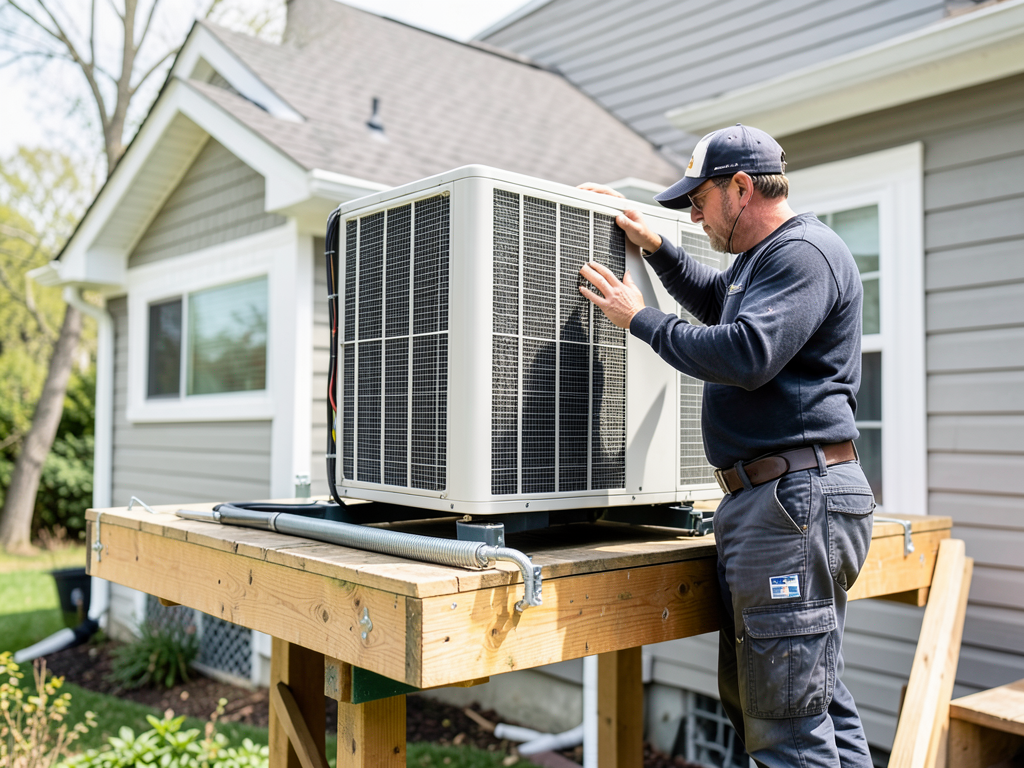








Should You Repair or Replace Your AC in Houston? – A Data-Driven Decision Guide

Make the right air conditioner fix vs replace decision using actual performance data, replacement cost thresholds, and Houston-specific factors that affect system longevity in our humid subtropical climate.

Slider Image 1
Slider Image 2
Slider Image 3
Slider Image 4
Slider Image 5
Slider Image 7
Slider Image 8
Slider Image 9
Slider Image 10
Slider Image 11

Why the AC Replacement Decision Is Different in Houston

You walk outside in July and feel the wall of heat. You walk back inside and the house is 78 degrees when the thermostat says 72. Your AC is struggling. Now you face the question every Houston homeowner dreads: repair or replace?

The air conditioner fix vs replace decision is more complex in Houston than in drier climates. Our punishing humidity and sustained cooling loads from May through October push HVAC systems harder than almost anywhere in the continental United States. A compressor that might last 18 years in Colorado gives out at 12 years here. Corrosion from Gulf moisture attacks coils faster. Salt air in Clear Lake and coastal neighborhoods accelerates metal degradation.

Most homeowners make this decision emotionally. The unit stops working on a Saturday afternoon. A technician quotes $1,800 for a compressor replacement. You panic and say yes because you need cool air now. Three years later, the evaporator coil leaks and you are replacing the whole system anyway. You just spent $1,800 on a temporary fix for a dying system.

The HVAC system repair vs replace decision should be mathematical, not emotional. You need to know the age of your system, the cost of the repair as a percentage of replacement cost, the refrigerant type, and the efficiency loss. When you plug those variables into the actual decision framework that professionals use, the right answer becomes clear. This guide gives you that framework so you stop guessing and start deciding based on data that applies specifically to Houston's climate conditions.

Why the AC Replacement Decision Is Different in Houston
The 5000 Rule and Other Decision Frameworks That Actually Work

The 5000 Rule and Other Decision Frameworks That Actually Work

The most reliable AC replacement rule of thumb is called the 5000 Rule. You multiply the age of your system by the cost of the repair. If the result exceeds 5000, replacement makes more financial sense. A 10-year-old system needing a $600 repair scores 6000. Replace it. A 7-year-old system needing a $400 repair scores 2800. Repair it.

This rule accounts for diminishing returns. Older systems require more frequent repairs. Each repair buys you less time. A compressor replacement on a 14-year-old system might give you two more years before the air handler fails. You just paid $2,200 for 24 months of cooling. A new system would have given you 12 to 15 years.

Refrigerant type changes the equation. If your system uses R-22 refrigerant, any major repair tilts toward replacement. R-22 production stopped in 2020. Prices for remaining stock are rising. A pound of R-22 that cost $80 in 2018 now runs $150 or more. Leak repairs on R-22 systems become expensive quickly. Systems using R-410A refrigerant have more repair runway because the refrigerant remains affordable and available.

Efficiency loss matters in Houston because we run AC units 8 to 9 months per year. A system operating at 8 SEER because of age and wear costs you roughly $180 more per year in electricity compared to a 16 SEER replacement. Over 10 years, that is $1,800 in wasted electricity. Factor that into your repair vs replace math. Titan HVAC Houston runs this analysis for every repair quote above $800 so you see the actual long-term cost difference between fixing and replacing.

How to Evaluate Your System in Three Steps

Should You Repair or Replace Your AC in Houston? – A Data-Driven Decision Guide
01

Collect System Data

Start by finding the manufacture date on the data plate attached to your outdoor condenser unit. Look for a serial number that encodes the date, usually in the first four digits. Write down the model number, refrigerant type listed on the label, and SEER rating. Get copies of past repair invoices if you have them. Document what failed and when. This history reveals patterns. A system that needed three repairs in two years is telling you it is dying.
02

Run the Numbers

Apply the 5000 Rule first. Multiply system age by repair cost. Compare the result to 5000. Next, calculate the efficiency cost. Subtract your current SEER from 16 SEER. Multiply that difference by $22 per SEER point per year. That gives you the annual electricity penalty. Multiply by the expected remaining lifespan to see total efficiency loss. Add major repairs you have made in the past three years. If that total approaches 50 percent of replacement cost, you are pouring money into a depreciating asset.
03

Factor Houston Conditions

Adjust your decision for local conditions. If you live within five miles of the Gulf, accelerate the replacement timeline by two years because of salt corrosion. If your ductwork is original and poorly sealed, factor in $1,200 to $2,400 for duct sealing with a new system. Check if your electrical panel can handle a modern two-stage or variable-speed system. Older panels may need upgrades. These Houston-specific factors affect total project cost and change the repair vs replace math.

Why Local Knowledge Changes the Recommendation

National HVAC chains follow corporate decision trees that do not account for Houston's climate. They apply the same recommendations in Houston that they use in Phoenix or Atlanta. That approach fails because Houston's sustained humidity and cooling load duration create unique wear patterns.

A system in Houston runs 2,800 to 3,200 hours per year under load. The same system in Dallas runs 2,200 hours. That extra runtime shortens compressor life, accelerates refrigerant leaks from vibration fatigue, and causes earlier capacitor failures. Local contractors who only work in the Houston metro understand these failure timelines. We know that evaporator coils in Pearland homes tend to fail at year 11 because of humidity exposure. We know that condenser fans in Memorial homes clog faster because of oak pollen and cottonwood seeds.

Building codes also vary. Houston amended the International Residential Code with local requirements for hurricane tie-downs on rooftop units and specific condensate drainage rules. A contractor unfamiliar with these amendments might install a replacement system that fails inspection, delaying your project and adding costs.

Titan HVAC Houston has diagnosed thousands of repair vs replace decisions across Greater Houston since 2015. We have seen how systems perform in Kingwood's older neighborhoods with 1980s ductwork. We know which brands hold up better in Galveston County's salt air. We track failure rates by ZIP code and system age. When we tell you a repair makes sense or recommend replacement, that advice comes from pattern recognition across similar homes in your specific area. You get a recommendation calibrated to your microclimate, not a generic national average.

What Happens When You Request a Repair vs Replace Analysis

Response Time and Scheduling

We dispatch a technician within four hours for same-day service requests Monday through Saturday. Sunday appointments are available for emergencies. The diagnostic visit takes 45 to 75 minutes depending on system accessibility and age. We test electrical components, measure refrigerant pressures, check airflow, and inspect the air handler and ductwork. You get a written condition report with photos of failed components and test results. We present the 5000 Rule calculation and efficiency comparison so you see the math behind our recommendation.

The Diagnostic Process

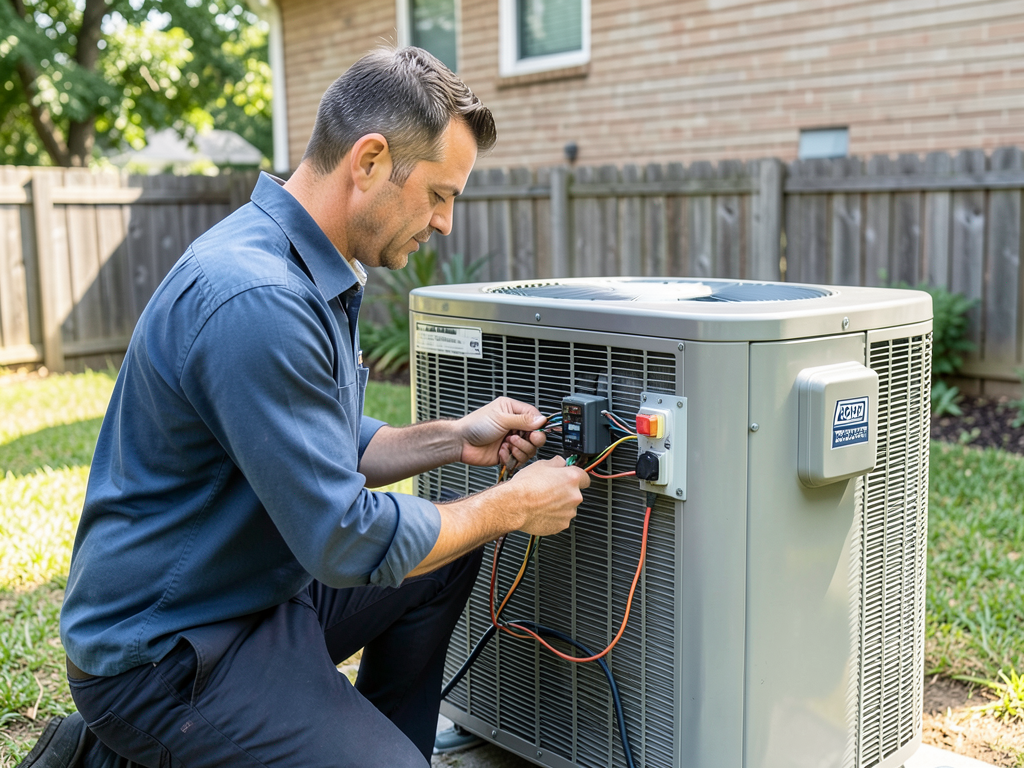
Our technicians use digital multimeters to test capacitors, contactors, and compressor windings. We measure static pressure in the duct system to identify airflow restrictions. Refrigerant testing includes superheat and subcooling measurements to detect charge issues or restriction problems. We inspect the condensate drain for clogs and check the drain pan for cracks. Electrical connections get thermal scans to find loose terminals before they cause failures. You receive a detailed report ranking issues by severity, cost to repair, and urgency. This transparency lets you make an informed decision without pressure.

The Recommendation You Receive

We present three options: repair with expected lifespan, replacement with efficiency comparison, and a hybrid approach if applicable. For borderline cases, we show the total cost of ownership over five years for each option. If we recommend replacement, you get multiple system options at different SEER levels with corresponding installation costs. We explain payback periods for higher-efficiency systems based on your square footage and actual usage history if you provide utility bills. No recommendation includes sales pressure. You get facts, math, and a clear explanation of when to expect the next major repair if you choose to fix rather than replace.

Warranty and Ongoing Support

Repairs come with parts warranties from the manufacturer and a one-year labor warranty from Titan HVAC Houston. New system installations include manufacturer warranties ranging from 5 to 10 years on parts depending on brand and model. We register all warranties at installation so you do not lose coverage. Optional maintenance plans provide two annual tune-ups with priority scheduling, 15 percent discounts on repairs, and extended labor warranties. These plans reduce emergency failures by catching small issues before they become expensive problems. We track all service history in our system so any technician who visits your home knows the complete repair and maintenance timeline.

Frequently Asked Questions

You Have Questions,
We Have Answers

How Houston Humidity Accelerates the Repair vs Replace Timeline

Houston averages 75 percent relative humidity year-round. That moisture attacks AC components in ways that dry climates do not experience. Evaporator coils develop corrosion faster because condensation never fully evaporates between cycles. Drain pans rust through. Electrical connections corrode. Blower motors struggle because moisture adds weight to accumulated dust on blades, creating imbalance and bearing wear. The average AC system lifespan in Houston is 12 to 14 years compared to 15 to 18 years in Phoenix or Albuquerque. When you apply the AC replacement rule of thumb here, you should subtract two years from the national average lifespan to account for humidity stress.

Local contractors understand which components fail first in Houston homes. We know that capacitors rated for 150-degree operation often fail at year seven here because attic temperatures hit 160 degrees in July and August. We know that condensate pumps clog more often in homes near Buffalo Bayou or Brays Bayou because of higher airborne mold spore counts. This knowledge changes our repair recommendations. A capacitor replacement on a nine-year-old system makes sense. A compressor replacement on the same system probably does not because you are three years from full replacement anyway. Choosing a contractor who works exclusively in the Houston metro gives you recommendations based on local failure patterns, not national averages that do not apply to our climate.
HVAC Services in The Houston Area

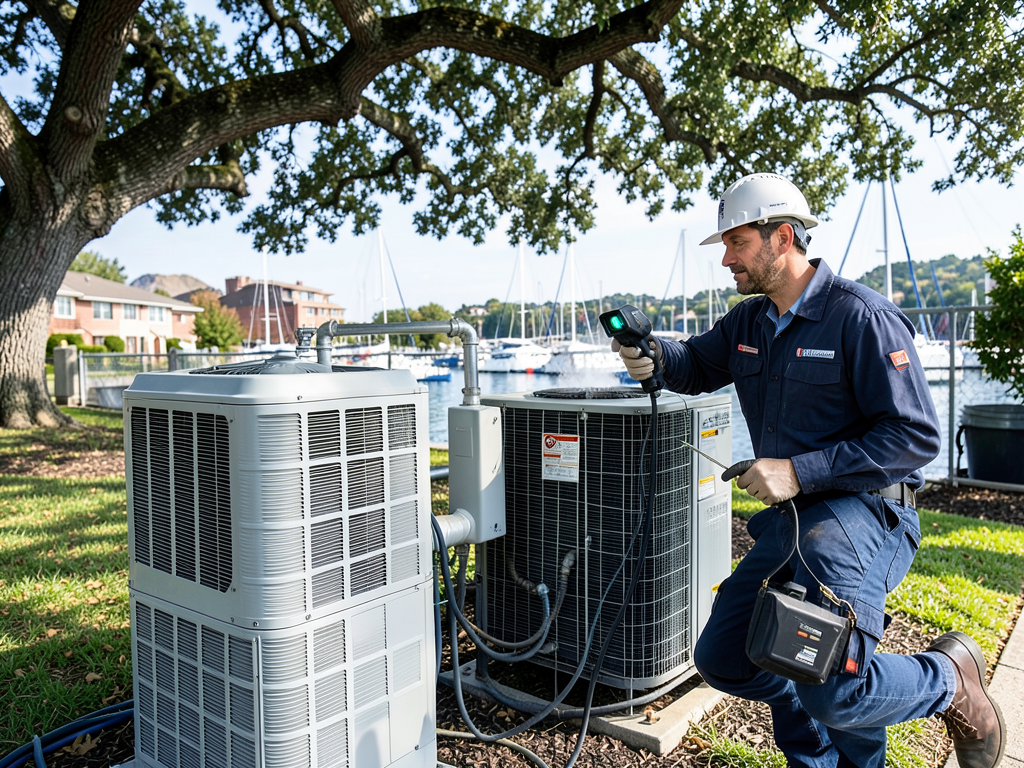
Titan HVAC is proud to serve Houston and the surrounding areas with expert heating and cooling solutions. Our central location allows us to respond quickly to both residential and commercial clients. Whether you need an emergency fix or scheduled service, we’re never far away. Explore our service area and see how close comfort really is. We're just a call or click away—connect with us today.

Address:
Titan HVAC Houston, 3730 Kirby DrHouston, Houston, TX, 77098

Additional Services We Offer

Our news updates

Latest Articles & News from The Blogs

Why Communicating HVAC Systems are the Superior Choice for Custom Builds in Piney Point Village Custom home builders in Piney…

Why Communicating HVAC Systems are the Superior Choice for Custom Builds in Piney Point Village

Why Communicating HVAC Systems are the Superior Choice for Custom Builds in Piney Point Village Custom home builders in Piney…

Filtering Industrial Pollutants and Ship Channel Odors from Your Galena Park Home

Filtering Industrial Pollutants and Ship Channel Odors from Your Galena Park Home Living near the Houston Ship Channel means dealing…

Why Your Meyerland Smart Home Needs a Fully Integrated HVAC System

Why Your Meyerland Smart Home Needs a Fully Integrated HVAC System Meyerland homeowners face Houston’s relentless heat and humidity year-round.…

Contact Us

Stop guessing. Get the data you need to make the right decision. Call (281) 552-7766 for a transparent diagnostic visit. We show you the math, explain the options, and let you decide without pressure. Same-day appointments available.